
I was able to sleep pretty well for my second night here. I think my practice of getting some morning sun is working to reset my circadian rhythm.
We were leaving the hotel today, so we had to have our bags out by 7:45. We left the hotel at 8:15 after breakfast. Here’s our route for the day, Alberobello, Ostuni and finally Lecce.
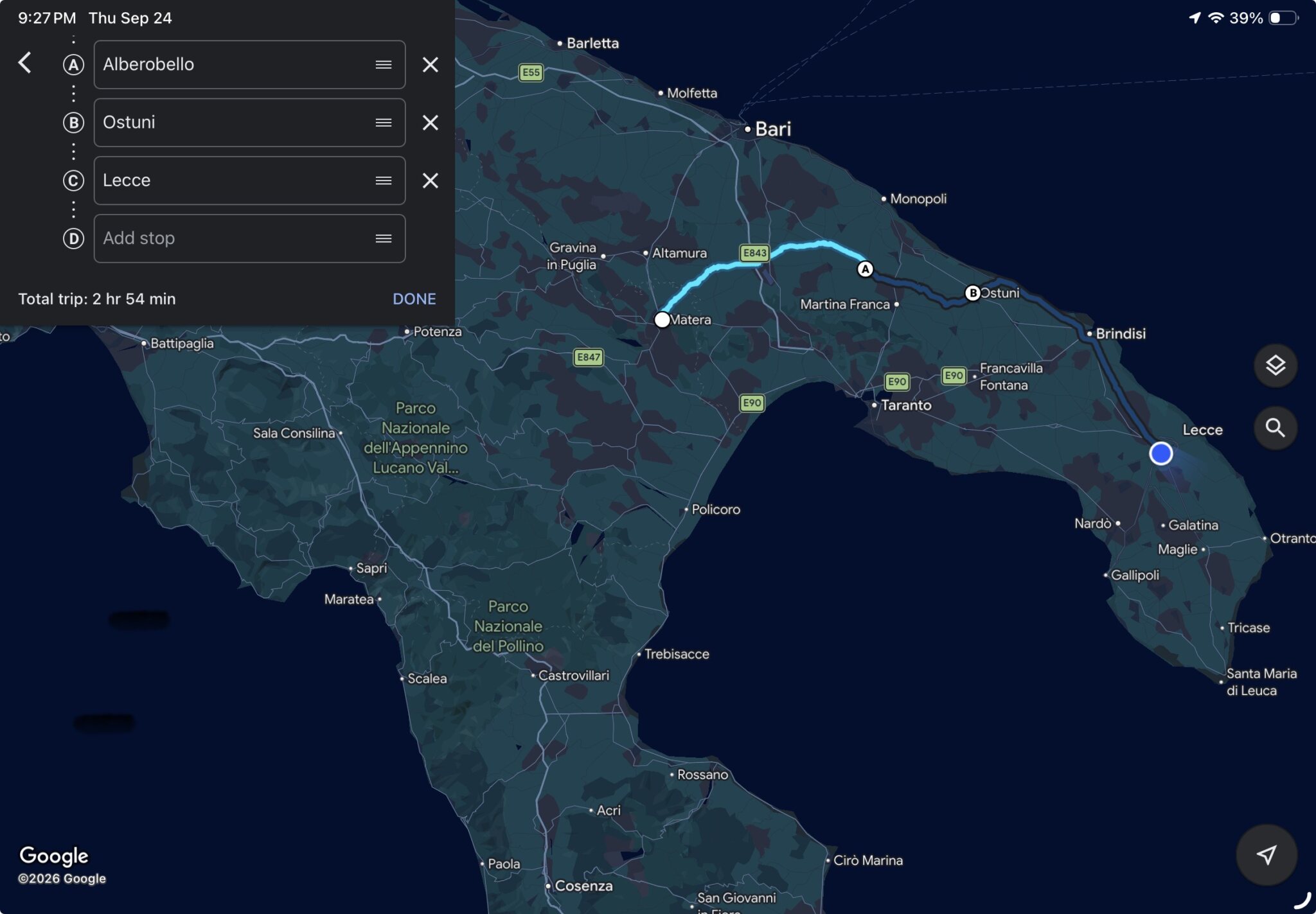
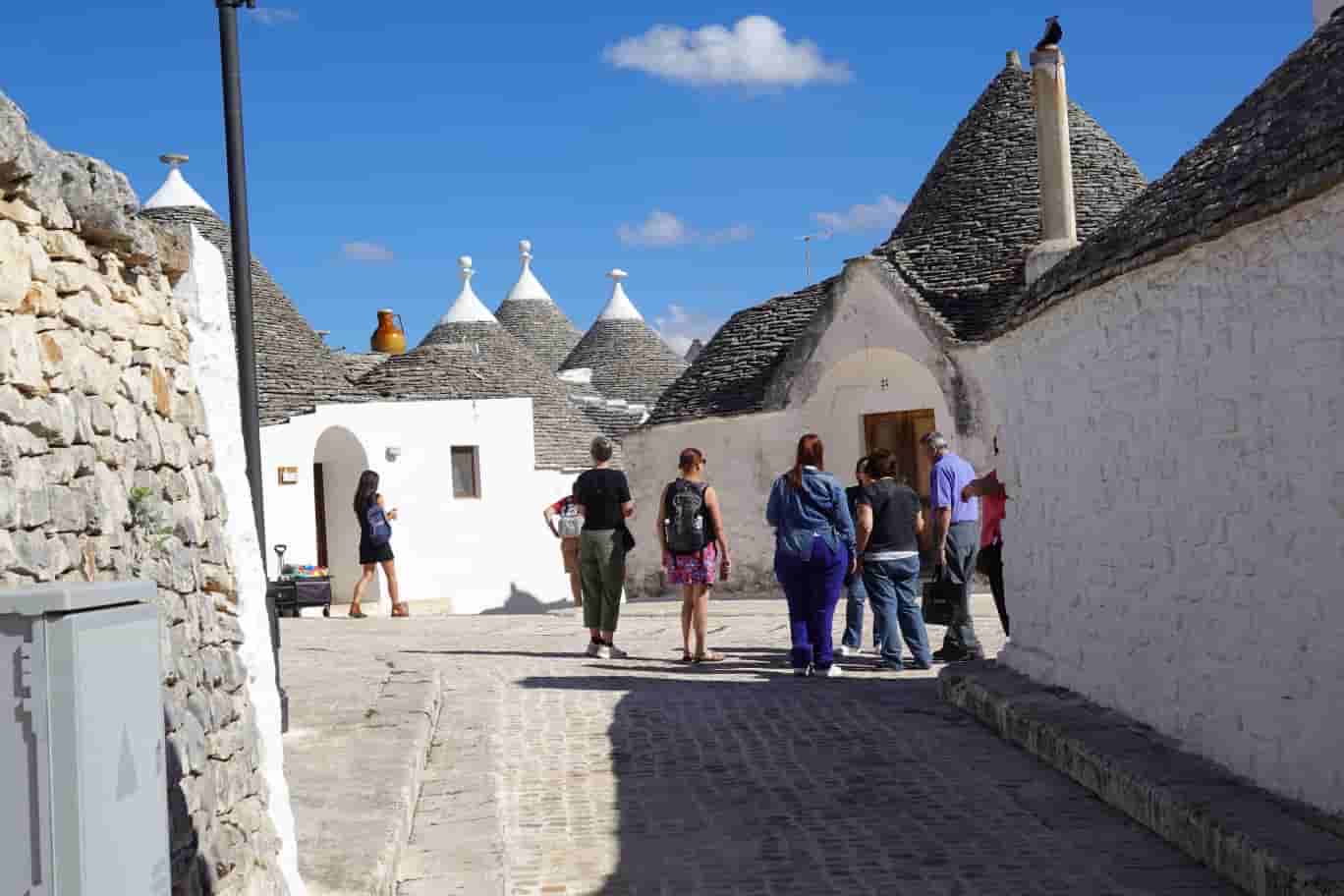
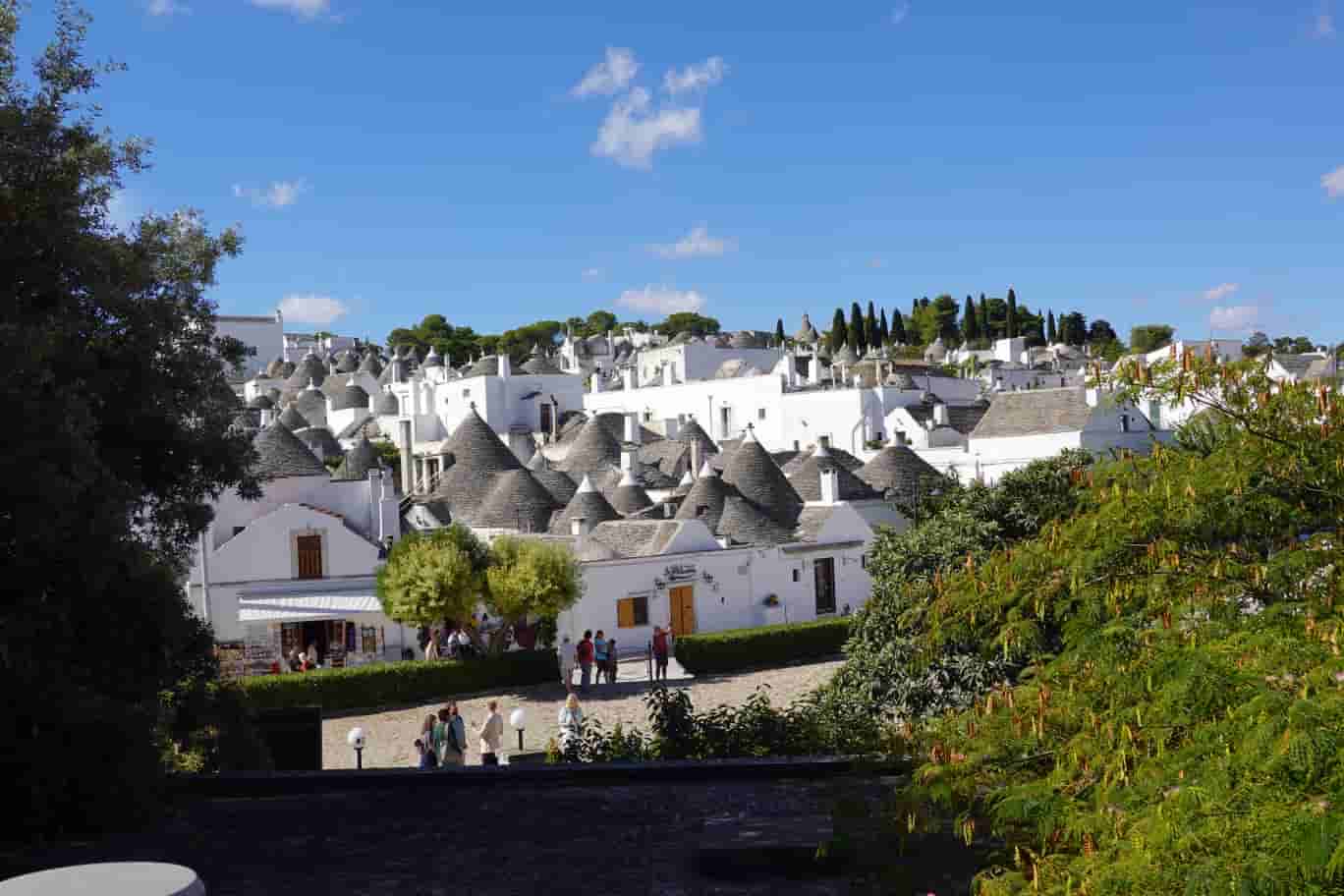
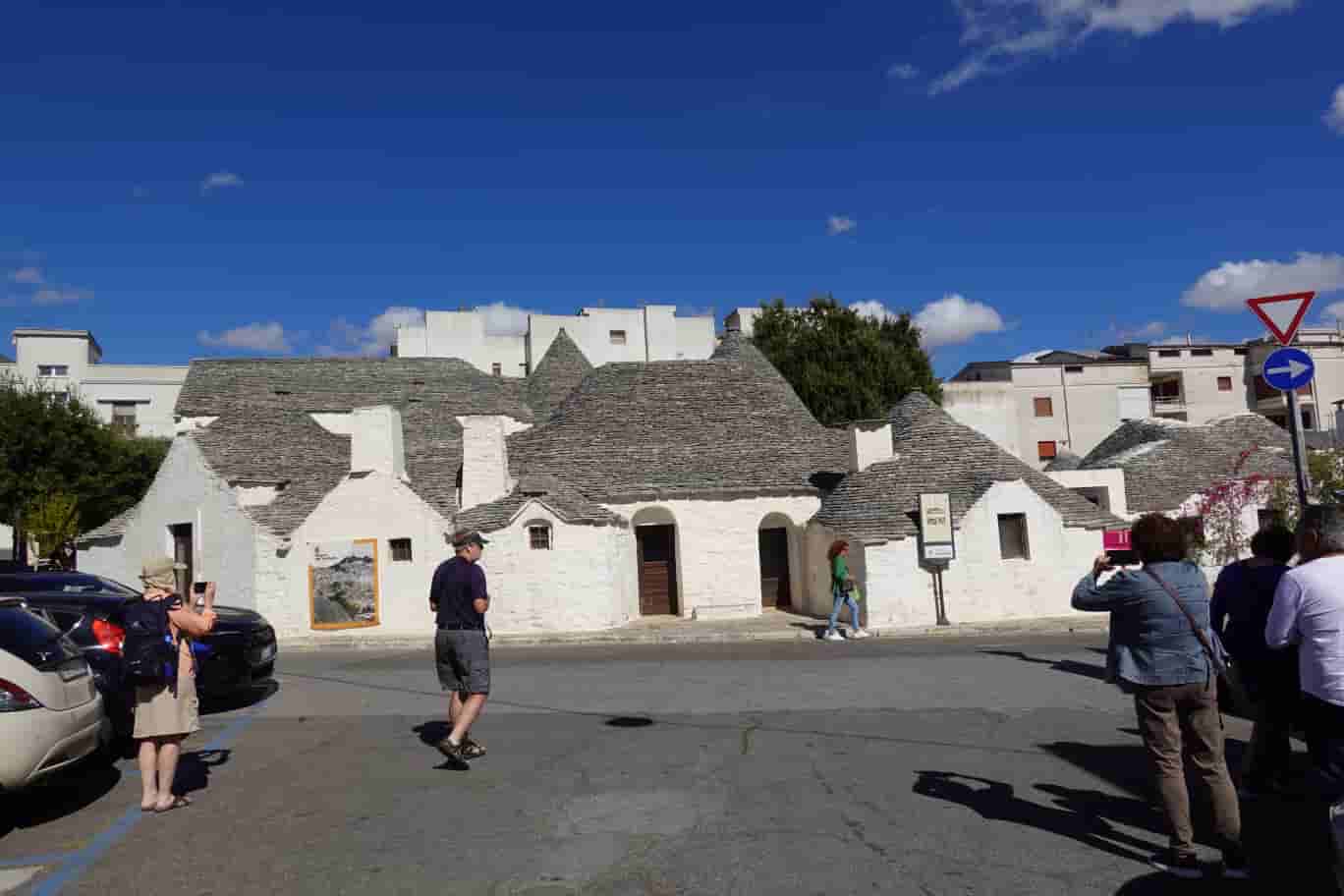
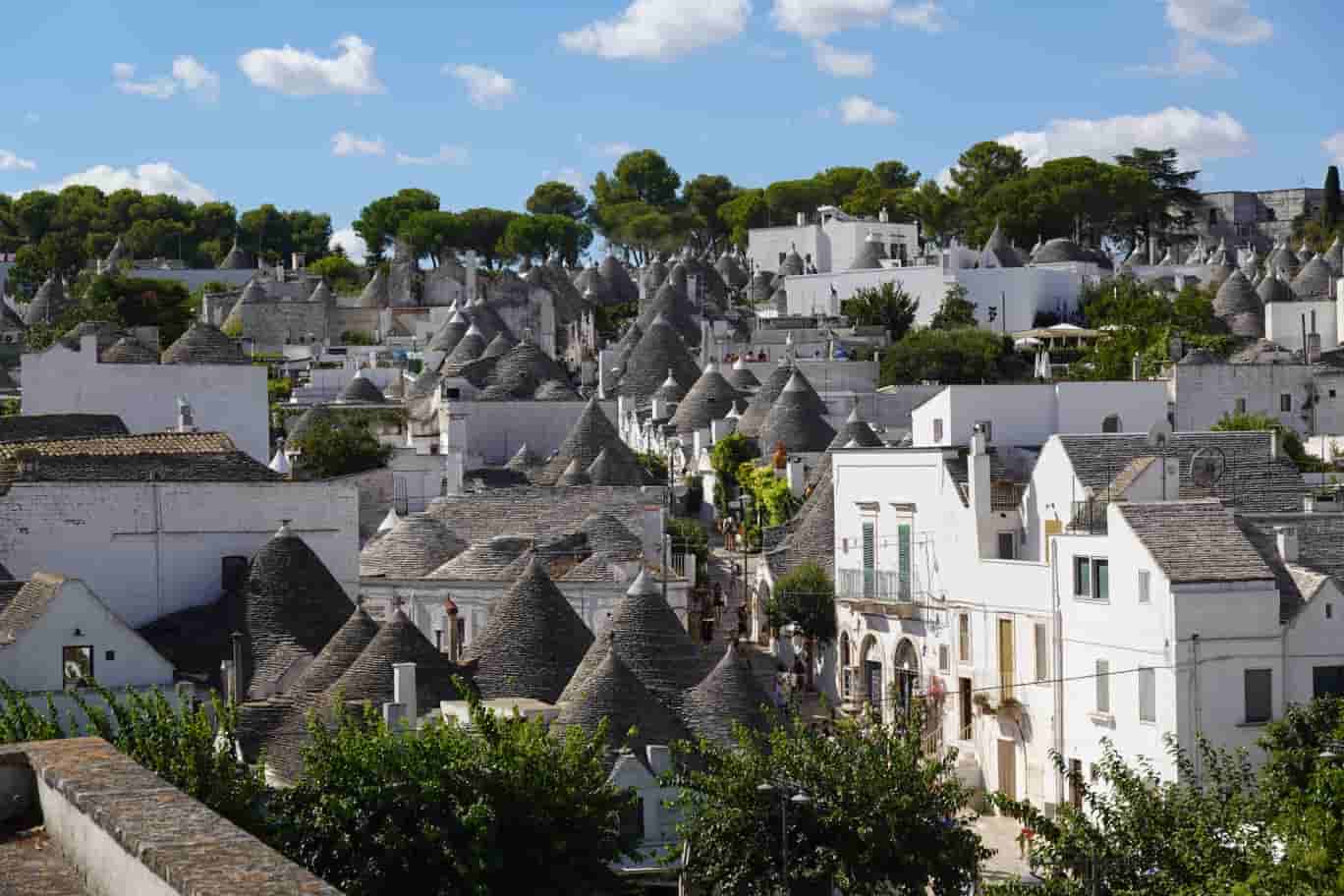
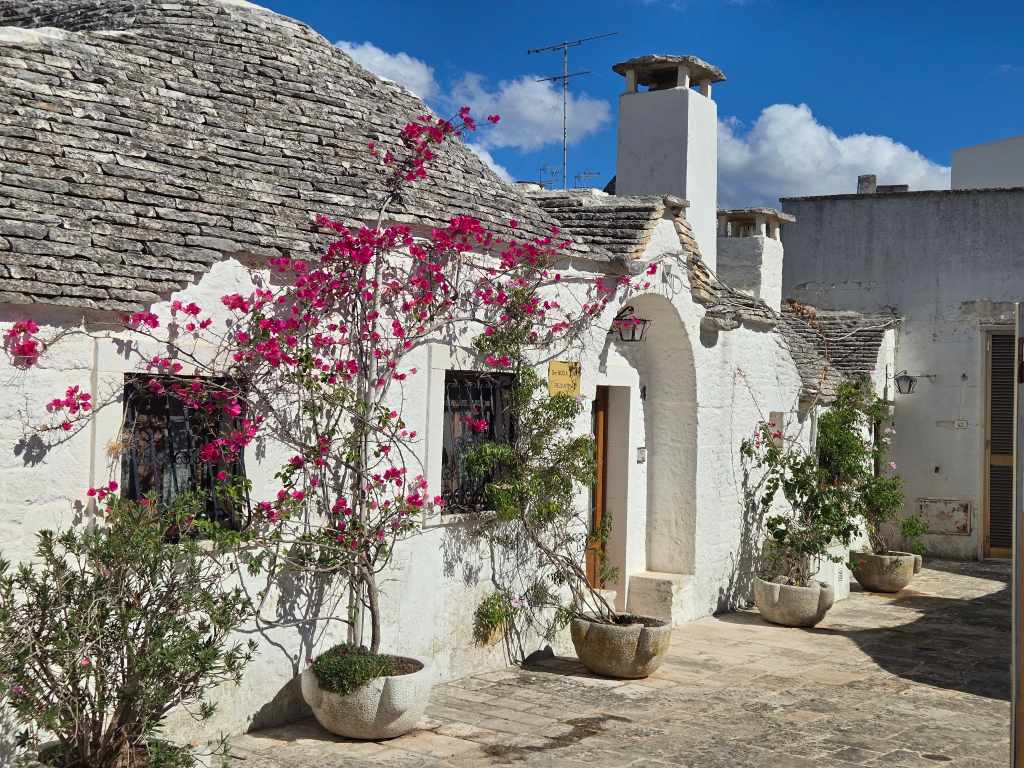
After about an hour’s ride, during which we crossed into Puglia. Our first stop was Alberobello, a charming town known for its more than 1,600 conical-roofed, dry-stone dwellings called trulli. It is another UNESCO World Heritage Site. Alberobello means “beautiful tree.”
The history of the trulli is linked to an edict of the 15th-century Kingdom of Naples that subjected every new settlement to a tax. In 1481, the owners of Alberobello required residents to build their dwellings without mortar so they could be considered precarious structures and easily demolished, thereby avoiding the tax. Although the houses were considered precarious buildings, they have lasted for centuries.
Having to use only stones found in the soil, the peasants found that the round form with a self-supporting domed roof was the simplest configuration. The walls and roofs are constructed from locally gathered limestone, with the roof made from overlapping slabs of stone. The roofs were embellished with decorative pinnacles, which supposedly represented the signature of the builder. Each peak represents a room.
We went inside one, and it was essentially open concept, with one area for a kitchen, one for a living room, and one for a bedroom. The kids slept above the living room in the “cone,” or attic.
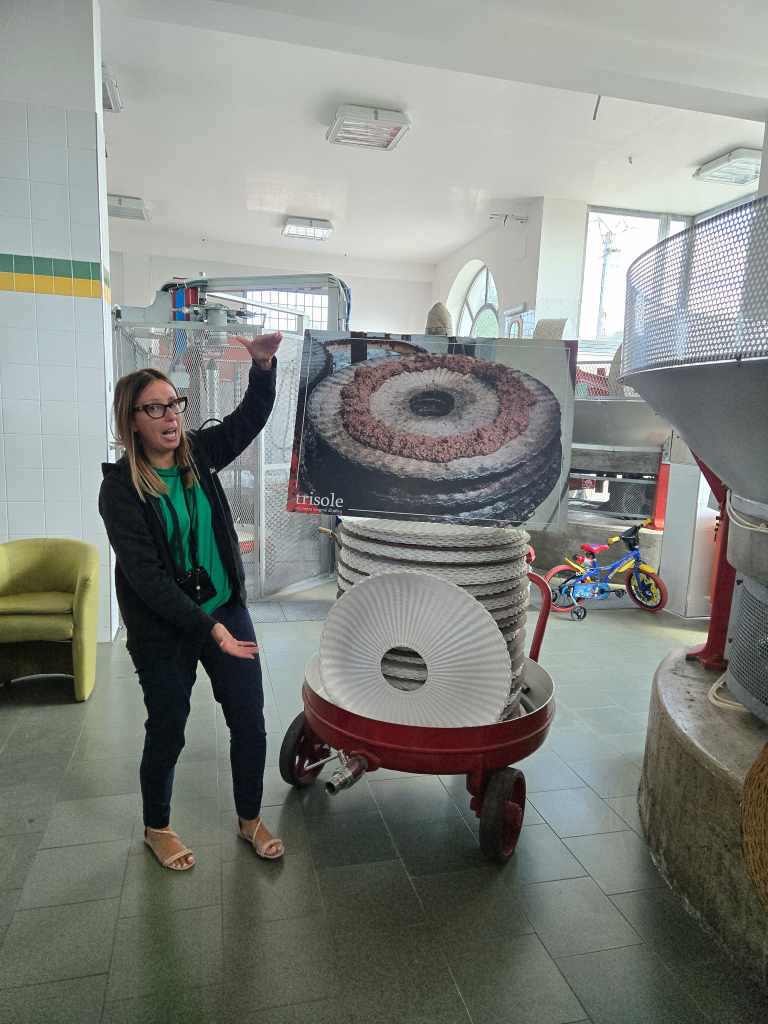
After walking around for about an hour, we got back on the bus and went to Il Frantolio, an olive oil production site. They have approximately 6,000 olive trees, which they harvest from October to January.
They have two processes for making the oil. The first is the traditional method, in which they crush/mill the whole olive, including the pit, within 12 hours of picking the olives. The very first oil from the milling process is considered especially prized. The resulting olive paste is then pressed to extract a mixture of water and oil. The water (80%) is removed and the oil (20%) packaged
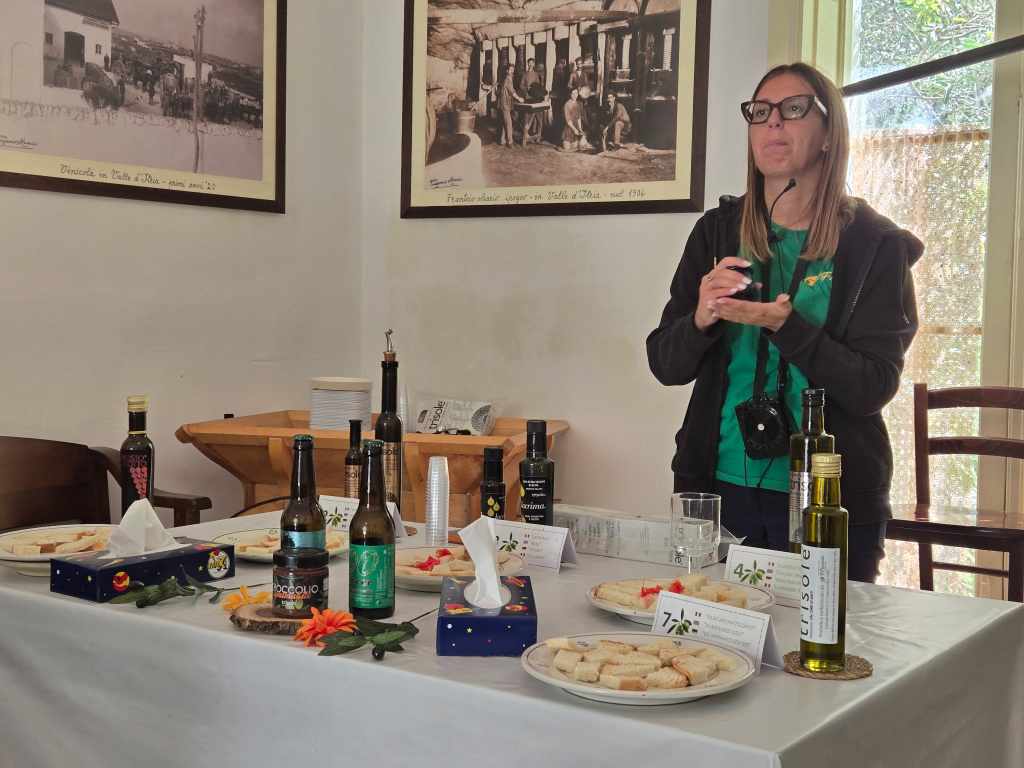
In the second method, a machine separates the pulp from the pit, and the resulting olive paste is used to make the oil. One method isn’t necessarily better than the other, but the olive oil flavor is very different. After the tour, we did some tasting, and I liked the Method 2 olive oil much better because it was less bitter.
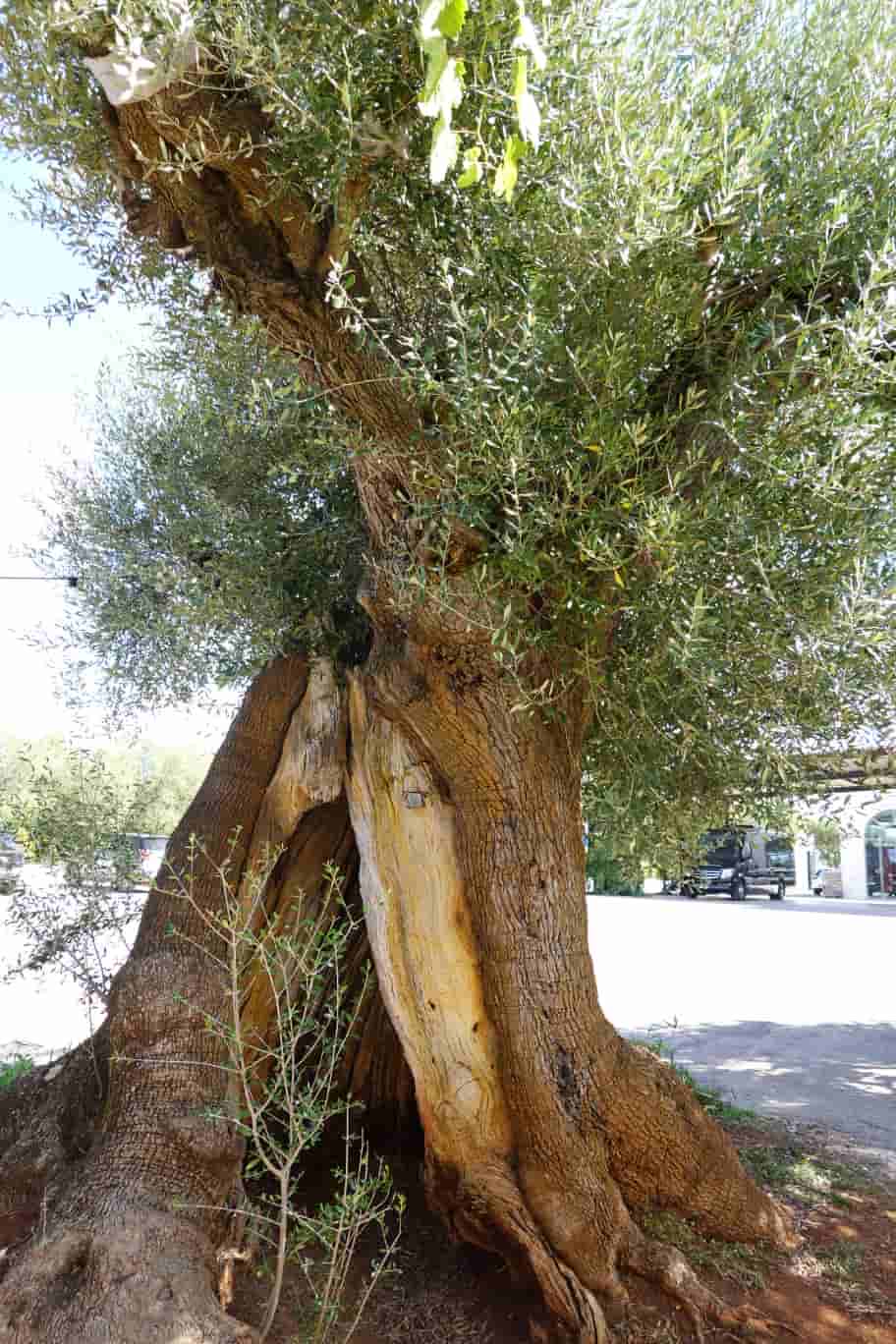
At the olive farm, we saw a tree that was about 1,000 years old. Apparently, olive trees can live as long as 5,000 years. Crazy, right?
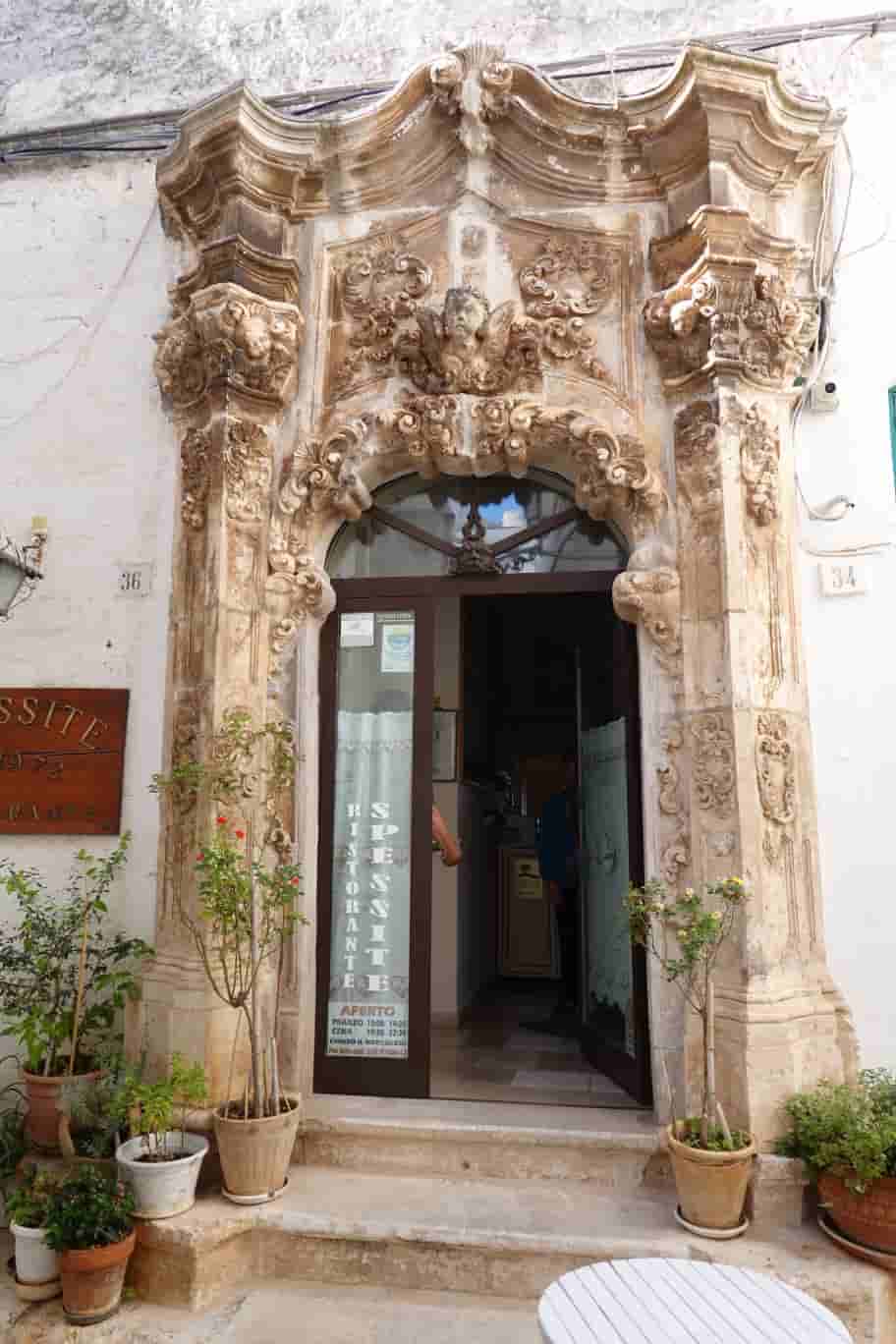
Next stop: lunch in Ostuni. It consisted of vegetable appetizers, which I ate and enjoyed (!), and the main dish was orecchiette pasta with turnip tops. Here’s a picture of the amazingly curved facade of the restaurant.
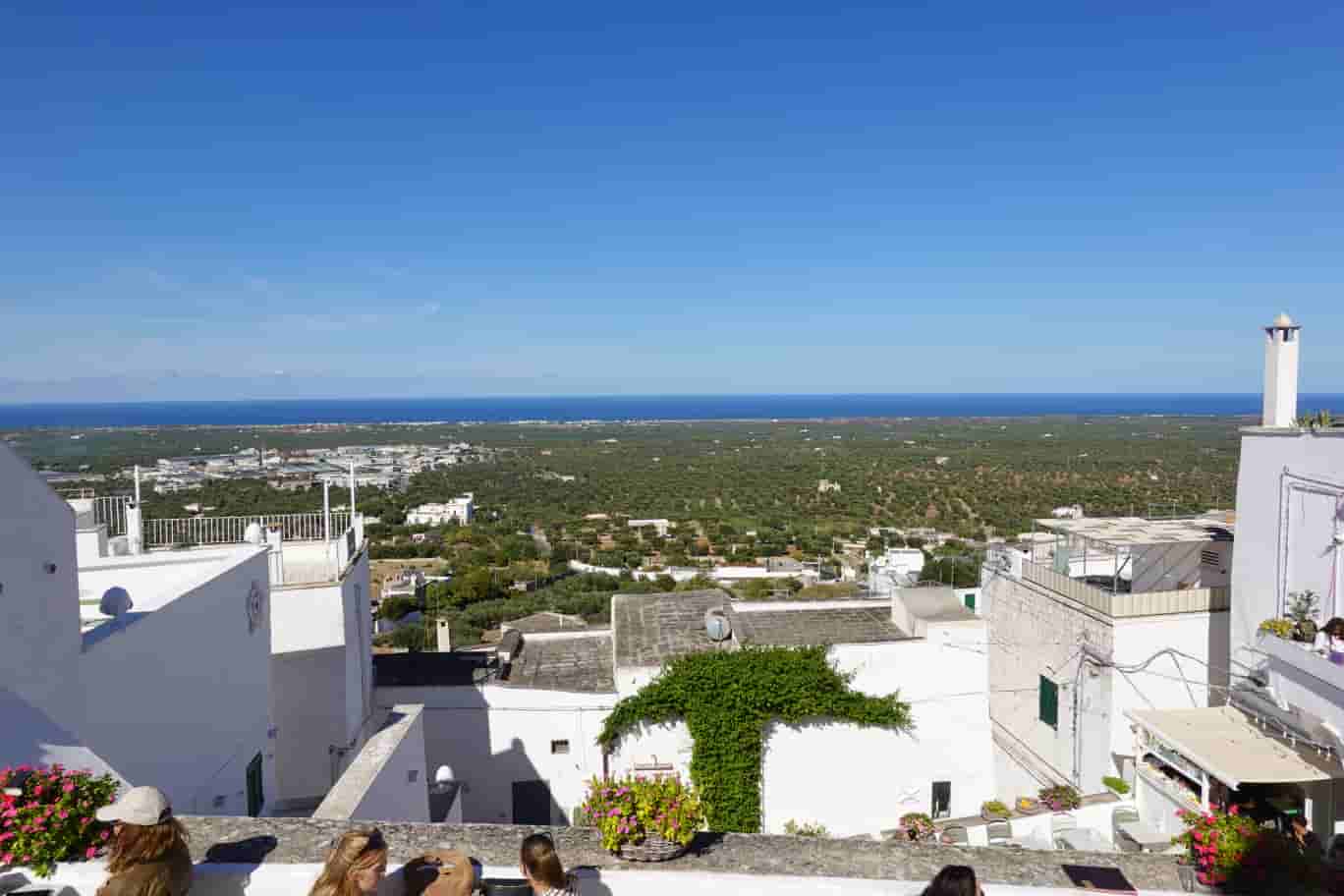
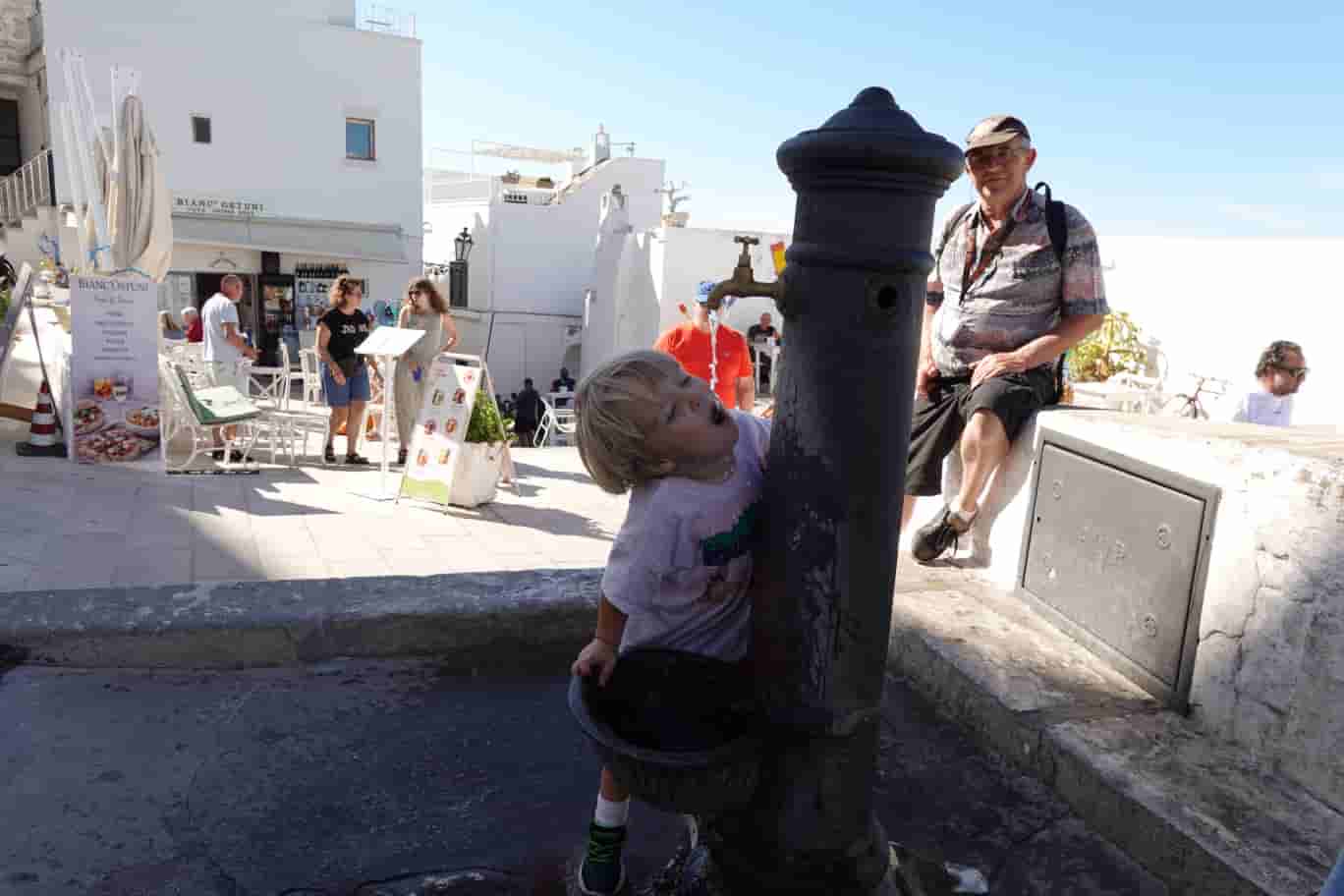
Here are some pictures of Ostuni, taken on our way back to the van.
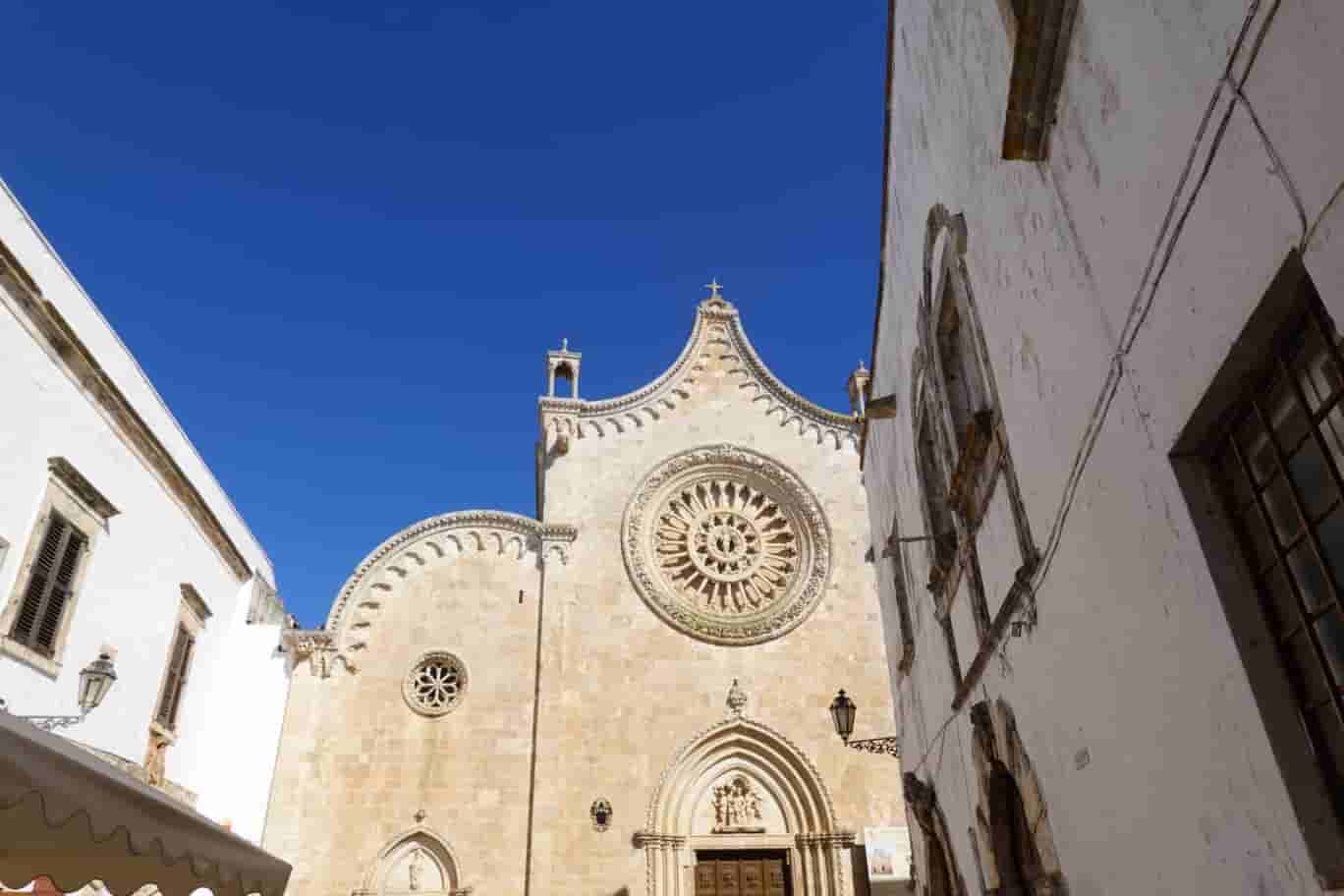
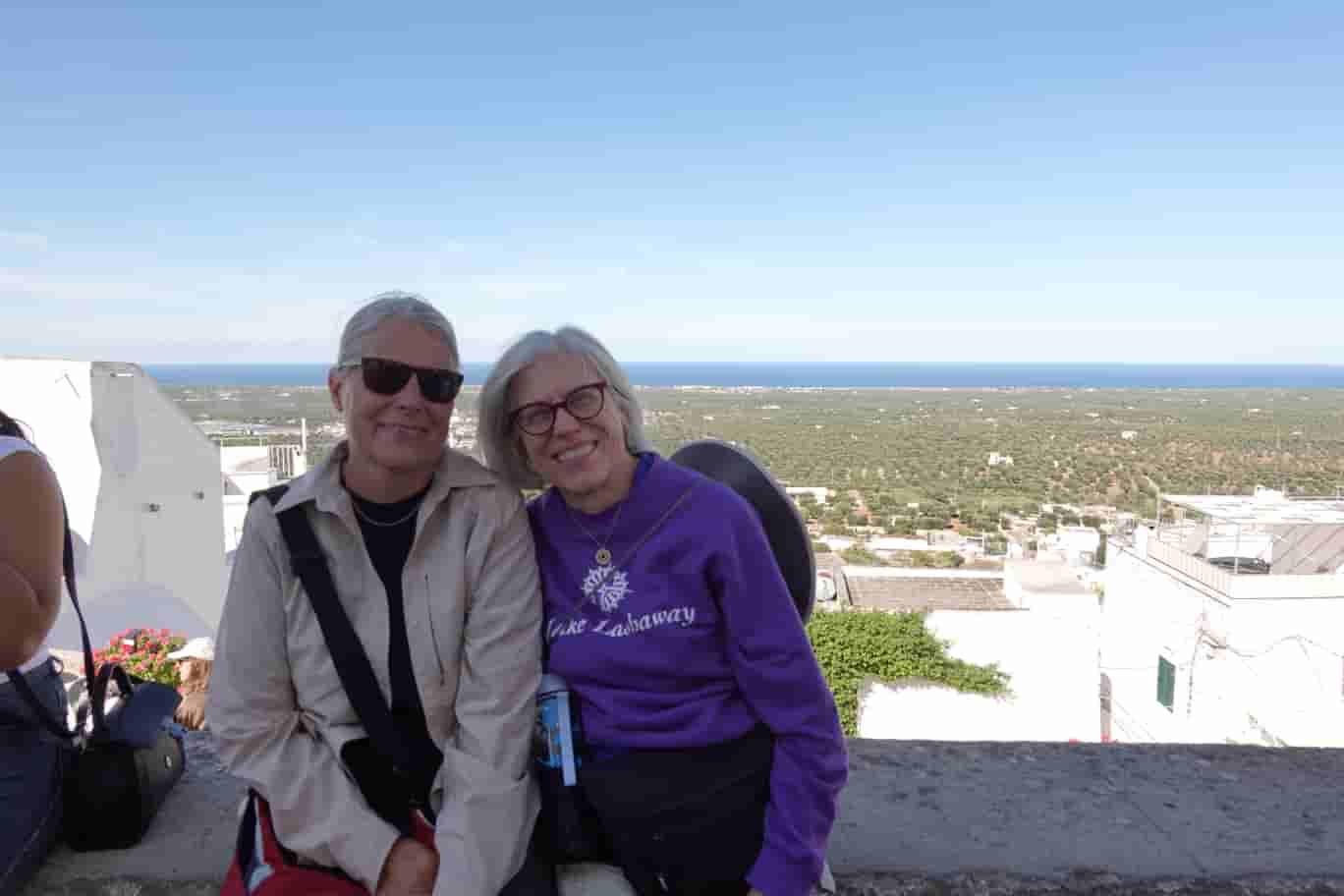
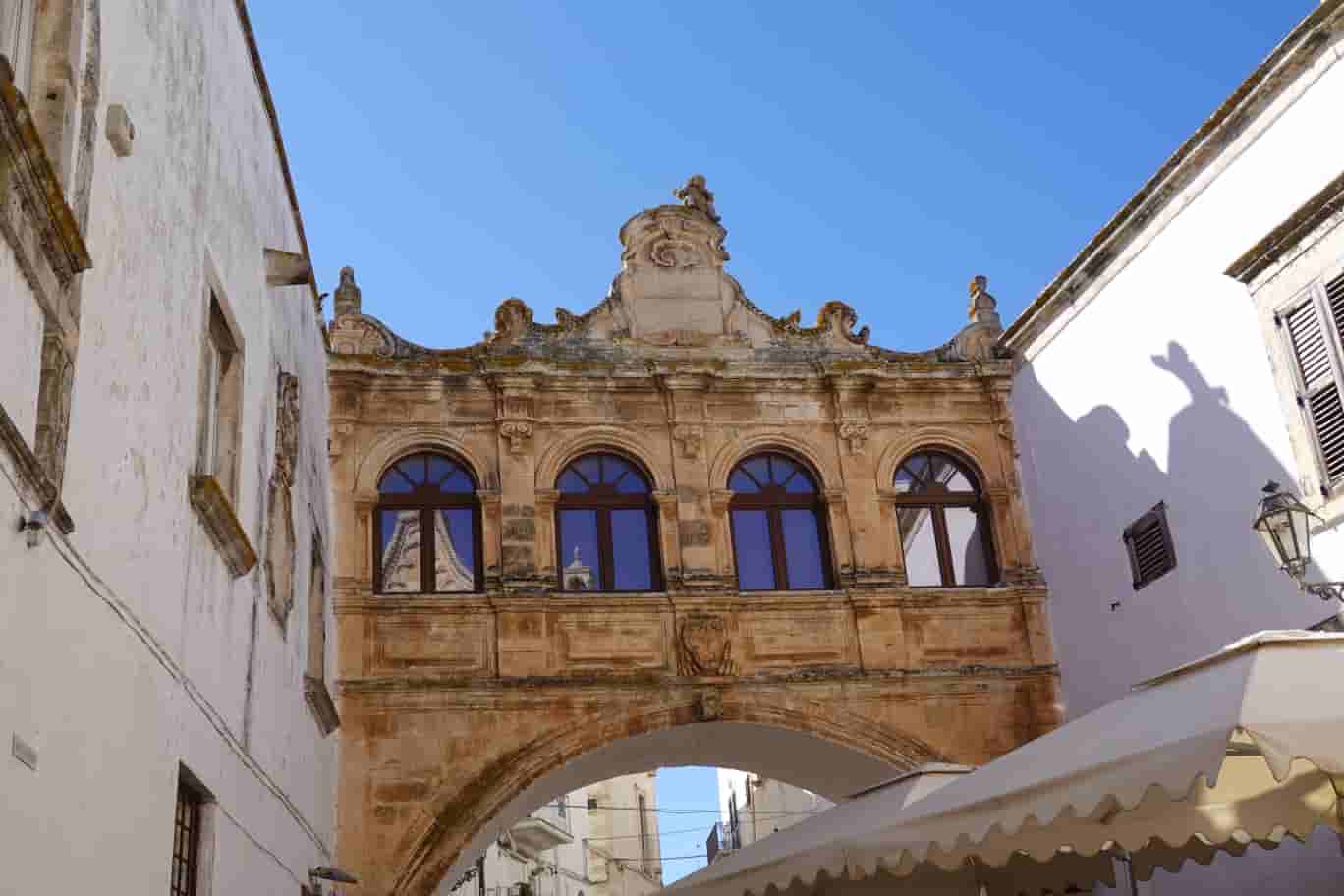
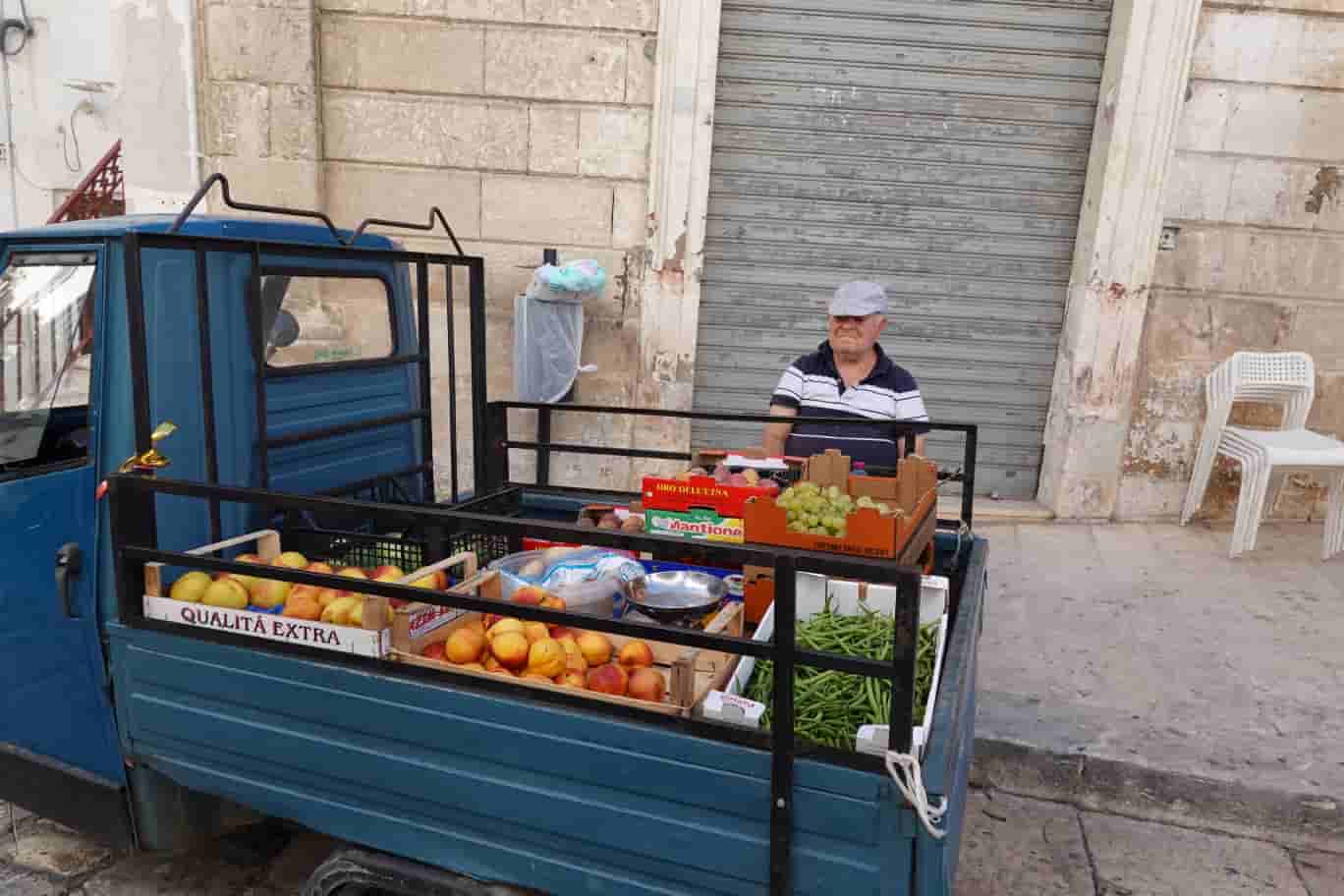
Back into the van, and about an hour later we were in Lecce, our new home away from home. Throughout the ride, we saw lots of wind turbines.
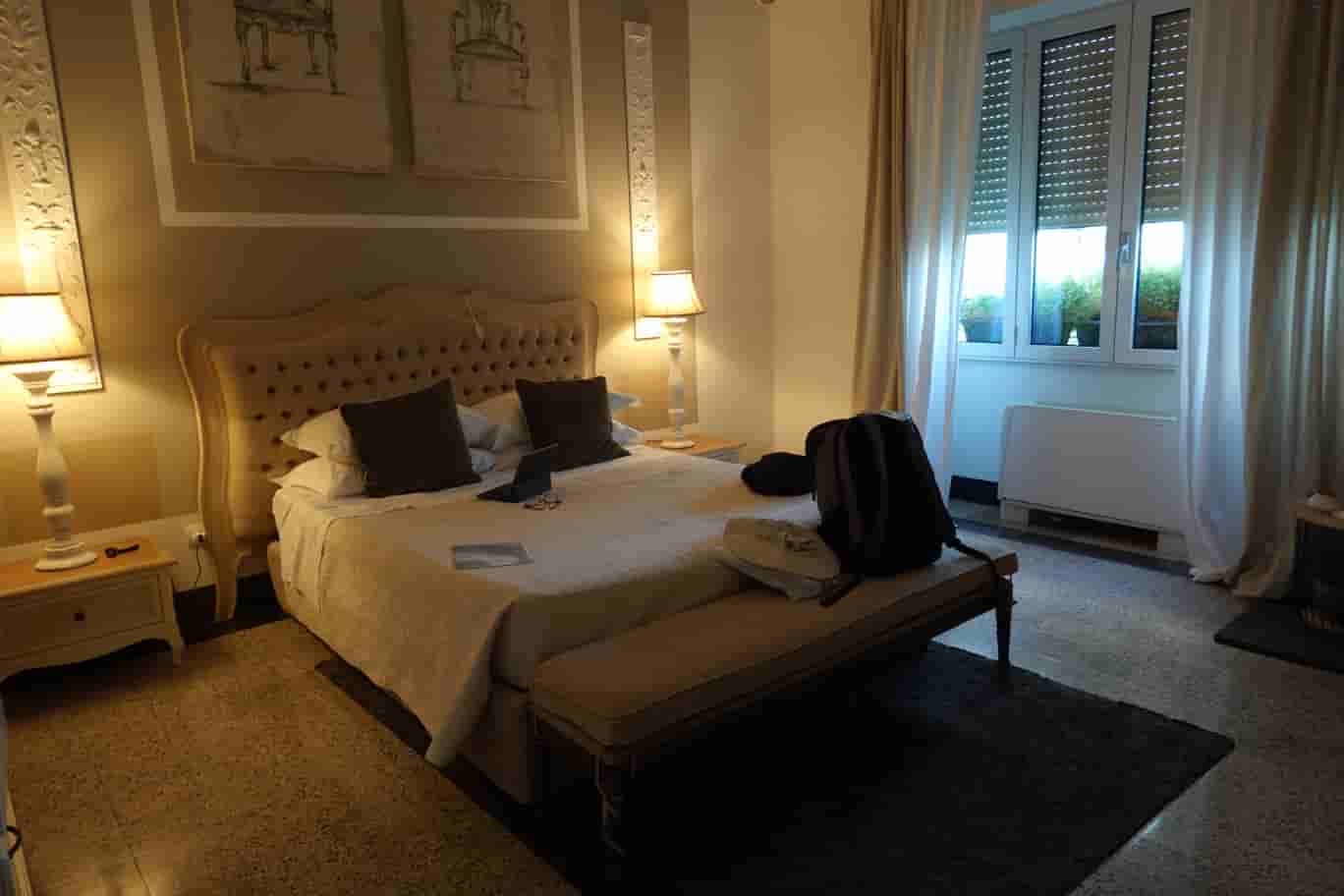
Our hotel in Lecce is very cute. Here’s a picture of my room.
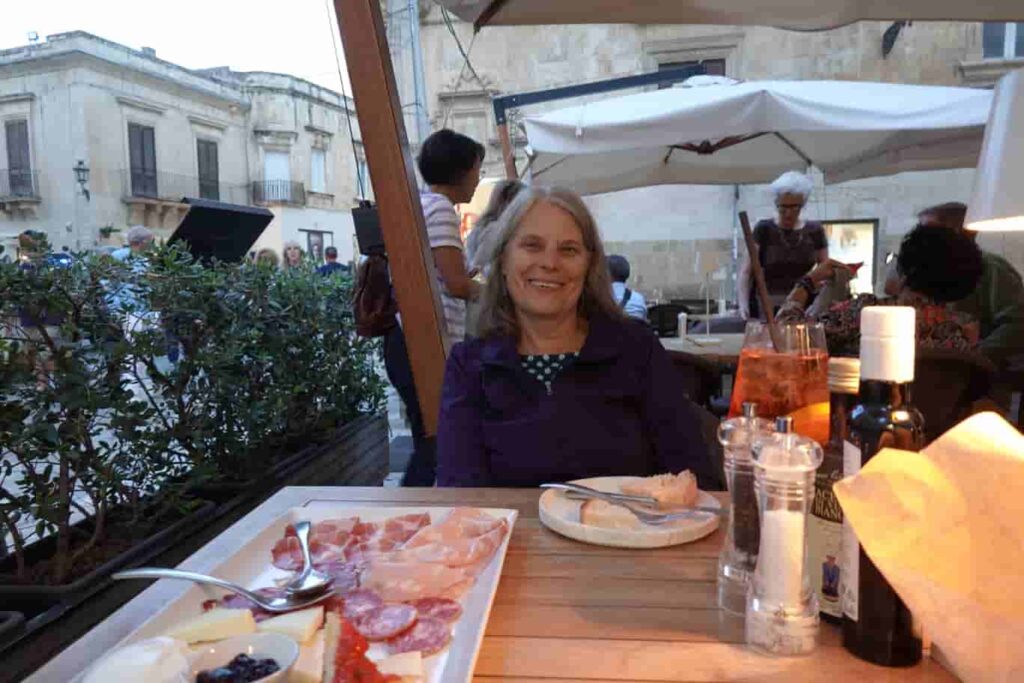
Tonight was dinner on our own, so Anne and I ventured into town. Italians eat dinner late, so we had a charcuterie board and spritzes. We were going to get a piece of cake to share for dessert, but the waiter said he’d be back in two minutes—and then we waited another half an hour. By that time, we didn’t want cake anymore, so we just paid the bill. Here are pictures from our evening.
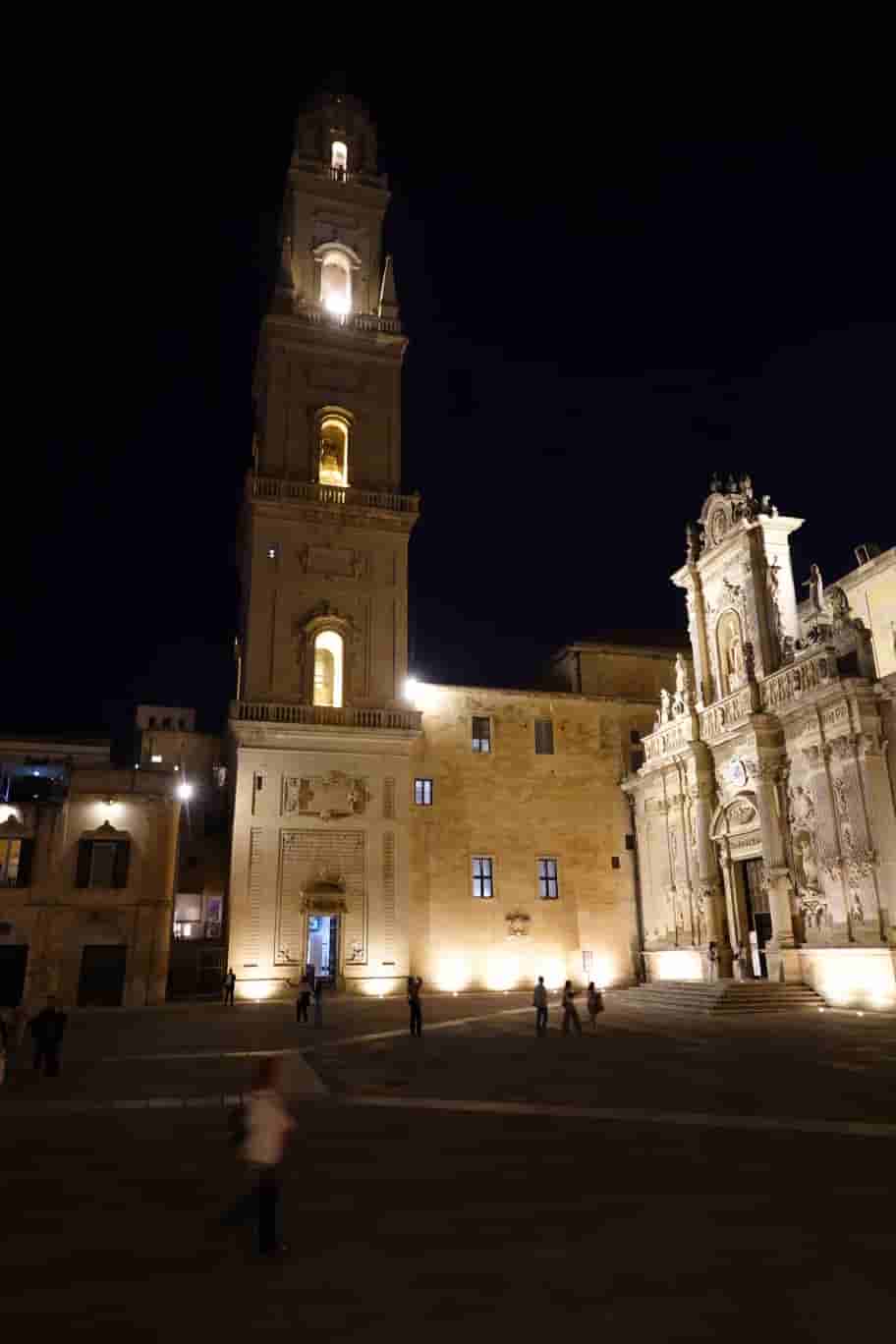
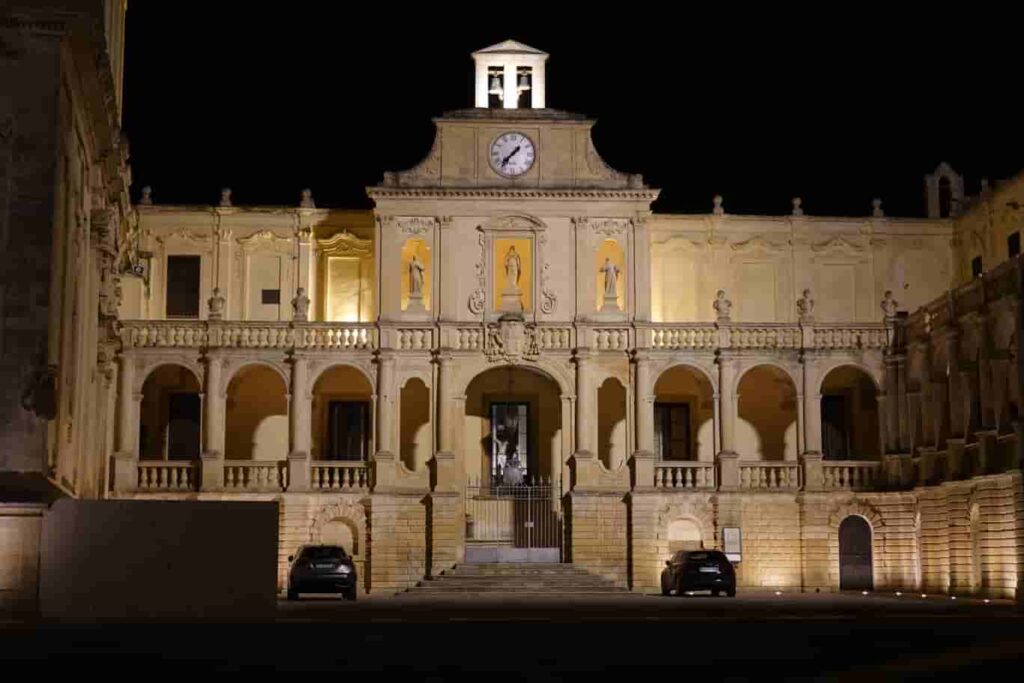
The restaurant was on a busy street, so we peeked into a shop or two on the way back to the hotel. It will be another relatively early night.