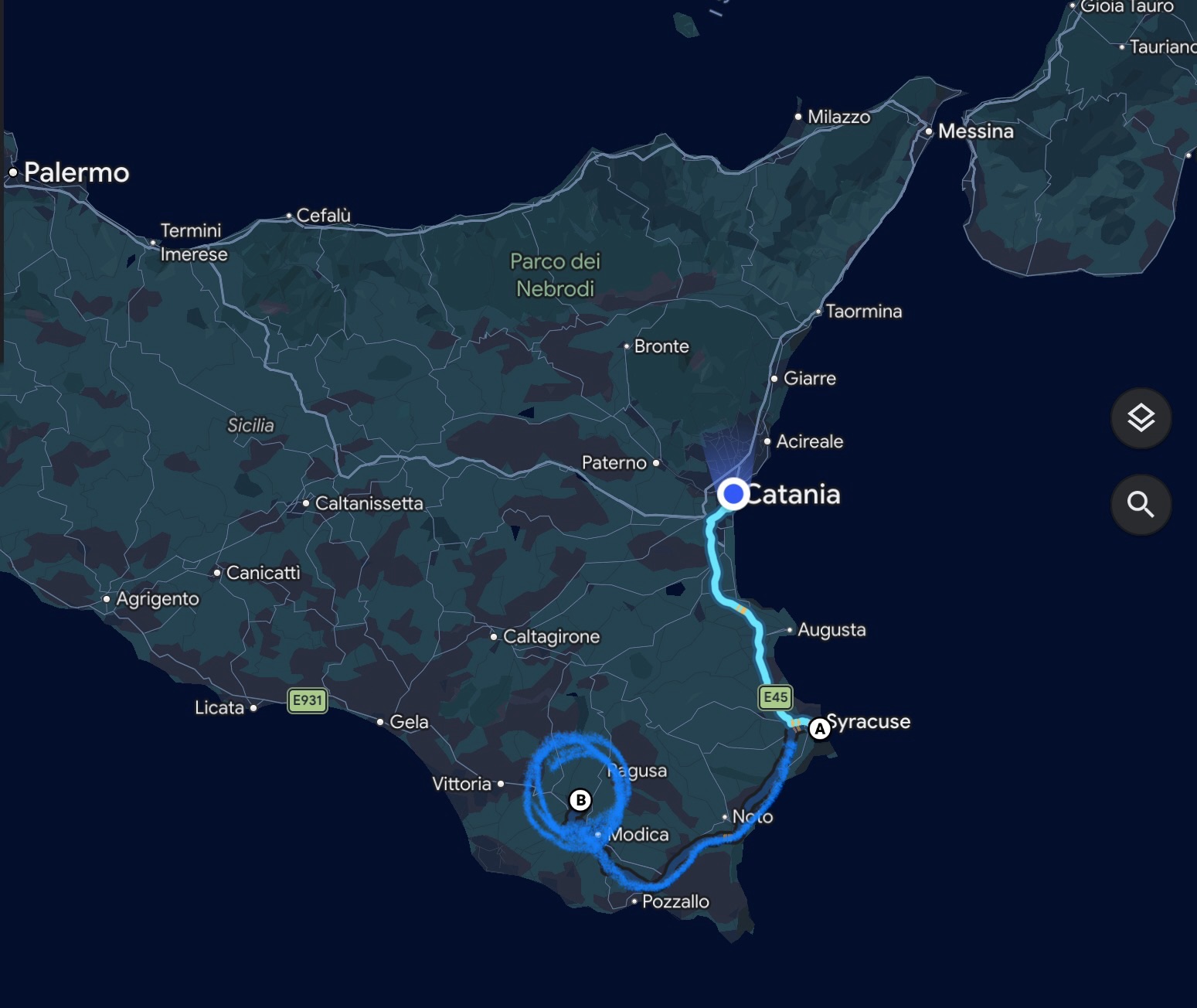
I was sad to leave Ragusa this morning. It’s such a nice, low-key town without a lot of tourists. But the road leads onward, and our next stop was Catania.
We left the hotel at 8:30, and on the bus to Siracusa, Nico told us about Sicily during World War II, including Operation Husky, the Allied invasion of Sicily, Operation Mincemeat, and Italy’s eventual surrender. It was a lot of history for the morning, but it helped put Sicily’s role in the war into perspective.
After about an hour and a half, we arrived in Siracusa. Siracusa was one of the most powerful cities in the ancient Mediterranean and is the birthplace of the famous mathematician Archimedes. It is also, of course, another UNESCO World Heritage Site. At this point, Anne wondered whether you could put a map of Sicily on the wall, throw a dart at it, and actually hit a place that isn’t a UNESCO World Heritage Site.
We had a walking tour of Ortigia, a small island just off the coast and the historic heart of Siracusa. The island was settled by the ancient Greeks in the 8th century BC and became the center of the powerful Greek city of Syracuse.
The tour took about an hour and covered the major highlights. The weather was threatening rain and occasionally spitting on us, but fortunately it never became a real downpour.
We started at the Temple of Apollo, built in the 6th century BC and one of the earliest Greek temples built outside Greece. One unusual feature is that the columns were carved from single pieces of stone and placed unusually close together, apparently to make the structure more stable.
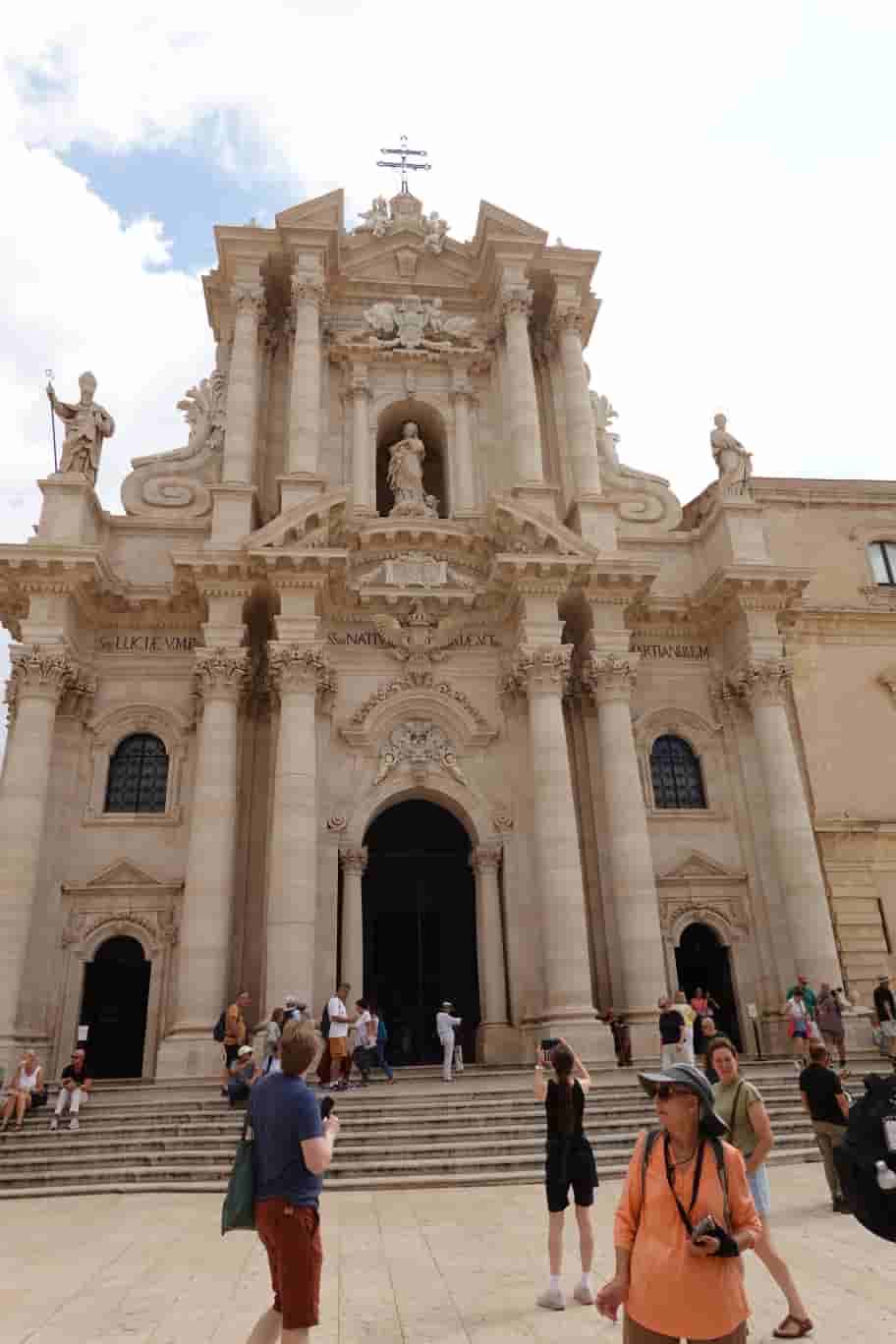
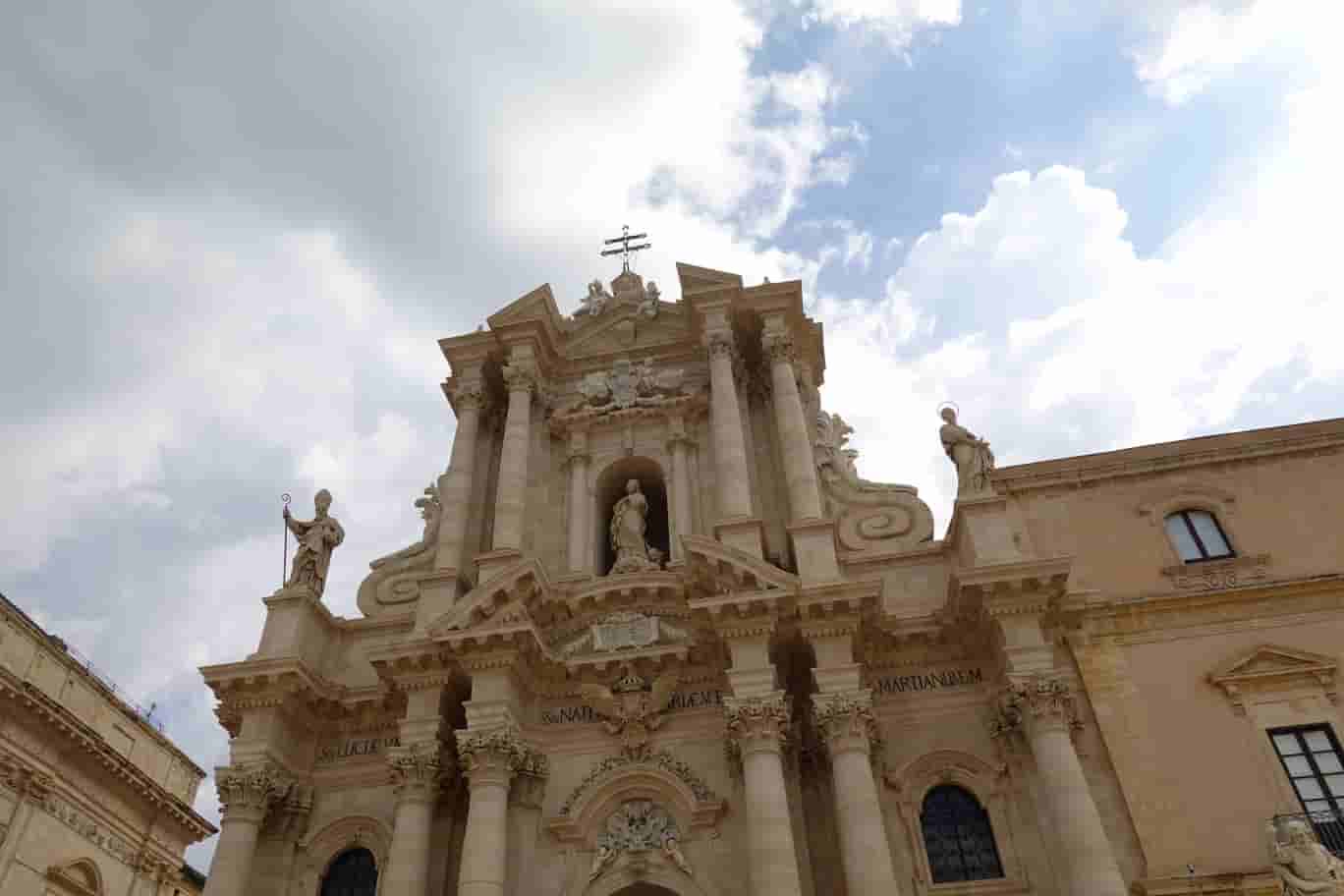
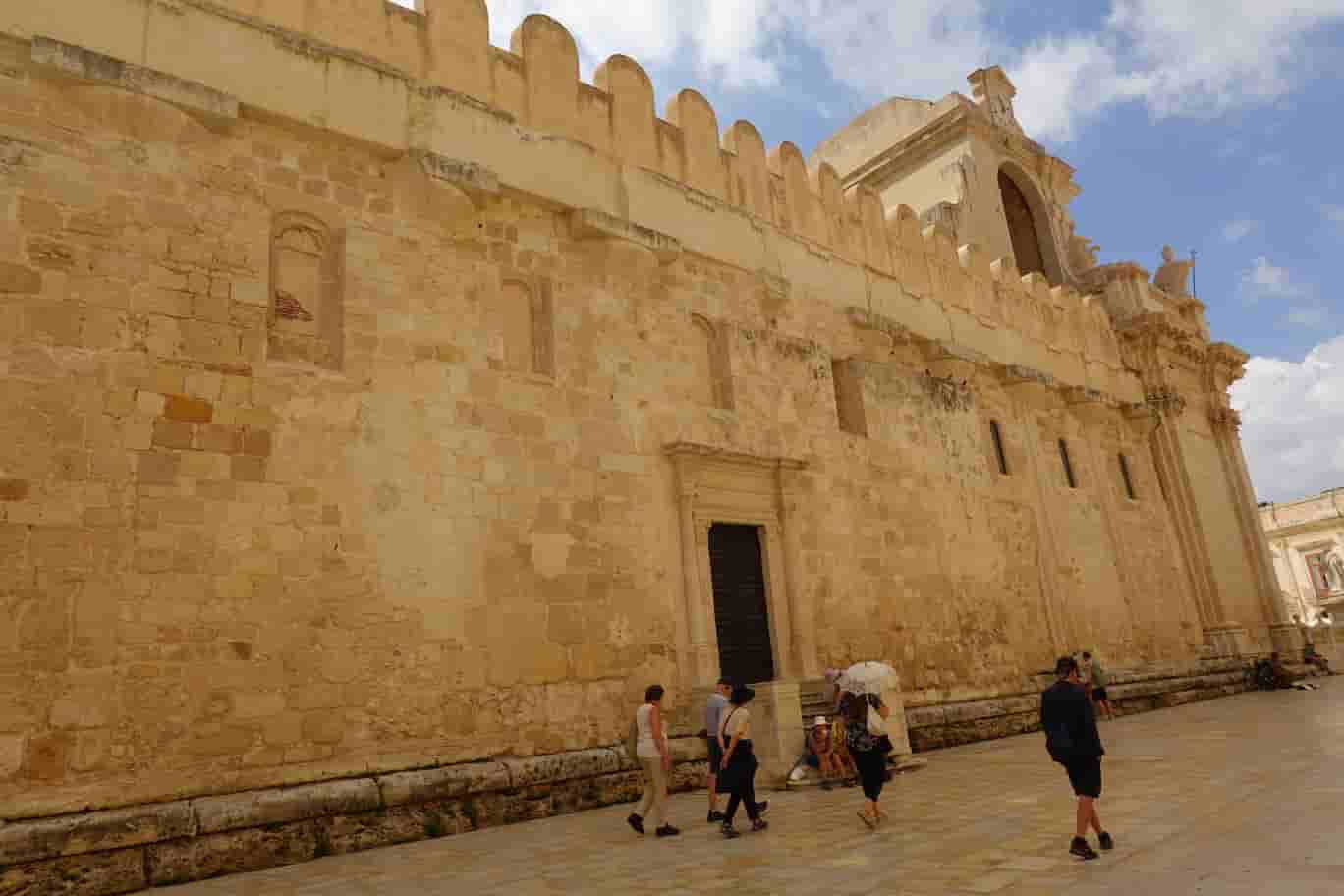
We then stopped at the Duomo, which began life as a Greek temple and went through several transformations before becoming a cathedral. You can still see the original Greek columns incorporated into the walls of the church, which makes for a remarkable combination of ancient and later architecture.
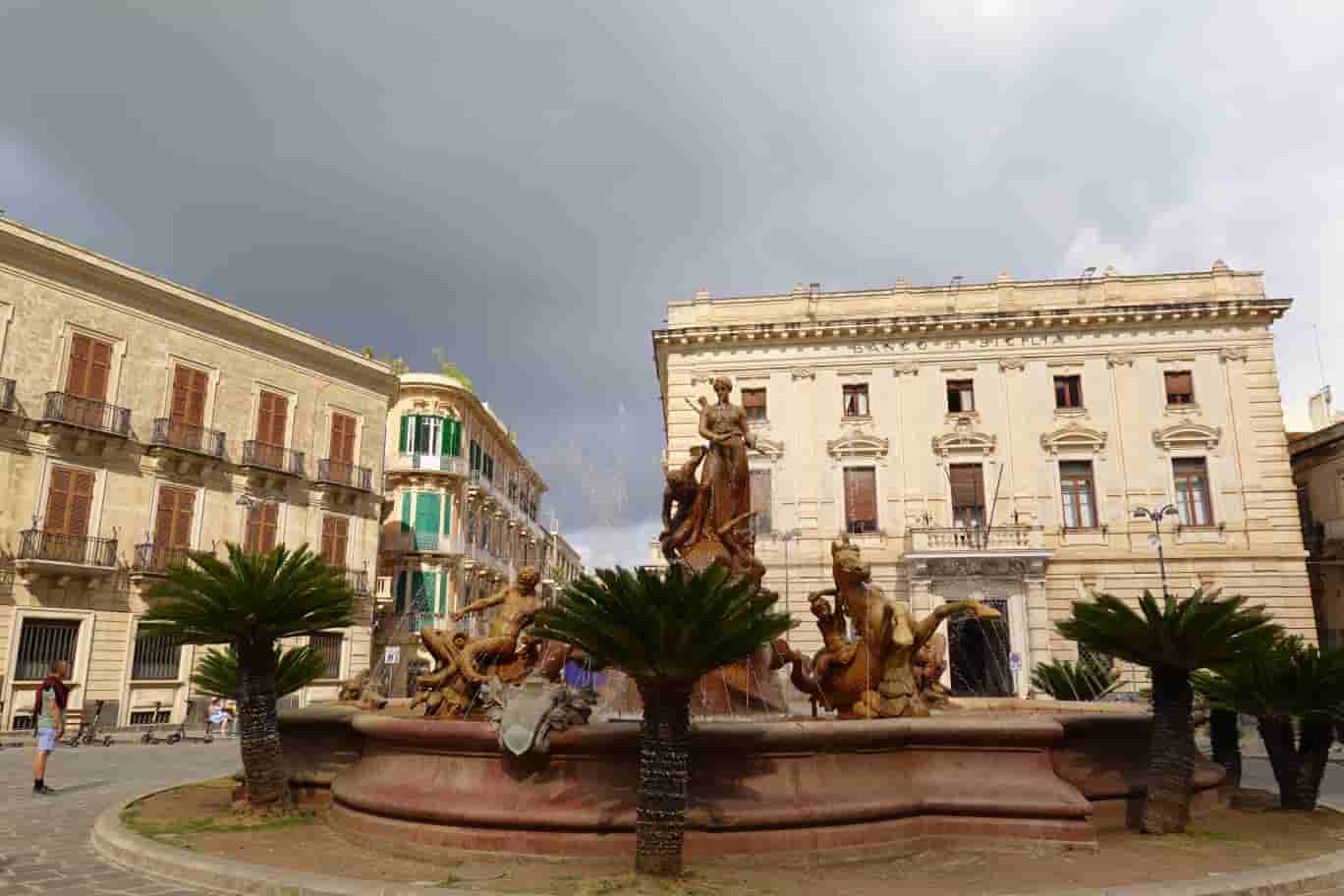
Our final stop was the Fountain of Arethusa, which comes from the Greek myth of the nymph Arethusa. According to the story, she was transformed into a freshwater spring while escaping the river god Alpheus. The fountain is also decorated with sculptures of Tritons riding sea monsters.
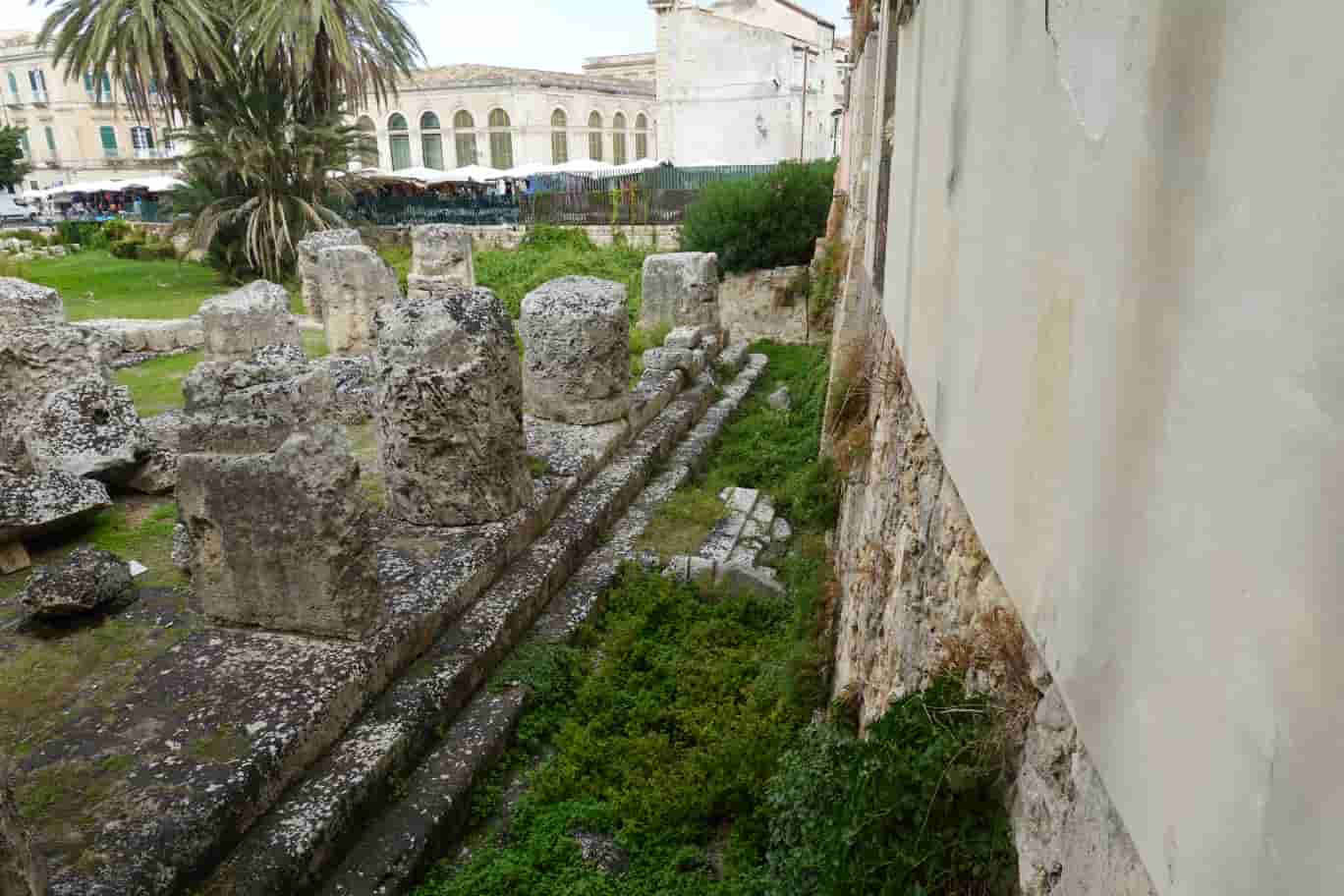
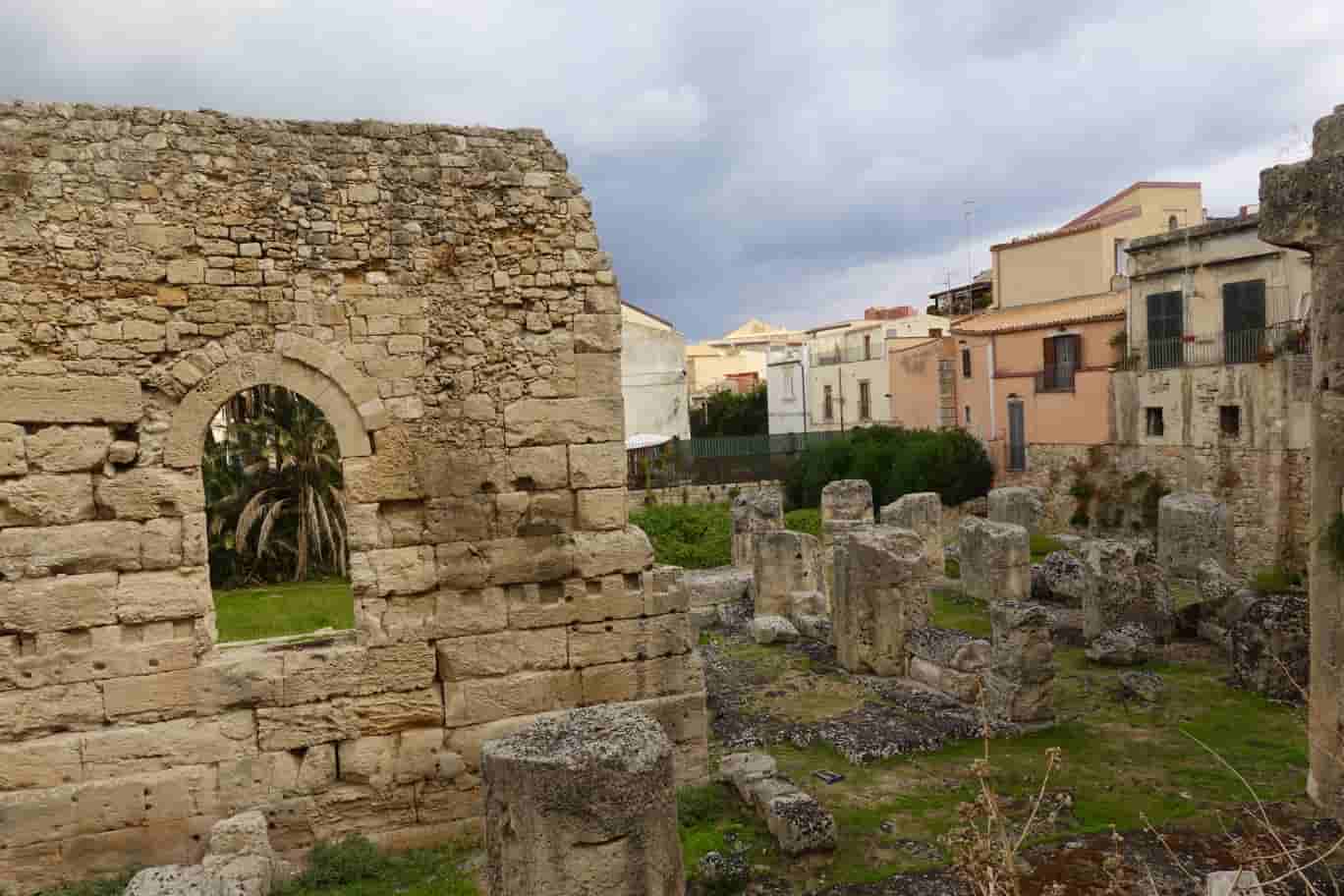
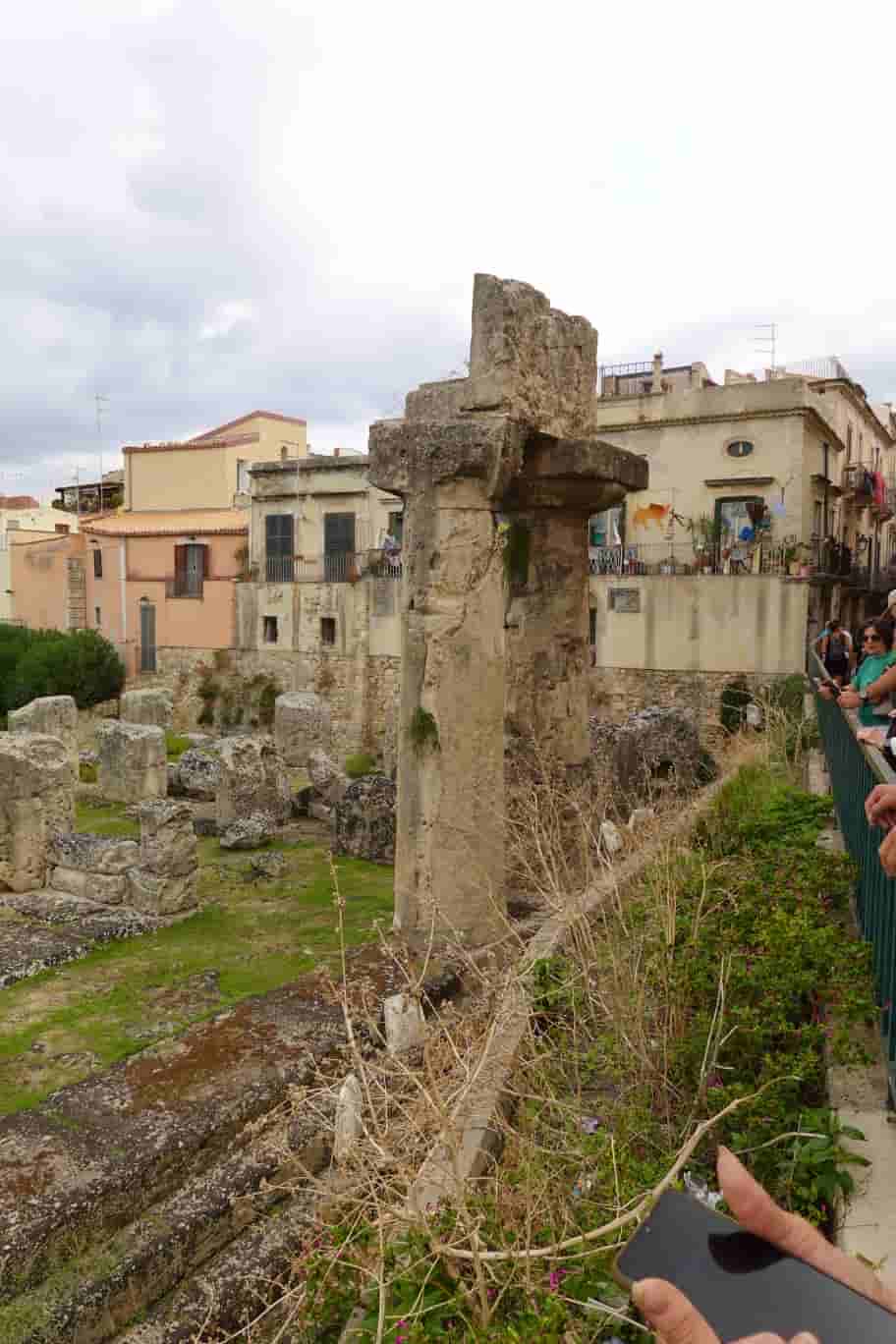
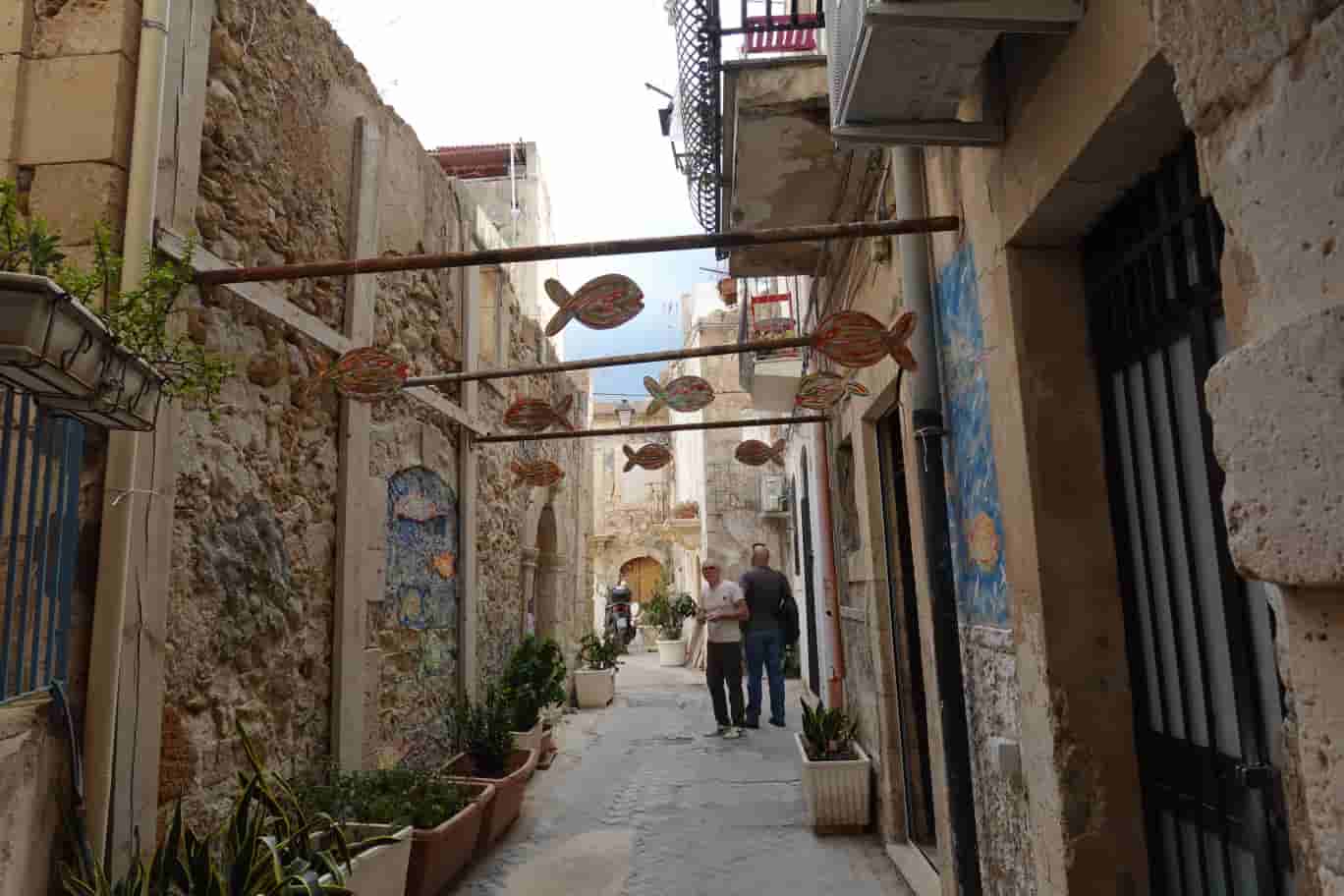
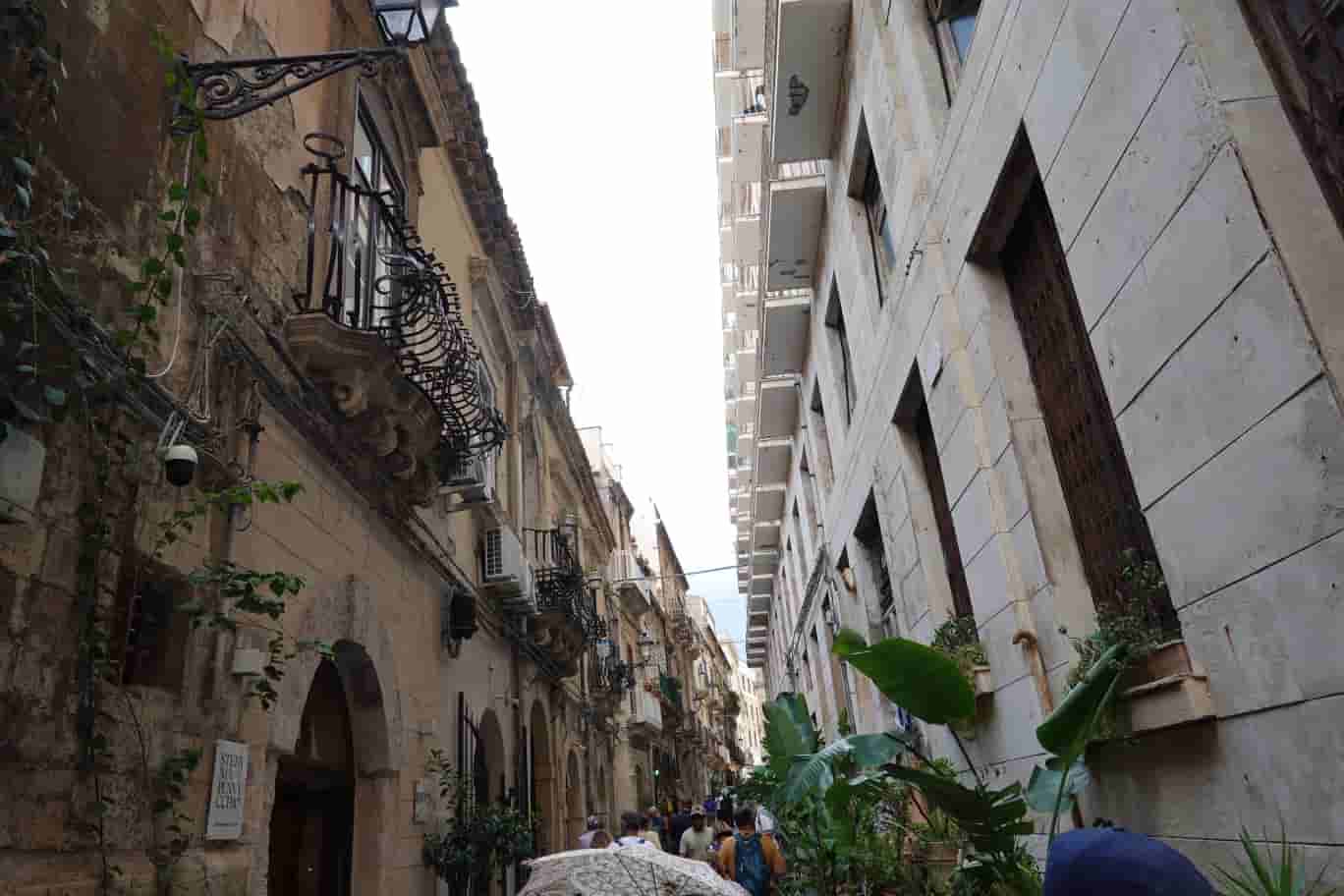
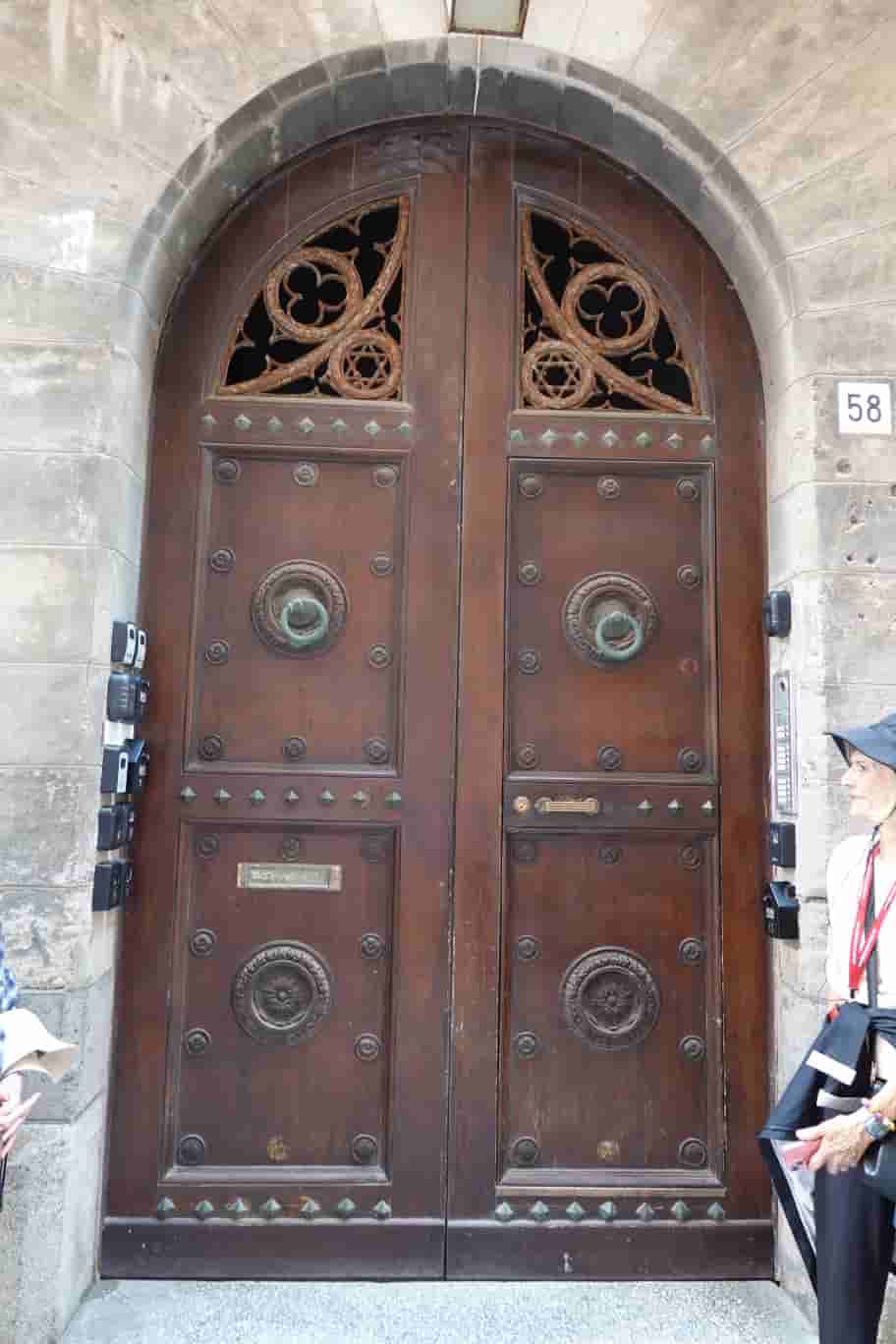
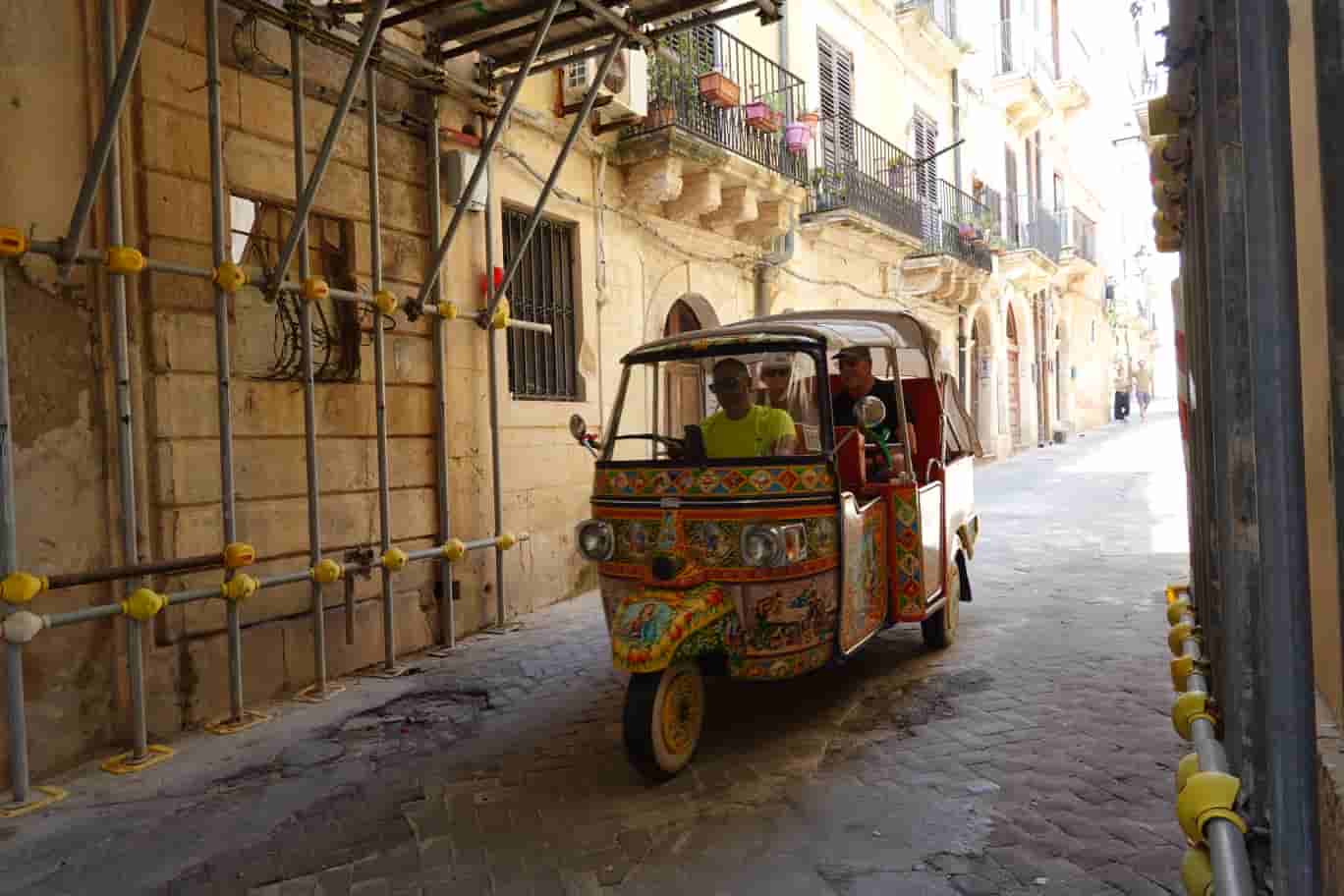
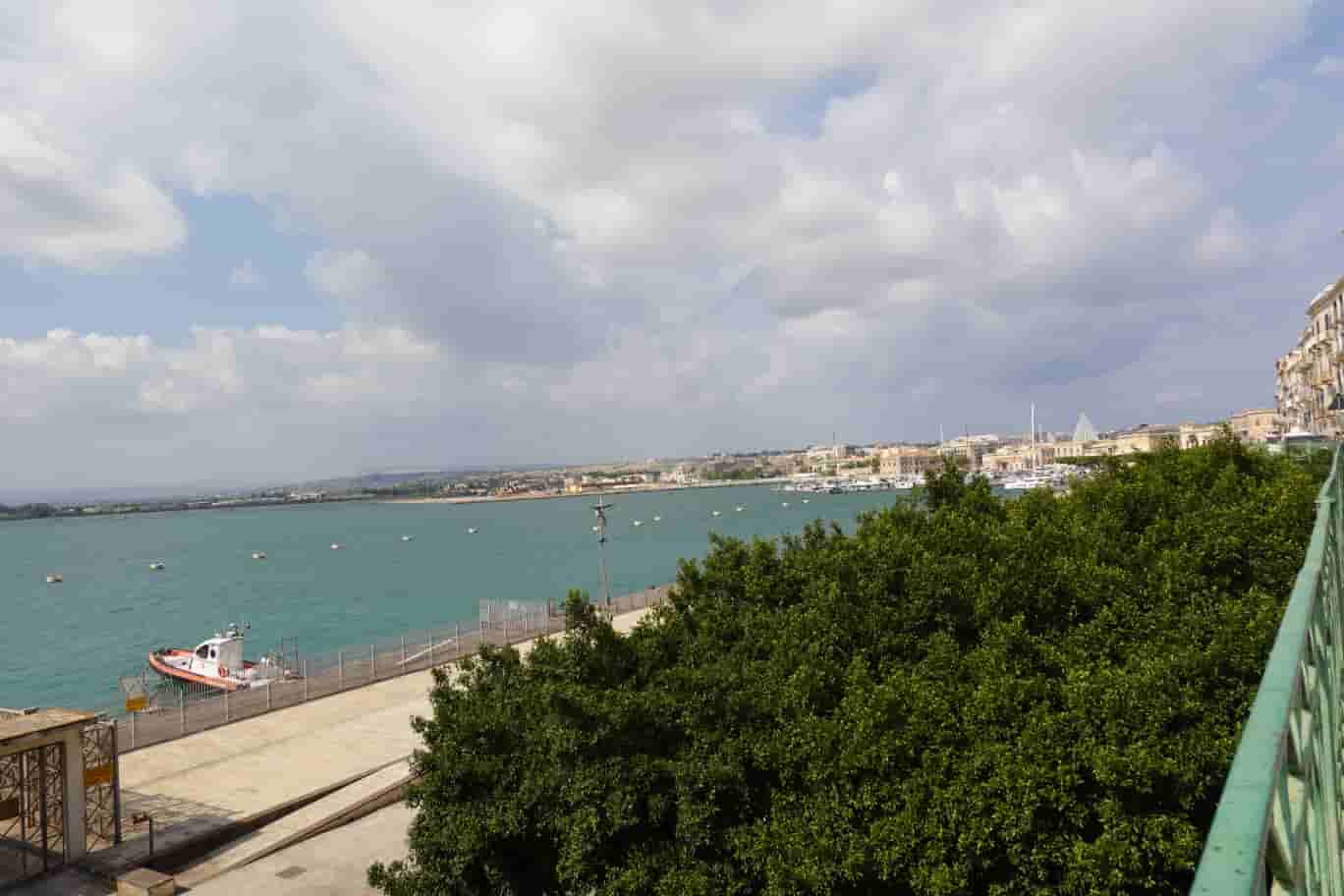
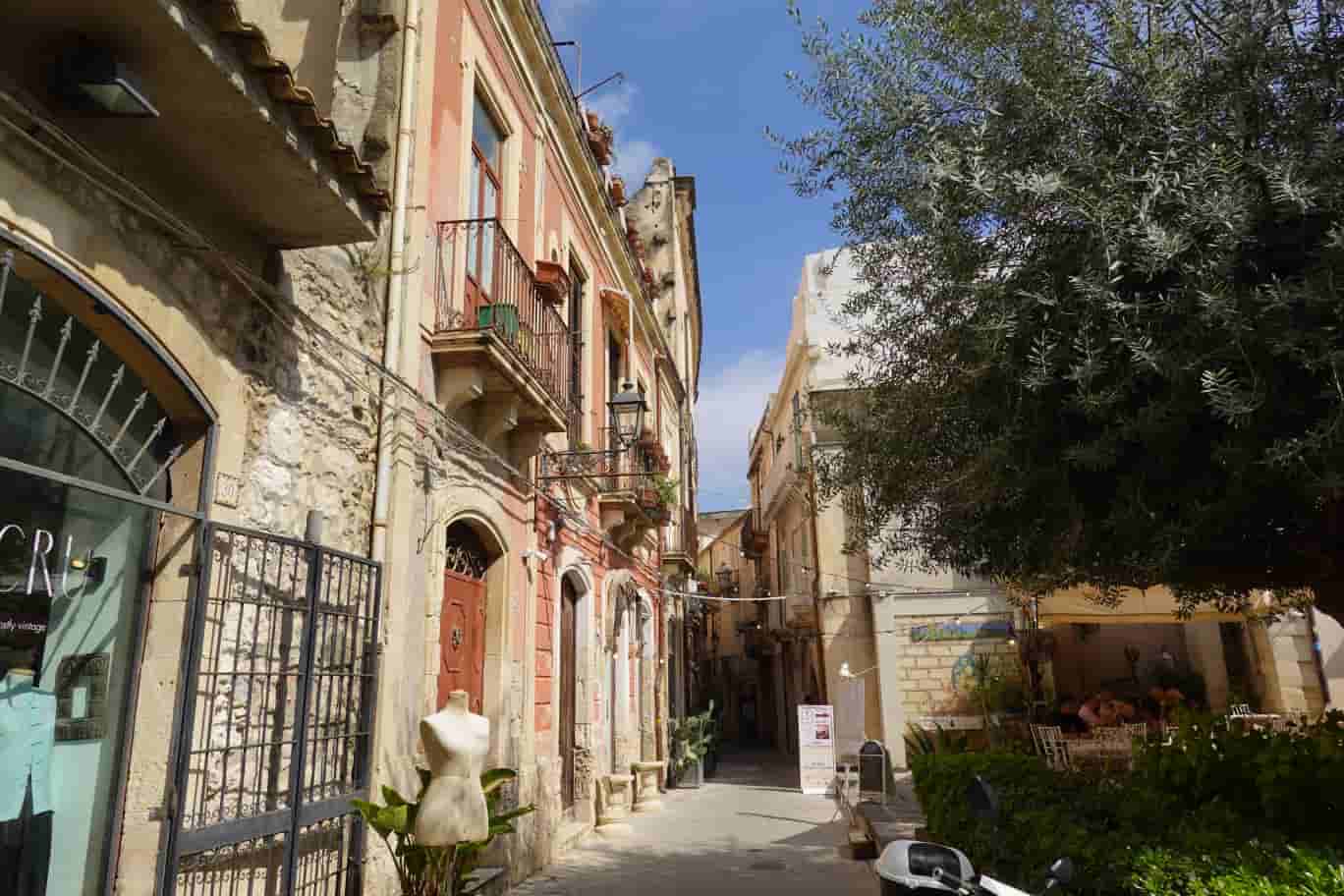
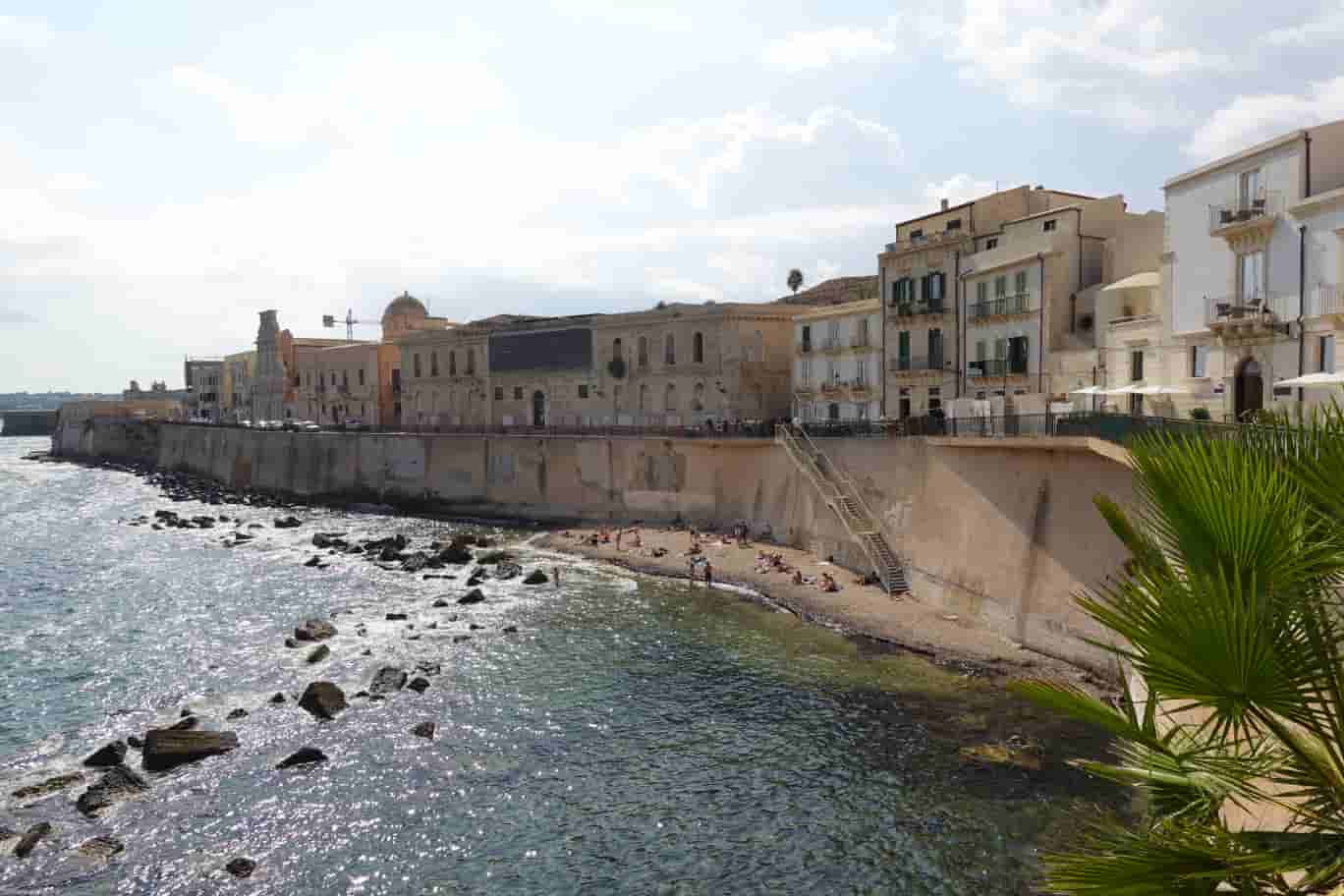
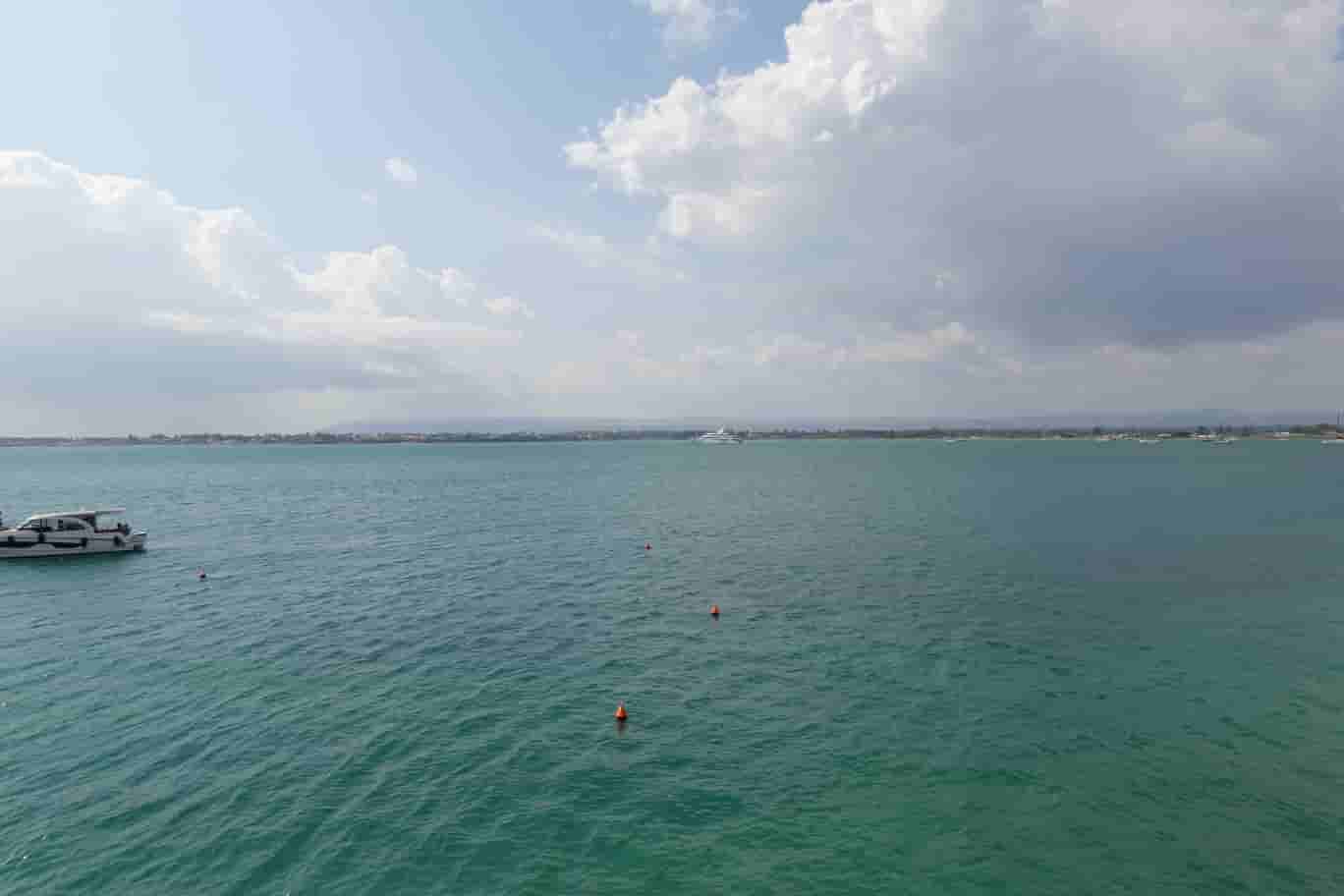
After the tour, Anne and I had pizza with two of our trip mates and then did a little shopping. We were supposed to take a boat ride before continuing on to Catania, but the wind had picked up, so the boat trip was cancelled. Instead, we got back on the bus.
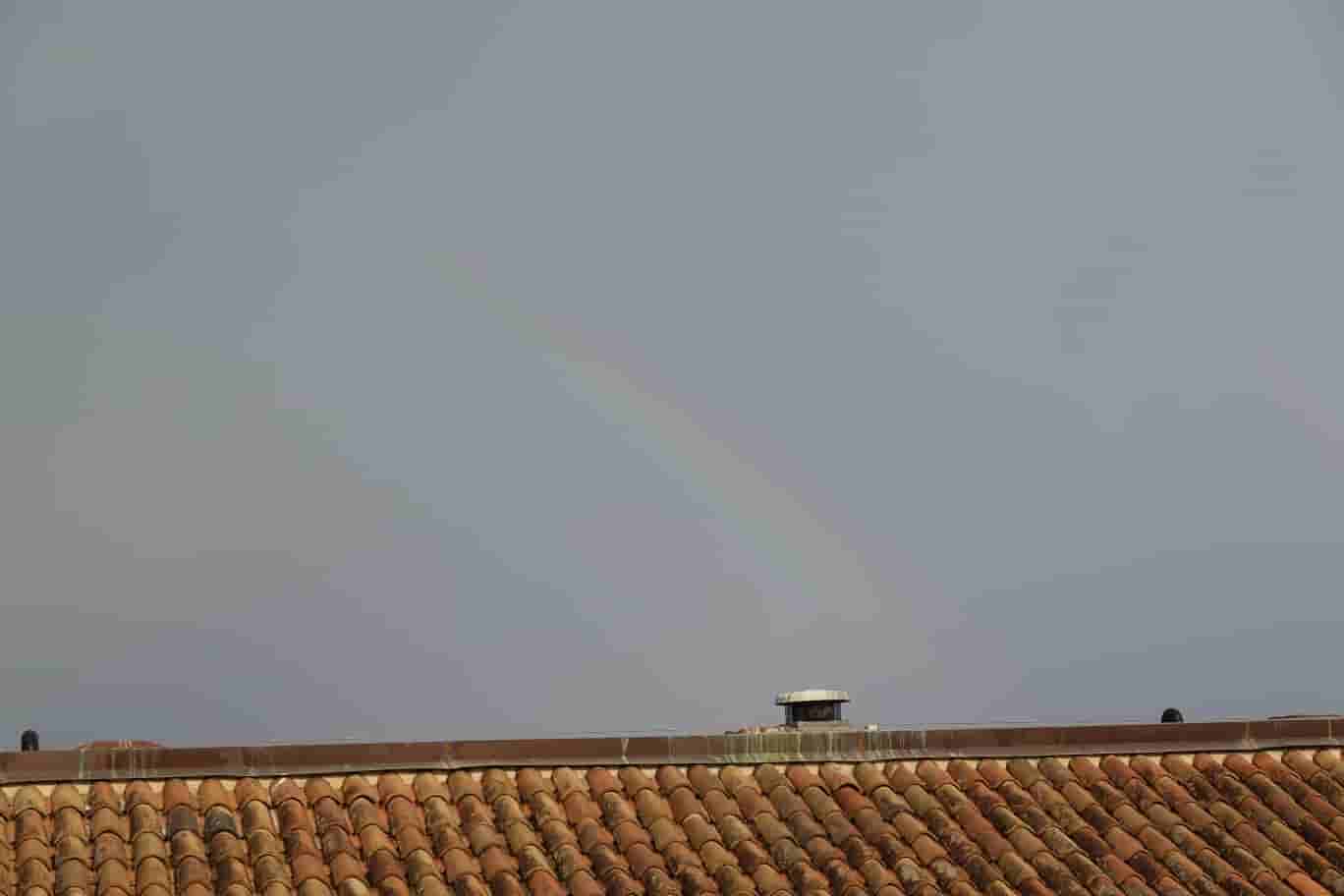
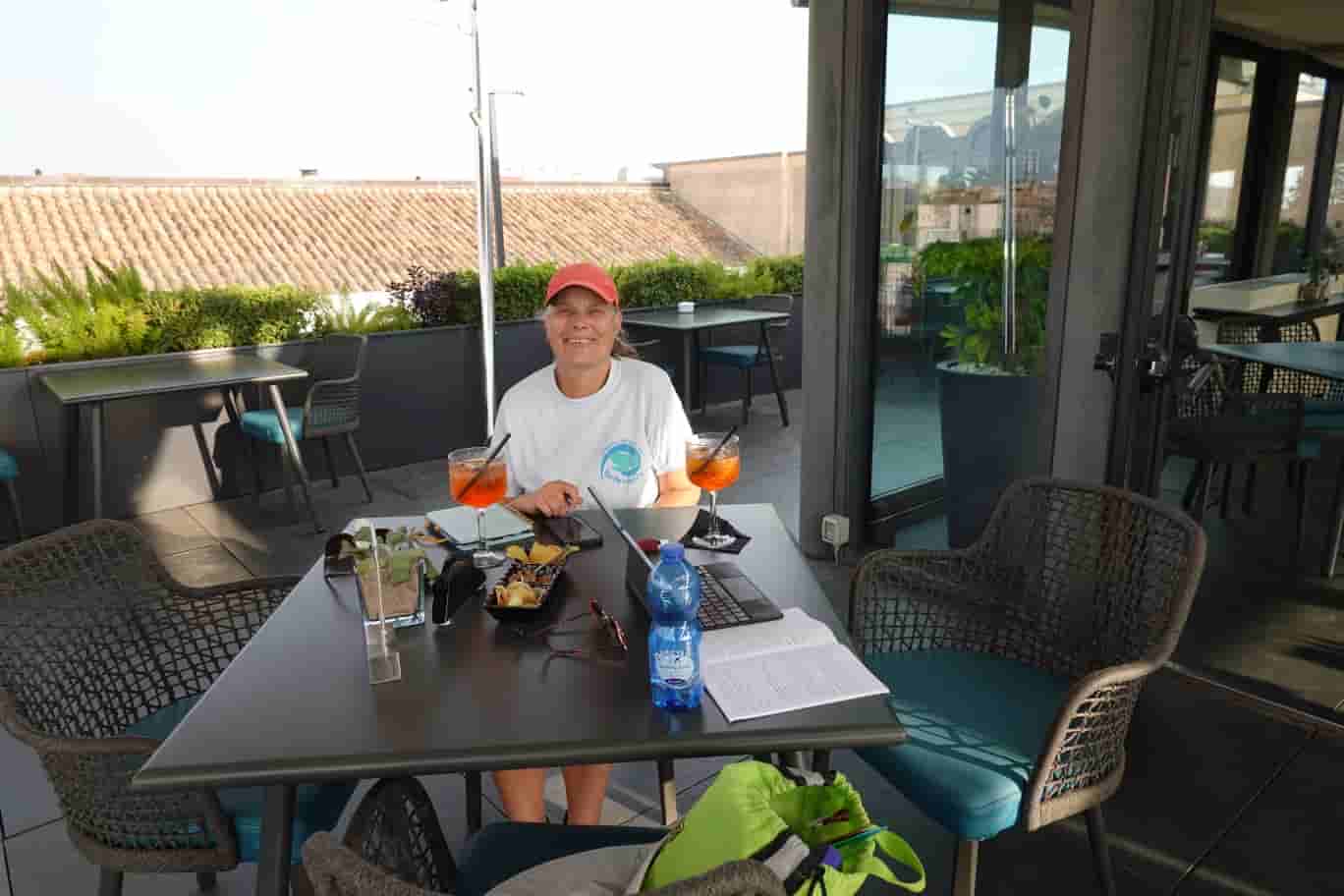
I slept almost the entire way to Catania, which felt pretty great. Once we checked into the hotel, Anne and I headed up to the roof deck for Aperol Spritzes and some blogging. We were supposed to have a view of Mount Etna, but storms were moving through the area, so Etna was nowhere to be seen. In fact, it started raining while we were sitting on the roof.
Clearly, the weather wasn’t going to stop us from having our Aperol Spritz.
The other Anne joined us after a little while, and we eventually headed out for our neighborhood orientation walk. After that, the group went out to dinner.
Another full day in Sicily—and one more city checked off the list.