November 14, 2022 Zanzibar, Tanzania

We started the day with a walking tour of Stone Town.  Ali had told us not to walk in the alleys at night so we had generally avoided them.  He took us into the alleys and it was like a whole new world.  It reminded me of Venice with all these cute narrow walkways.  We learned to about doors.  Historially doors were a sign of wealth.  The doors were heavily carved often with chains along the door frame.  The ones with chains either had a single, double or tripe chain which represented how many slaves you owned.  Some doors had verses of the Quran over them.  The square door frames were Arab and the one that had a rounded portico over the door were Indian.  Many of the doors had large metal spikes (that were dull at the end).  This design came from India were the spikes were used to prevent the elephants from trying to enter.  Many of the restored buildings had traditional Indian balconies.  The construction was plaster over stone.  If the plaster is not well maintained mold grows under the plaster and delaminates it. 

The next stop on our tour was the Anglican Cathedral.  Zanzibar was part of Oman in the late 17th century and at one point was the capital of Oman.  It was during this period that the slave trade was in full swing.  Livingstone came to Zanzibar and saw the slave trade.  When he returned to England he reported what he had seen and the English decided to come and shut down the sale trade.  It officially end in 1873 but unofficially didn’t end until 1907.  The Anglican Cathedral was built over the old slave market as a way to “purify” the space.

An aside…from Wikipedia…

Sir Henry Morton Stanley (born John Rowlands; 28 January 1841 – 10 May 1904) was a Welsh explorer, journalist, soldier, colonial administrator, author and politician who was famous for his exploration of Central Africa and his search for missionary and explorer David Livingstone, whom he later claimed to have greeted with the now-famous line: “Dr. Livingstone, I presume?”. Besides his discovery of Livingstone, he is mainly known for his search for the sources of the Nile and Congo rivers, the work he undertook as an agent of King Leopold II of the Belgians which enabled the occupation of the Congo Basin region, and his command of the Emin Pasha Relief Expedition. He was knighted in 1897, and served in Parliment as a Liberal Unionist member for Lambeth North from 1895 to 1900.

More than a century after his death, Stanley’s legacy remains the subject of enduring controversy. Although he personally had high regard for many of the native African people who accompanied him on his expeditions, the exaggerated accounts of corporal punishment and brutality in his books fostered a public reputation as a hard-driving, cruel leader, in contrast to the supposedly more humanitarian Livingstone. His contemporary image in Britain also suffered from the inaccurate perception that he was American. In the 20th century, his reputation was also seriously damaged by his role in establishing the Congo Free State for King Leopold II. Nevertheless, he is recognized for his important contributions to Western knowledge of the geography of Central Africa and for his resolute opposition to the slave trade in East Africa.

Slaves were brought from all over eastern African to Zanzibar to be sold.  They were held in small unground cells that would often flood with sea water during high tide.  When it was their turn to be sold they would tie them to a tree and whip them so the potential buyers could see how strong they were. The floor of the church shows where the tree stood and has red marble to represent the slave blood spilled there. 

There was a slave museum associated with the church which provided more history.  It was all very overwhelming.  One important thing that we learned was that slavery is still very alive today and there ware between 21 and 36 million people living in modern day slavery today, more than were seized during the entire African slave trade.  The International Labour Organization (ILO) estimates that illicit profits of forced laborto be $150 billion a year

Other random historical facts:  Tanzania was communist for many years. Communism fell in the early 90’s and that’s when it opened up to the world.  Ali said everything, including food was very limited during the communist era. 

Another random fact:  Fred Mercury was born in Zanzibar so there is a museum in his name.  We didn’t go there.

After the church and slave market we went to the regular market.  The government is building a new market so portions of it were on the street.  We started with the octopus and fish markets which, as with other third world markets, there was no refrigeration and a lot of flies.  All the fish vendors were together and I asked Ali how he picks who to buy from.  He always buys from the same man.  He know that his fish is fresh and won’t make him sick.  This vendor builds loyalty by extending credit when you don’t have enough money or adjusting the price if you are a little short.    

Next stop the chicken market where you can buy your chickens alive or if you want to eat it soon they will kill it and clean it for you.  Ali rarely eats chicken because it’s quite expensive, about $12/chicken. 

We then walked through the streets and to the palace of the Sultan Seyyid Said from 1828 until it was largely destroyed by the British bombardent in 1896. It was rebuilt and used until the 1964 revolution when the last sultan was overthrown. It was renamed the People’s Palace during the communist period. It used to be open as a musuem, but it is unstable and therefore closed. We went into the Old Fort that was built by the Omani after expelling the Portuguese in 1699. 

We then went to lunch at our favorite restaurant.  Rick worked on his presentation for the sailing club that afternoon.  That evening we went to the Africa House to watch the sunset and to have a drink.  The Africa house was where the English congregated in colonial times. 

November 13, 2022 Zanzibar, Tanzania

At breakfast we saw boats coming back loaded with people (typically 10-12 men).  Ali says they are fishing boats and they fish all night.  We have seen the kerosene lamps that they use to light their work on the horizon at night.  It’s very dangerous work because they use nets to catch fish and the men must get in the water to spread the nets.  Needless to say, in the dark it is easy to lose someone.

This morning we went to a spice farm.  Zanzibar is well known for its spices.  The climate and its history as a port on the trade routes made it a logical spot for spice farming.  Spices are grown in the center of the island because the other areas are too inhospitable for the plants due to presence of significant quantities of coral rock.

The farmers showed us a sample of spices grown on the island.  It was very interesting to taste the fresh spices and compare them to tastes we are accustomed to. They were all far more intense.  We were surprised by the form some grew in.  For instance turmeric is a root, with an exterior skin that looks like ginger, cinnamon comes from the bark of a tree, and cloves from a flower.  Zanzibar boosts the world’s best cloves.    

Ali guided us but we also had a young man who got the spice samples for us to see/taste.  He was continuously working, making stuff out of reeds and hibiscus flowers.  By the end of the tour I had a hibiscus ring, bracelet, necklace, basket and crown and Rick had a hibiscus tie and a crown.  Here is a picture of us in our geeky finery. 

We also saw the original method for building a house which consisted of a lattice structure, packed with mud, with a palm leaf roof.  The mud and roof need to be replaced every couple of years so people have moved to a more sturdy construction. 

We returned to the hotel for lunch and that afternoon we walked around town.  It was very hot.  There is a lot of Arab and Indian influence in the architecture. 

We went to a park where food vendors set up shop for the dinner crowd.  It seemed as if vendors had the same thing, mostly kababs of fish and meat.  Of course they was no refrigeration and lots of flies.  The kababs were packed in newspaper. The whole thing didn’t seem very sanitary to us. 

Almost all the ladies of Zanzibar wear hijab, the traditional muslim head covering. Some wear Niqab which is a veil that covers the face, showing only the eyes. Most wear an abaya which is a shapeless, floor lenght cover up. All in all they must ve very hot because I’m hot and I don’t have all those clothes on!

We walked back to the hotel.  The food at the hotel isn’t very good so although our meals are paid for we went down the street to another restaurant for a pizza. 

November 12, 2022 Zanzibar, Tanzania

We were up early to go to see the red colobus monkeys which are endemic to Zanzibar.  It was a 45 minute drive to Jozani National Park.  The road was one of the best roads we have been on in Africa. 

Ali commented on how much the population had spread into the “burbs” of Stone Town.  There has been huge population growth, there were 475k people in Zanzibar in 1978 and today they estimate the population at 1.8 million The road was widened several years ago and some of the houses had been chopped through the middle to make space for the road.  Many of these houses still showed the scars of the chopping.   There was a lot of poverty and people sitting around.  Ali told us that the unemployment rate is 30%. 

We arrived at the park at the same time as several buses full of people.  There is a cruise ship in the harbor and one of the excursions is to see the red colobus monkeys.  There was a monkey family living right by the parking lot, so we saw them pretty much immediately.  These monkeys eat unripe fruit because sugar is toxic to them.  If they inadvertently eat sugar they will go in search of charcoal to neutralize the sugar.  They have very long tails because they only have four fingers on their hands and no thumb.  They use the tails to help hold on to branches.  They were playing/fighting and they fell off the branches a lot.  These monkeys are on the endangered species list. Only about 5,000 Colobus monkeys remain today. 

Also living in the park is the Zanzibar blue monkey.  These monkeys look quite similar to the red colobus monkeys, but they have a thumb and a shorter tail.  Their diet does not overlap with the red colobus so they don’t compete for food and live together peacefully.

After watching the monkeys we took a walk through the forest and Ali pointed out many different species of trees.  There were a lot of small mahogany trees which are protected. Hopefully they’ll grow to be big mahogany trees. 

Next we crossed the main road and went to look at the mangrove trees.  I learned a new fact about mangrove trees.  Mangrove trees live in brackish water so they need to eliminate the salt that they take in.  They do this by pushing the salt to a few of the leaves which cause the leaves to turn yellow and fall off. 

We watched a group of singers and dancers at the park. Ali said they were for the tourists but more importantly they were trying to spark an interest in younger Tanzanians to preserve their culture.  

We had a late lunch t a a good restaurant up the street from our hotel.  That afternoon we got caught up on the blog.  We had a very light dinner at the hotel and then lights out. 

November 11, 2022 Amboseli, Kenya to Zanzibar, Tanzania

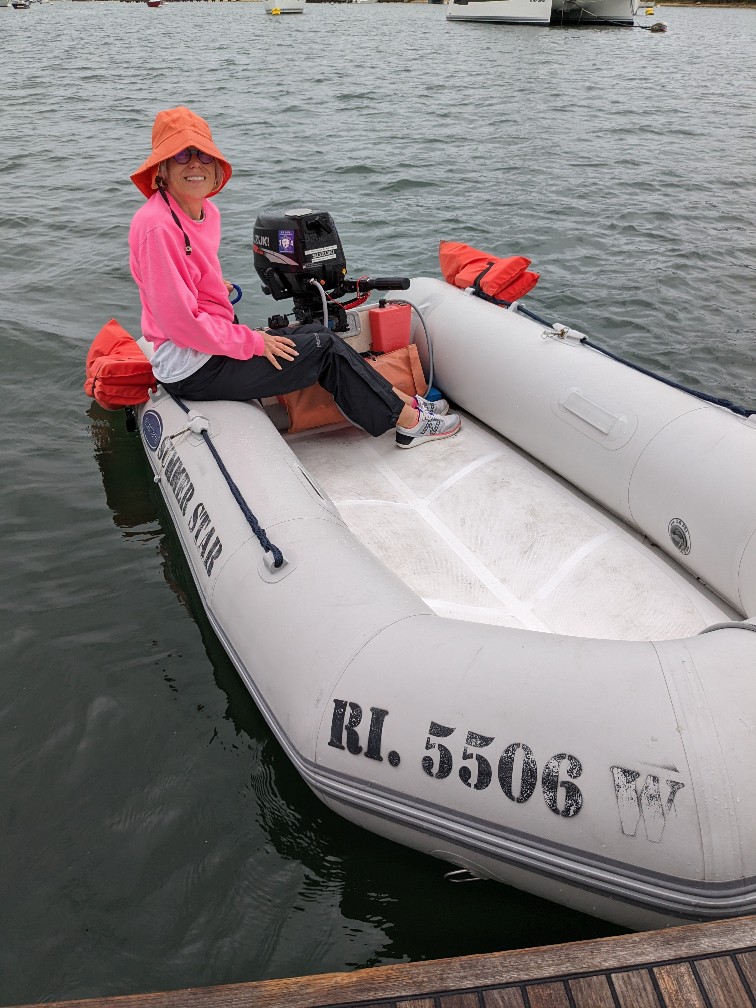
We were up early to catch our 7:40 flight.  Another great view of the mountain this morning. We were on our way to the airport when they radioed Joseph that we had left medicine in the tent.  In the tent we had to put food and medicine inside a chest in case the monkeys got in.  Although we had checked the tent for stuff we missed, we forgot to check the chest.  Someone from the camp drove like a bat out of hell and delivered the stuff before our plane had even landed.  All’s well that ends well.  Here’s a picture of us with Joseph. we will miss him.
We made one stop and then flew to Nairobi. 

We were picked up by Lydiah and William and driven to the Giraffe Center.  This is part of the Giraffe Manor, a small hotel were the giraffes stick their head through the window and share breakfast with you. I fed the giraffes (Rick wasn’t so interested in feeding the giraffes).

Then we went to the elephant orphanage for feeding time.

After these two stops we needed to return to the airport for our flight to Zanzibar. It was a slightly bigger plane this time.


The flight from Nairobi was about an hour and a half and we arrived in Zanzibar around 3:30. We were met by our guide, Ali, and our driver, Suleiman and taken to our hotel which is right on the edge of Stone Town, the main city.

On our drive we learned that Zanzibar is an archipelago which includes two large islands, Unguja (population ~1.3 million) and Pemba (population ~600k). We are staying in Stone Town which is on Unguja. Zanzibar is part of Tanzania but is governed fairly autonomously and they have their own president. 1.8 million people live here. The islands facilitated trade between Africa and Europe and Asia so they were ripe for colonization. In the early 1500s, Zanzibar became part of the Portuguese empire. At the end of the 17th century, the Portuguese were kicked out and Oman took over. It was under the Omani rule that Zanzibar became a hub for the slave trade to the Middle East. Eventually, the British took over the nation in an effort to abolish the slave trade. Zanzibar was granted its independence in 1963 and it merged with Tanganyika in 1964 to become Tanzania. This is a long way of say that Zanzibar has many European and Middle Eastern influences. The Arab influence seems to be the strongest. The population is 95% muslin.

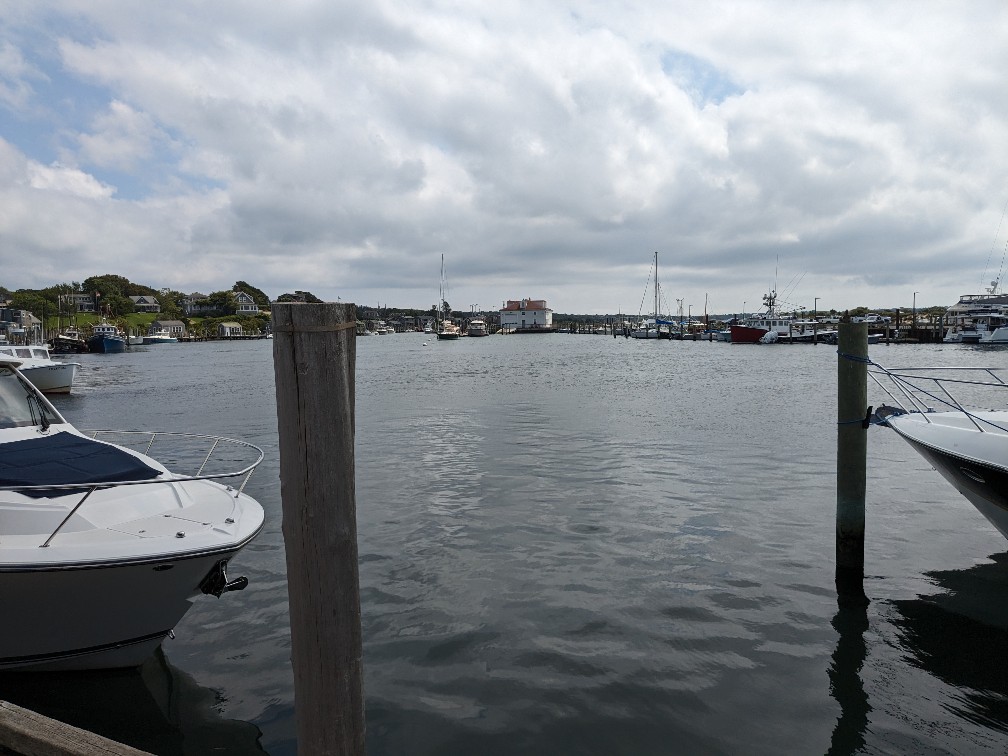
We arrive at the hotel which is right on the water.

After getting settled we walked a little and had a drink at a beach bar. There we met a nice man who works in the embassy in Addis Ababa. We got a lesson on the war in Ethiopia and where to go when we visit.

We returned to the hotel for dinner which was incredibly slow and not that great.

November 10, 2022 Amboseli, Kenya

We started our day with an early morning game drive.  Kilimanjaro was clear of clouds. We went back to the lions. The lioness had made another kill.  She is definitely teaching her cubs to hunt.  One of the cubs was interested and the other was not.  We also saw lots of elephants.

At around 8am, we pulled up to an acacia tree and the camp had set up a dining area for our breakfast. We had a lovely breakfast in the bush.  Here are some pictures

Next stop was a Masai village.  There we were greeted by the chief’s son and a que of ladies singing. 

The chief’s son provided a blessing for us and his people.  They also showed us how the men start a fire by rubbing to sticks together.  They do that in the morning and in the evening.  Then the ladies come to get some fire to cook with. 

The village housed 4 extended families whose houses were arranged in a circle.  There were four gates in the village with one family in each “quarter”. 

Masai are herders and do not farm.  They only eat meat, no vegetables (my kind of people).  The men herd the cows and the women herd the goats and sheep.  The men wear red to protect themselves and scare away predators from their cows. 

Each mud hut contains two sleeping areas and a cooking area.  The parents sleep in one sleeping area and the children sleep in the other.  It was much too dark to take pictures inside the hut.

There were some young children around but the older children were at a nearby school that had been built by the camp. 

Finally we were taken to “shop.” I bought an overpriced bracelet.  While I was shopping, Rick was sitting under a tree.  A man who spoke limited English was admiring Rick’s watch ($20 at Walmart).  He was looking at it and then touching it and finally Rick asked if he wanted it.  He said yes and Rick happily/reluctantly gave up the watch. (Rick ultimately suggested he had been culled from the group, looked like a weak target and was set upon by the Masai warrior in this case, similar to the lioness and the zebra.

While talking to the chief’s son we learned that the Masai practice polygamy, but it is quite expensive for a man to have multiple wives.  The price to the groom for each wife is 15 cows.  (Our guide later told us that throughout Kenya having a lot of children is a sign of prosperity even if it means you have no money.) The parents arrange the first wife and then the man can select subsequent wives.  He also told us that the drought had been difficult on them.  The village started the year with 208 cows, now they have 34.  They are very good at sharing the resources so our $20 fee to visit the village would be spread across the village.  The elephants had broken the pump for the well so the women had to walk 1-2 miles to get water.  It wasn’t clear when the pump would get fixed. 

We said goodbye to the Masai and went back to the camp for lunch. 

Later that afternoon we went out for another game drive.  We were trying to find a cheetah, but no luck.  We found a cape buffalo, some hippos and an oryx, in addition to the usual suspects. 

Joseph found a nice spot under an acacia tree and we had cocktails. 

It was a chance for us to really get to know Joseph.  We talked about his life, his family and the future. We returned to the camp and had a light dinner.

November 9, 2022 Nairobi to Amboseli, Kenya

We left the hotel at 6am because we have an early charter flight to Amboseli.  There were only 8 people, including us, on the plane — a Cessna 208.

We arrived in Amboseli which is on the southern border with Tanzania around 9:30am.  The primary reason for coming to Amboseli was to see Mt Kilimanjaro.  We saw it from the plane, here is a lousy picture of it though the plane window.

At the “international” airport we were met by Joseph, our guide.  We had coffee and tea while we waited for two more guests to arrive on a different plane.  It turns out the other guest were Douglas Costa, a pretty famous soccer player, and his wife. 

Amboseli is a game park and brags of elephants with some of the largest tusks.  The Kenyan government has been aggressive in protecting these elephants.  The security patrols are instructed to shoot to kill any poachers they find, so they’ve been pretty effective.  We did a game drive on the way back to the camp.  I think Joseph is the most knowledgeable guide we have ever had.  He provided details on all the animals we saw but I’d be here for days if I tried to recount them, so I’ll just post some pictures. 

We learned that Amboseli is named for the dust devils that we see frequently.  They are formed by the sun heating up the rocks and dirt.

Climate change has been blamed for a four year drought in Amboseli. Of course  the animals are affected by the drought and we see zebra and wildebeast carcasses everywhere.  The clouds get caught by Kilimanjaro and the rain is dumped in Tanzania. It doesn’t make it to Amboseli.  They are hopeful that they will get rain soon. 

After about a 2 hour game drive we arrived at the camp.  On a clear day Kilimanjero is visible from the camp, however it is often covered in clouds.   Here are pictures of our camp, including the monkeys and dik-diks who were hanging around our tent.

After lunch we relaxed/blogged until 4 when we went out on another game drive.  We saw a lioness who had just taken down a zebra.  She had her two 6 month old cubs with her and was teaching them how to hunt.  It was gruesome so I’ll spare you the details.  We found the rest of the pride which included two more lionesses, two sets of cubs, (a group of 4 three month old cubs and a three week old cub). Joseph thought there were more three week old cubs, but we couldn’t find them. We finally came acros the father and two other females.

Here are some pictures from the afternoon game drive. 

We had dinner at the hotel and went to bed early because we have an early morning game drive tomorrow. 

November 8, 2022 Ruhengeri, Rwanda to Nairobi, Kenya

Today was a travel day.  We were supposed to go see the golden monkeys which live in the same forest as the gorillas but our flight back to Nairobi got changed so we didn’t have enough time.  I’m not happy about this.  Here is a picture of a golden monkey so you can see what we missed. 

We had a leisurely morning.  It is their low season because they have a lot of rain.  During the low season, the hotel allows locals to stay there.  There was a general who stay at the hotel last night.  He said good morning to Rick, so Rick asked him a question about the war in the Congo and Rwanda’s role. All of a sudden he didn’t know how to speak English. Hummmm!

 We left the hotel at 10am and it was actually sunny!  We really loved our hotel, called the Bishops House.  The facility was beautiful and everyone was great.  We got to know a lot of the staff. 

We drove 2 ½ hrs back to Kigali.  Along the way we noted how clean the roads are because the government pays people, primarily ladies, to sweep the road every day.  We also noticed that in the city (Ruhengeri is the second largest city in Rwanda) they have sidewalks! Pretty much every hill we could see was used for agriculture. The Rwandan people are very hard working.  Everyone is doing something. There were bicycles everywhere. We saw many men pushing bikes piled high with product for the market.  We saw other bikes that were taxis, taking people from one place to another. 

We saw a lot of flags. The Rwandan flag is green for agriculture, yellow for mining, and blue for water, with a star in the upper right corner representing the country’s bright future. 

We agree that Rwanda has a bright future.  They seem to have a stable government and limited corruption.  They have done a good job marketing and managing the gorilla trekking.  The education and medical systems seem to work — a lot to be said, and a distinct set of differences from most of Africa.

We would have like to have seen more of the country and could imagine going back one day, maybe to see the golden monkeys.  Everyone was very nice and their English is very good.  We have heard some murmurings about limited freedom of speech and their involvement in the war in Congo, but don’t have any real insight.  We would highly recommend a trip to see the gorillas, making sure you spend enough time to really see the country.

We arrived at the airport and had to go through a security check which involved taking all of our luggage out of the car and having a dog check for explosives. There was a thorough check of the car. Here is a picture of Hussein, Rick and our car. 

Once we had passed through immigration we went to the lounge and got some lunch.  We were joined there by our friends, Valentin and Sandrine (friends from gorilla trekking) who were also flying to Nairobi and then on to home in Paris.  Unfortunately our flight was delayed until about 5 so we might have been able to see the golden monkeys after all. 

We were meet in Nairobi and driven to our hotel. 

November 7, 2022 Ruhengeri, Rwanda

Gorilla Day number 2!  Again we were are Volcano’s National Park early. 

On the way there we saw lots of people out at 6:30am, including lots of teenagers on their way to school, another sign of the relative prosperity of Rwanda and the country’s successes.

It was foggy but it was’t raining.  Here are some pictures from the park entrance.  You can see why they call Rwanda Land of Thousand Hills. 

We were paired with Emmanuel again which is wonderful because he’s a lot of fun. There are only 6 people in our group today, so I guess they don’t sell out on gorilla permits every day.  Two of the people were also in yesterday’s group, a mother and daughter from France who we befriended.

We are visiting the Muhoza family today.  Muhoza means a perfect ending after a long effort.  This describes the silverback, Marambo, who spend many years trying to collect a family.  The family was established in 2016 so it is relatively young.  Marambo is enormous. 

We got back in the car and headed to the trail head.  There, I was assigned Alice as my porter.  She was an excellent porter, gently helping me when I needed help but otherwise just carrying my bag.  The walk up the hill was quite muddy. At one point I was trying to pass over a muddy stream bed.  I had one foot on a rock in the middle of the bed and the other on the edge of the stream bed.  I was trying to adjust my weight to move to the other side of the stream bed and to my surprise Alice just picked me up and lifted me over.

We walked through planted fields for about 45 minutes. There are many fields of flowers used to produce permethrin, a strong plant-based insecticide that we had sprayed on our clothes prior to departing the Uo.  Everybody said hello to us as we passed.  The volcanus soil looks is dark and fertile.

Eventually we came to areas with lots of bamboo, the edge of the gorillas’ territory.  It was much different from yesterday. 

We left our trackers and kept walking.  It wasn’t too long before we found the Muhoza family.  Marambo, the silverback who was HUGE, was sleeping and other gorillas were grooming him.  One thing I learned was that gorillas fart a lot, I guess it’s all the plants they eat. There were young gorillas playing and two moms, one with a two month old baby and one with a three month old baby.  The babies were very cute.  They would move around their mothers with very jerky movements.  We watched for quite a while with Marambo slowly waking up the whole time.   We couldn’t see him very well but it sounded like a young gorilla had done something to annoy him. He yelled at the young gorilla and then came charging out of the little clearing.  We all crouched down and everyone was fine.  All the gorillas followed him and, as a young one went by me. he reached towards me. I though he was going to grab my glasses. Luckily, he didn’t. We moved with them and watched them a little longer before having to say goodbye.  One take away is how loving, caring, loyal and playful the gorillas are.  It’s really both exciting and heart warming to spend time with them. 

Here are a couple of videos

We walked back down the hill and said goodbye to Emmanuel and Alice.  Then we went to the newly opened Ellen Degeneres Campus of the Dian Fossey Gorilla Fund. We learned a little more about gorillas and Dian Fossey.   

We came back to the hotel for a late lunch and then napped/relaxed/blogged in the afternoon.  That evening they made us a special local dinner which was a chicken, potato, plantain, and peaut braised dish.  It was delicious.  We spent quite a bit of time talking to the hotel manager and chef.  We really enjoy making these personal connections. 

November 6, 2022 Ruhengeri, Rwanda

We were up early. I had had trouble sleeping because I was anticipting seeing the gorillas.  I’ve been looking forward to this for close to 4 years.  We left the hotel at 6:30 and arrived at Volcano’s National Park at 7.  On the way there we saw lots of people out running for exercise, sometimes in big groups. We were commenting that a society has to be quite secure to focus on getting enough exercise. At the park, there were lots of people having coffee and waiting for the trekking to be organized.  Hussein went off to get us registered and make sure that we got a nearby family.  There are 22 gorilla families in total, 12 get daily visitors and 10 are studied/researched by representatives of the Dian Fosse Foundation.  We were organized into 8 person groups, each with two guides, that go to the gorilla families that receive visitors.  I believe the permits sell out every day.  There were also people going to see the golden moneys there.

10% of the income from the gorilla tours goes back to the local communities, thus incentivizing the locals to protect the gorillas.  The worldwide population of mountain gorillas is around 1,000, spread throughout a mountain range that encompasses parts of Rwanda, the Congo, and Uganda. They have been so successful in protecting and growing the population in Rwanda that they are running out of land for the gorillas and have a 5-year plan to buy farmland to expand their territory.  A handful of gorillas have died because they fight each other for the limited space.   

Here are some pictures of the gathering area.

We had two guides Emmanuel and Francis.  Emmanuel has been working with the gorilla for 12 years.  He told us a little about the family we were going to see.  It has two silverbacks.  The back of a male gorilla turns grey when he is about 12 years old (male gorillas live for 35 to 45 years old).  The two silverbacks in this family are brothers, Guhonda, the alpha and Big Ben, his brother.  Big Ben is bald.  This is unheard of and they aren’t sure why he is bald. He can’t attract any females because they don’t like his baldness, so he can’t start his own family.  The family had several babies. 

We got back in the car and travelled to the trailhead.  There we were met by a number of porters.  We were encouraged to hire a porter by Burt, who had arranged our travel plans.  The porters are former poachers, so finding alternative income is important.  We each hired a porter.  My porter’s name was Innocent.  I would say he was helpful at times and unhelpful at other times.  The path was very narrow and he wanted to hold my hand. I couldn’t walk squarely.  Also, when the going got tough, he held my hand and my armpit which wasn’t the most comfortable.  But he was trying to help and he didn’t speak any English so we managed.  We walk up the mountain through farmland for about 30 minutes.  The walk was pretty easy and we had no trouble. Then we got to the edge of rainforest which had no path, stinging nettles and very dense vegetation.  It was not easy going.  We were walking over bushes that had been a slightly trampled. 

Once we got close to the gorillas we had to leave our porters behind. There would be too many people if they came too. 

Gorillas typically wake up at sunrise and then spend 3 hours grazing around for breakfast. Then they take a nap and repeat the process for lunch and dinner.  They go to sleep for the night around sunset. They make a new nest, always in a different location from the prior night, to sleep in. There was a team of 4 trackers who track the gorillas all day so they know roughly where the gorillas decide to sleep.  Then the trackers are up early the next morning to find the gorillas.  This is how the guides know where to take their groups.  

We were walking up a hill, over the bushes and through the stinging nettles and suddenly there was a juvenile male gorilla, just sitting there scratching himself.  As we watched him, other gorillas wandered closer to us.  Eventually Big Ben came down the hill.  He beat his chest and charged us. We had been instructed to crouch down when they do that. Big Ben or one of the other juvenile males did this several more times while we were watching them. A couple of times a young male moved through our group and hip checked someone, knocking them over. No one got hurt. We also saw some young ones playing.

We were only supposed to be with them for one hour but it seemed longer. We were watching them, moving around to see them better and taking pictures. It was hard to get a good picture because they often had their backs to us. During our briefing we were told to say about 20 ft away from them, but our guides let us get as close as 3 ft. It was truly amazing. Here are some pictures.

We walked back down the hill and our car was waiting for us. Next we went to a cultural village which was very commercialized and, frankly, kind of hokey. We didn’t learn much about the culture or the history because the woman who ushered us around the village was very difficult to hear and her English wasn’t great. She couldn’t fully understand our questions. Here are a couple of pictures of the “welcoming committee.”

We came back to the hotel and had lunch. While we were in the restaurant, top generals from the Rwandan army came in. One of them talked to us and asked if we were nervous to have so many military men there. We said no, that is made us feel safe. Several people have talked to us about the importance of the military in terms of keeping Rwanda safe. Of course they have the warring DRC to their north, but it also seems to partially be the aftermath of the genocide. Having such a strong military seems danagerous to me because they could easily support a coup and install a dictator.

That afternoon we both napped, relaxed, and blogged. It poured rain. We didn’t realize it but this is considered low season since it rains on and off a lot. The walk up to see the gorillas will probably be a muddy mess tomorrow.

We had another great dinner at the hotel. We would strongly recommend our hotel, the Bishop’s House. Everyone is very friendly and helpful. At dinner we were talking to our waiter who was 29 years old. His father died a number of years ago and our waiter is supporting several siblings and his mother. So while life is better here in Rwanda than in Madagascar it’s not easy. We asked him if he was a Hutu or a Tutsi and he wouldn’t answer us. I think that is because they don’t want to view themselves as one or the other, rather they view themselves as Rwandan.

November 5, 2022 Nairobi, Kenya to Ruhengeri, Rwanda

We left the hotel at 8AM for the airport terminal, just a 5 minute drive.  We got checked in and through customs.  We hadn’t had breakfast at the hotel because we were going to have a long wait at the airport for our flight.  We planned to go to the airport lounge for breakfast.  The lounge was at the very other end of the airport. It seemed like it was about 5 miles away from our gate.  It was the worst lounge we have ever been in. A review we found online described the food as salmonella on a plate.  Needless to say we didn’t stay long, althought the cappucino was good.  We headed to our gate and just waited for the flight.  The Air Kenya pilots decided to go on strike that day so our flight on Air Rwanda was full with people being rerouted. 

We sat next to a Rwandan gentleman who had been in Kenya studying for a masters in IT.  He described a fairly dire educational system in which they were teaching him IT theory but nothing practical.  We tried to figure out how to help him, but so far we don’t have any ideas.  We also met a swiss woman and her two children.  Interestingly she had heard a lot about Rick’s cousin, Bruno Manser.  I guess he is quite famous. 

We were met at the plane by an agent of our travel company who helped us through immigration and then took us to a lounge where we had a covid PCR test.  The covid test was not to enter the country, it was to ensure we weren’t sick so we could see the gorillas.  Both our tests were negative. 

Outside the airport we met our guide, Hussein.  He took us to lunch in Kigali, the capital of Rwanda, at a 5 star restaurant in a hotel.  Our initial impressions of Rwanda and Kigali are very good.  The roads are in great shape.  The houses look much better.  People are not so skinny.  We are told that 90% of the country has electricity.  Hussein told us that he really likes the president, who in Hussein’s opinion has done a great job of rebuilding the country after the 1994 genocide. Hussein’s son is going to university and he expects his daughter to go too. It was very different from our impressions after having spoken with the IT student on the plane.

Other interesting facts about Rwanda:  Rwanda is called the land of 1000 hills and is home to 13 million people, 1.5 million of whom live in Kagali.  90% of the people are Chrisitans, 50% Catholic, it used to be higher but some Catholic priests and nuns participated in the genocide, so many people left the Catholic church and 5% Muslim.  Girls must be over 21 years old to get married. Women represent 64% of parliament and hold 50% of government jobs.  They have nationalized healthcare.  In Kagali there are lots of mopeds, most of which act as “taxis.” People know they are taxis because the drivers wear red vests.

After lunch we went to the genocide museum. It was overwhelming to learn that one million people were killed in 100 days.  We learned that there really wasn’t any difference between the Tutsis and the Hutus.  It was a convention created by the Germans and later the Belgium, colonizers of Rwanda.  They designated anyone who had more than 10 cows as a Tutsi and everyone else was a Hutu.  Then the colonizers created a culture of hatred between the two groups.  After Rwanda gained its freedom in 1962 the politicians intensified the culture of hatred and planned the genocide using Nazi techniques.  They had youth soldiers in neighboring countries learning how to massacre people.  On April 6, 1994 the president’s plane was shot down and the Hutus blamed the Tutsis.  They had set up roadblocks by that night to hunt down the Tutsis.  No one ever learned who shot the plane down, but it is believed that it was the Hutus because they were able to initiate the roadblocks and the killings so quickly.  The world and the UN stood by and did nothing to help the Tutsis.  There were neighbors killing neighbors and even family killing family. Even the catholic priests and nuns joined it! After several months Rwandans, Tutsis and moderate Hutus who had fled the country, organized to invade and stop the killing.  The stories from survivors were haunting.  As a result of the genocide, there were about 400,000 orphans. Many women had been raped by knowingly HIV positive men. 

The museum highlighted some other genocides, including the Nazi genocide and the Cambodian genocide instigated by Pol Pot, and is part of a foundation that tries to educate people about the roots of genocide and prevention of future genocides.  There was a traditional saying higlighted on one of the walls that I really liked, “A tree can only be straightended when it is young.” So true!

We watched Hotel Rwanda before we left and apparently the movie does not tell the entire story.  According to Hussein the hotel manager made people pay to stay at the hotel and if they couldn’t pay he made them leave to be slaughtered.  The real manager is in prison today. 

After the museum we drove for about 2 ½ hours to Ruhengeri, which is where our hotel is located.  We drove through lots of little towns and lots of farm land. Sinilar to our experience in Madagasgar, trucks struggling up the hills really slowed us down.

It rained much of the way and was pouring when we arrived.  We got checked in and had a lovely dinner.  Here are pictures of our hotel.