April 6, 2018

Mom slept pretty well all night.  I was up from 3 until 6 and then was really sound asleep when the alarm went off at 8.  I guess I’m still struggling with jet lag and it seems she’s worked through it.  Oh well!

We were up and out by 9 because we had tickets to the Scrovengni Chapel at 10:15.  We had breakfast, fresh orange juice and a croissant, at a little local coffee shop.  Then we walked over to the Scrovengi chapel.  Here’s a picture of the outside of the chapel, unfortunately it’s somewhat obscured by scaffolding.

We had trouble finding our way into the chapel and met a woman who is from Wisconsin, living for a year in Florence and working on her Ph.D in Islamic art studies.  Her dissertation is on Turkish tents.  I am only including it because she showed us an amazing picture of a Turkish tent.

Eventually we found our way in.  We watched a short video about the chapel and then were allowed to enter the chapel for 15 minutes.

It contains a fresco cycle by Giotto which was completed about 1305 and is considered an important masterpiece of Western art. Giotto and his team covered all the internal surfaces of chapel with frescos, including the walls and the ceiling. The largest elements are two extensive cycles showing the Life of Christ and the Life of the Virgin. The wall at the rear of the church, through which the chapel is entered, has a large fresco of the Last Judgement. There are also panels in grisaille (monochrome) showing the Vices and Virtues.  It was beautiful.  Here are pictures.

Then we walked through the pinacoteca, the painting museum, and went to the multimedia room to watch another video about the chapel.  By this time we were hungry for lunch so we had sandwiches at the museum cafe.

After lunch mom rested on a bench in the park and I tried to go to the ATM (no luck so we are still working on getting some Euros for mom) and I brought her purchases back to the apartment which was right around the corner from the chapel.

Then we walked down to the Basilica of Saint Anthony.  The original structure was built between 1233 and 1310.  Saint Anthony is buried here and therefore the basilica attracts a lot of pilgrims.  We walked around following Rick Steves’ tour which included the relic room.   The most prized relic in the glass case at center stage was Anthony’s tongue. When Anthony’s remains were exhumed 32 years after his death (in 1263), his body had decayed to dust, but his tongue was found miraculously unspoiled and red in color. Other relics included his lower jaw with all his teeth impressively intact and his vocal chords, discovered intact when his remains were examined in 1981. How appropriate for the great preacher who, full of the Spirit, couldn’t stop talking about God.  Pictures were not allowed inside (sorry no picture of the tongue) but here are some pictures from outside.

Here are several pictures of his tomb that I downloaded from the internet.

And here’s a picture of the relic room.

We walked back from the basilica and returned to the apartment.  I worked on figuring out the train for our trip to Ravenna tomorrow as well as blogging.  At about 7, we went out for some dinner.  In the square there were lots of stalls set up selling various types of food, some vegetable stands and some speciality food stands.
We found a restaurant, had a lovely pasta dinner and then came back to the room and went to bed!

April 5, 2018

Today was primarily a travel day.  I left Boston yesterday at 7:15 pm and arrived in London at 6:50 am.  Luckily the plane was quite empty so I was able to get a row of four seats to myself.  I ended up sleeping most of the way.  Unfortunately my mom was not able to sleep on her flight.  I found her easily in London and we flew to Venice.  In Venice we managed to find the bus to Padua or in Italian, Padova.  I wasn’t totally sure which bus stop but we got off at the right one and took a taxi to our Airbnb apartment.

Our apartment is small but just find for the two of us.

After a nap and a shower we went out for some dinner.  The place we had selected was in the old section so we wandered around for awhile.  We were a little early because we arrived at 6:30 and they started serving dinner at 7:00. We ended up have pizza which was a dinner appetizer and then stopped at a gelato shop for dessert.  We took the long route back to the apartment and were ready to collapse.

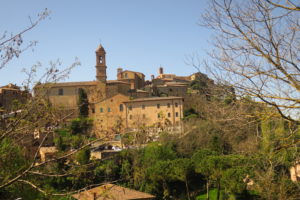
Here are some pictures of Padua.

April 4, 2018

I leave for Venice today.  I’m meeting my mom there and we are going to Padua, Ravenna, and San Marino.  Next Wednesday Rick, Nancy, and Mike are flying to Venice and my mom is flying home.  Then for the next 2 weeks, we are spending time in Venice, Cinque Terra, Florence, and Rome.  Then Nancy and Mike return home and Rick and I go to Switzerland to visit his family.  Stay tuned for more updates!

Some general thoughts about our S. American adventure

I feel like I should share some deep thoughts about our trip but I’m not sure what they are.  🧐

This was primarily a nature trip.  We saw many amazing, pristine, and vast landscapes in Antarctica and Patagonia.  I hope they remain that way but I am not hopeful for any reason other than I see how disrespectful humans are to this planet!  While not pristine, Iguazu was really, really cool.   The wildlife on S Georgia was like watching a National Geographic program.

Experiencing  the history and culture of Easter Island was spectacular.  I have seen many pictures of moai in books but it’s nothing like seeing them in real life.  I would recommend this goes on everyone’s bucket list.

In general my top three sights/experiences on this trip were

  1. The wildlife on S. Georgia
  2. Easter island
  3. Iguazu falls

Patagonia and Antarctica are close behind.

In summary, as with all of our trips and our exploration of this world . . . AMAZING.  I feel extremely lucky that I have had this experience.

March 6, 2018

Today is our last day in South America. ☹️

We had breakfast and then headed to Valparaiso, about 1 1/2 hour drive from Santiago. Valparaiso is on the coast and is dominated by hills, San Francisco type hills.  It’s known for its steep funiculars and colorful, clifftop homes.  It got foggier and foggier as we got closer to Valparaiso.

We decided to visit Neruda’s Valparaiso house first, hoping that the weather would improve while we were in the house.  I liked it better than Neruda’s Santiago house because I felt like I got a better sense of the man.  It was actually three houses blended together.  Pictures of the interior were not allowed however here’s a picture of the view of colorful houses from Neruda’s home.

After leaving there we headed towards Cerros Concepción and Alegre to see the colorful houses and graffiti.  We wandered for awhile, just taking in the grafitti.  There was grafitti everywhere you looked.  Also there were interestingly decorated houses.

Here’s picture of just some of the graffiti.

Here are pictures of the area.

We had a wonderful lunch in a small restaurant that we just wandered into.  After a late lunch we headed back to the car.

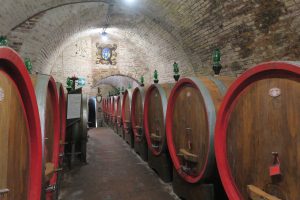
Our flight didn’t leave until 9:50 so we had some time to kill.  We decided we would stop in winery in the Casablanca valley.  A cool climate and temperatures that vary greatly from day to night have made this valley halfway between Santiago and Valparaíso one of Chile’s best regions for fruity Chardonnays, Sauvignon Blancs and Pinots.  Randomly we picked a winery called Viña Indomita.  We were lucky and got a private tour of the winery from a very nice young man who’s English was great and who was studying to be an industrial engineer.  We learned a lot.  Here are a couple of pictures of the winery.

After the tour we tasted the wine.  Here are the labels of the wine we tasted.

It had been a wonderful day but now it was time to head to the airport.  We had no trouble finding the airport or returning the car.  However at the airport I opened my suitcase to get some pants out for the trip home and the zipper on my suitcase broke.  Luckily I was able to get it shrink wrapped and even luckier TSA didn’t feel the need to open it.  We flew all night to Atlanta.  Unfortunately neither of us slept much.  Then we headed home to Boston.  Vacation is over.  Good news is the next one is about a month away!

March 5, 2018

Today is a travel day. We had a free morning before our flight. We tried to do some shopping but didn’t end up buying anything. We left for the airport at about 12:30. Here is a picture of the airport.

Because we had trouble getting tickets for this flight we ended up in business class. It was pretty nice and we tried not to get spoiled by it.

We landed in Santiago around 10:30, picked up the car, and went to the hotel. It was a long day.

March 4, 2018

Today was a free days so we continued to explore the island on our scooter. We went to sites where we wanted to get additional pictures.

One thing I haven’t mentioned is all the horses. According to Patricia, horses used to be a sign of wealth because there were critical to traveling and farming. Today people still use horses as a status symbol even though they are not really used anymore. There are horses everywhere mostly roaming freely and eating the vegetation. They are branded so they are owned by someone. Here are some horse pictures.

That evening we had to return our scooter. Here’s a picture of Rick on the scooter.

We had hope to see our friends, David and Alison, people we had met on the ship and whose itinerary overlapped with ours. Unfortunately their flight was 5 hours late so we didn’t connect. Hopefully our paths will cross sometime in the future.

March 3, 2018

We were up early to take pictures of the sun rising over the moai. We set off on our little scooter and after getting lost once or twice ended up at Tongariki, the site with 15 standing moai. There were a lot of people there taking pictures.  It was beautiful to see the sun rise behind the moai.

We went back to the hotel and had breakfast before Patricia picked us up. She took us to the local museum and then showed us several more standing moai. Some that where aligned celestially and facing the sea, as a tribute to the orginial polynesians who arrive on Easter Island.  Most of the moai face in land so that the isanders could receive the benefit of the moaik’smanu. Here are some pictures.

The island is really beautiful. Here are some pictures I took of the island.

Here is a picture of the typical house hundreds of years ago and one of an original foundation.

By the time of the European arrival in 1722, the island’s population had dropped to 2,000–3,000 from an estimated high of approximately 20,000 just a century earlier. European diseases and Peruvian slave raiding in the 1860s further reduced the Rapa Nui population, to a low of only 111 inhabitants in 1877.  Today there are about 9,000 inhabitants living on the island.  Virtually all 9,000 people live in Hanga Roa, the main town on the island, because electricity and water are only available in the town.

The name “Easter Island” was given by the island’s first recorded European visitor, the Dutch explorer Jacob Roggeveen, who encountered it on Easter Sunday (5 April) in 1722.

Easter Island was annexed by Chile on 9 September 1888 by Policarpo Toro by means of the “Treaty of Annexation of the Island” (Tratado de Anexión de la isla). Toro, representing the government of Chile, signed with Atamu Tekena, designated “King” by the Roman Catholic missionaries after the paramount chief and his heir had died.  According to Patricia, shortly after signing the treaty the Chilean government rented out the island to a company for sheep farming.  Until the 1960s the Rapanui were confined to Hanga Roa, the main city.  The rest of the island was rented to the Williamson-Balfour Company as a sheep farm until 1953. During this time, the islanders could only work for the company and shop at the company store; they were essentially slaves because they had no other way to earn their livelihood.

That afternoon we learned about the Birdman Cult. After the fall of the Moai carving era society, new Gods replaced the Old ones while there was a struggle for power. In order to settle this in a non-violent manner, the Birdman Cult competition was established to help decide who would lead the Rapa Nui each year.

The process was simple, each year, elders would make a bid for leadership and choose one of their champions to honor the God Make-Make, deity of fertility. What a better way to honor the God of birth than to steal eggs, right?
The chosen ones of the Birdman Cult would then dive down dangerous cliffs of Orongo, a village located meters away from the Volcano Rano Kau. They would then swim to the small inlet named Moto Nui and wait for the first manutara (sooty tern) egg of the season, swimming all the way back to Orongo with the egg safely secure in order to win the crown for his elder, who would then be considered the supreme ruler for one year, until the next competition.

Here is a picture of the volcano.

This is a picture of Moto Nui.

And here are pictures of Orongo, the village where the elders and priests waited to see who won.

This symbol represents the manutara

And this represents the Birdman

This seems like an odd way to run a society but went on for about 150 years.

Again that evening we went out for a ride before having dinner at a restaurant recommended by Patricia.

March 2, 2018

This morning we met our Easter Island guide, Patricia. Her English was great since she lived in Australia for 8 years when she was growing up. On our way to our first stop we asked her about immigration to the island. She said the population had increased significantly over the last several years. It has caused issues on such a remote island. For instance, recently, they had no cooking oil for about two months. They get a supply ship every several weeks. It has to anchor out in the harbor because they don’t have a dock for it. Then the goods are transferred to a ferry which shuttles them to the island. With calm seas it typically takes about a week to unload the ship but it has taken as long as a month due to weather delays. Recently Chile enacted a law to limit the number of people immigrating to Easter Island.

Our first stop was Tahai, the location of the only moai with eyes.  The eyes in the rest were damaged when they fell or damaged maliciously.  This is the only one that has been fully restored.

Patricia explained that the Polynesian people most likely settled on Easter Island sometime between 700 and 1100 AD. Oral tradition states the island was first settled by a double-canoe expedition, originating from Marae Renga (or Marae Toe Hau), and led by the chief Hotu Matu’a and his captain Tu’u ko Iho. The island was first scouted after Haumaka, the chief’s priest, dreamed of such a far off country; Hotu deemed it a worthwhile place to flee from a neighboring chief, to whom he had already lost three battles. The people that came with them were organized into tribes.

The original inhabitants believed that their forefathers’ spirits had the ability to come to their aid, since the spirit remained around its relatives for a long time before leaving for good. This spiritual energy, or mana, attributed mostly to chiefs and important members of society, had the ability to influence events.

This cult of ancestors worship led to the development of a funeral ritual which consisted in wrapping the bodies in vegetable fabric and expose them to open air for decomposition. Finally, the bones were washed and deposited in a funeral chamber in the ahu, or burial mound, so that the spirit could reunite with its ancestors.

When a tribe chief or any of the important members died, a moai was ordered to be sculpted and was later transported to its village and placed on an ahu or ceremonious altar.

Once the Moai was set up in its ahu, the eye sockets were sculpted and, in a ceremonious ritual, the eyes, made from white coral and red scoria, were placed; from this moment on it was considered that the Moai’s mana could project over the tribe. Finally, an enormous red scoria cylinder called pukao was placed on top of its head. The meaning of the pukao is ambiguous, on one hand it is believed to have represented the tribe’s hierarchy and on the other to have symbolized the long hair that the islanders used to wear up in a bun.

The statues were at first sculpted out of basalt, trachyte and red scoria, but the preference soon switched to volcanic rock. At first the moais were small, with wide heads and short ears, but little by little the styling was changed to include long torsos and rectangular heads with long noses, thin lips and long ears. Also, with the passing of time the sculptures increased in size to proportions that, it is believed, would have been impossible to transport.

The population grew and grew to as high as 20,000 and the island did not have the resources to support these numbers so there was a lot of fighting and discord among the people and the tribes. Tribes started push over the moai of other tribes to eliminate the manu coming from the moai. By the 1800’s there were no moai left standing. It wasn’t until the 1960’s that a few were starting to be restored.

Here are pictures of moai that we saw that day.

We went to Anakena, the beach that the original Polynesians were believed to have landed. It was a really beautiful beach, one of only two on the island. Here are some pictures.

That afternoon we went to the quarry, a dead volcano. The master carvers sculpted the stone with basalt or obsidian chisels and it’s calculated that a team of carvers could take 2 years in finishing a big moai. First, the front side was carved with all of the details except the eye sockets. Then, the back was chiseled. They cut holes in the “keel” and inserted logs into the holes. They wet the logs, causing them to swell, which, in turn, freed the moai from the keel. Then they stood it upright with the help of ropes and place it in the previously prepared pits.

Once upright, the sculpting was completed and the Moai was ready to take one of the four “Moai paths” that would lead it to the ahu (altar) it was destined for. There are many, many moai at the quarry, some half carved and still attached to the bedrock, others in the finishing pits which have since been filled in, others which were clearly broke as they were being transported. Here are pictures.

We walked up to the volcano crater. Here are some pictures.

That evening we went out for a ride on our scooter. We stopped at a restaurant for a beer and juice. We had dinner in the room and went to bed early because we wanted to be up early to take pictures of the sunrise over the moai.


March 1, 2018

We had an early pickup this morning because today we are going to Easter Island. Easter Island is over 2,000 miles from Santiago so it was a 5 1/2 hour flight. In fact Easter Island is one of the remotest inhabited islands in the world.

At the Easter Island airport we purchased tickets to the national park and then took a taxi to our hotel. We walked downtown where we found a couple of moai, the monolithic human figures that are iconic of Easter Island. After lunch at a seaside restaurant we explored town a little further. Here are some pictures of Hanga Roa, the main town on Easter Island.

Although we had two days of tours, we decided we wanted to be able to explore the island on our own so we ended up renting a moped. Luckily Rick has a motorcycle license.

That evening we went out for a ride. We were expecting to see moai all along the coast but we didn’t. The island looks very volcanic; lots of black porous rock everywhere. We saw a couple on fallen moai and one still standing.

After our ride we stopped at the grocery store and got some dinner.