February 9, 2019 Sailing

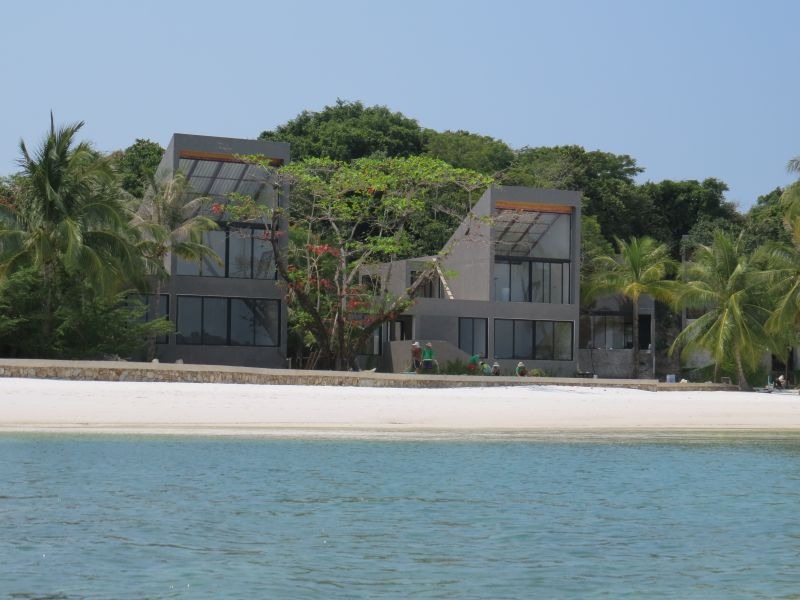
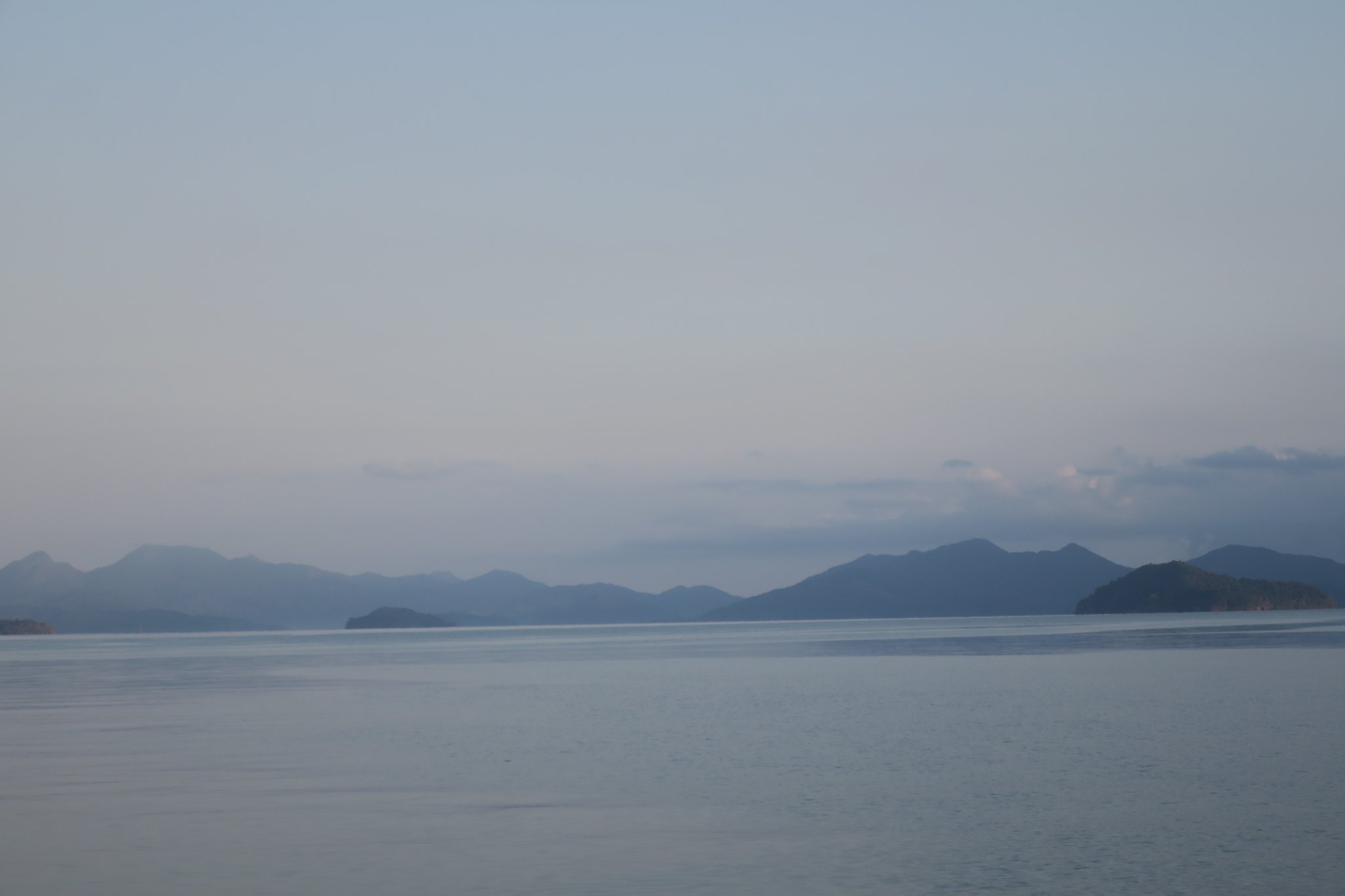
As usual when we’re on a sailboat we wake up pretty early.  We went into the marina for a shower and to check with Phil on a couple of open issues.  Then we were off.  We were headed to Koh Mak.  The winds were not cooperating so we motored the whole way, about 2 1/2 hours.  We anchored in a lovely little bay called North Koh Mak.  Just us, two other sailboats and one very small catamaran.  We cruised around our dinghy, checking out the beach.  There were three resorts and a deserted resort on Koh Kham, a small island just across the bay.  

That evening we just had a light dinner on the boat.  First day is always a little difficult since we don’t know the boat and we don’t know the area.  It’s good to have day one behind us!

February 8, 2019 Bangkok to Koh Chang

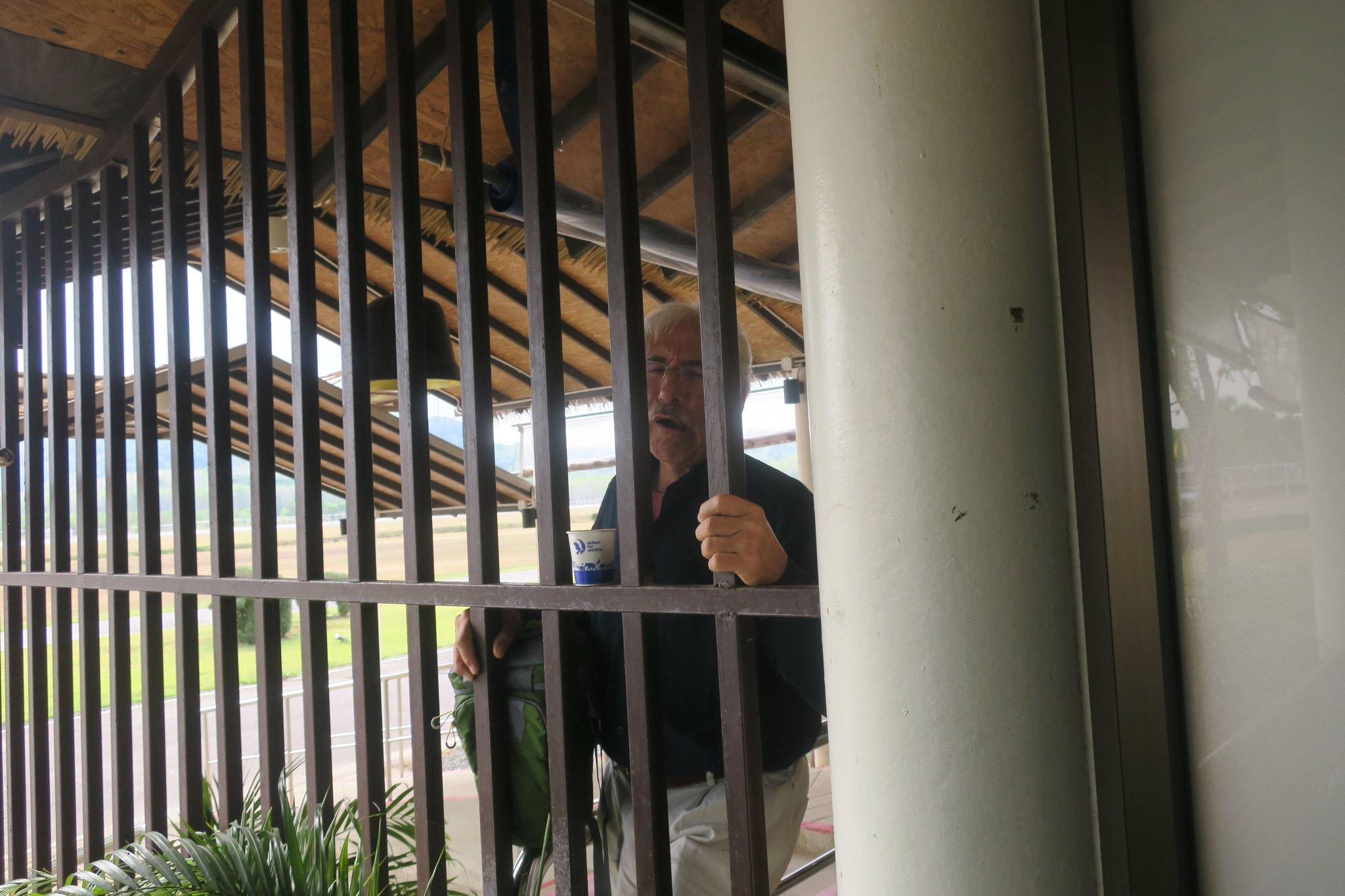
We were up very early to get to the airport in time for our 8:30 flight.  Lin, George, and Margie came with us.  We got checked in and found the lounge where we relaxed and ate breakfast with Lin. Too soon we had to say good bye to her.  She told us that in Buddhism you can add salt by doing bad things that give you bad karma or you can  you can add water by doing good things that give you good karma.  The goal is lots of water and little or no salt.  Lin is a wonderful person with lots of water and very little salt.  I’m going to miss her.

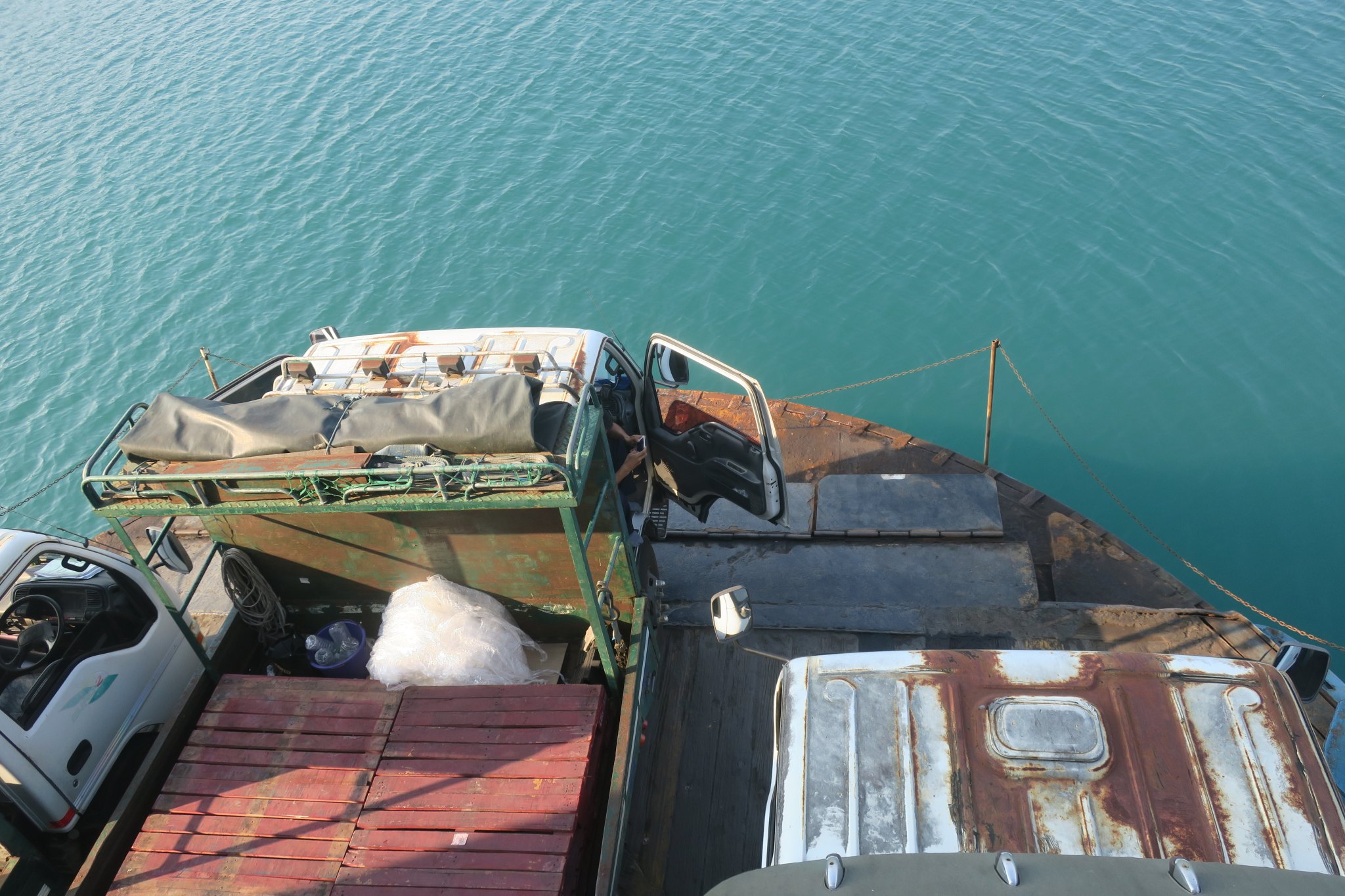
Our flight to Trat, in southeastern Thailand, was uneventful.  Our taxi was waiting for us and took us via ferry to Koh Chang.

Once on the island the ferry took us to the supermarket.  This supermarket was recommended by our charter company because it had good variety, but it sold most everything in bulk.  I had to buy 5 lbs of sugar in order to have a lunch title sugar for my cereal.  Oh well, we will give the extra away. 

Then our driver took us to the marina where we loaded our stuff onto the boat.  Our boat is a 2008 37.5 ft Catalina named Vague a L’ame. After stowing the groceries we met with Phil, the operations manager of the charter company.  He gave us a chart briefing, telling us where we could and couldn’t go, and a little tidbit about each harbor.  Then he came and reviewed the boat with us.  

At that point we could have left but decided to spend the night at the marina. We just wanted a little time to get situated.  They moved us onto a mooring ball so we would be out of the way of boats coming in the next morning and so that we would be a little cooler.  Here’s our view of the base from the mooring and other boats waiting to be chartered. 

We went to bed early, it had been a long day.

February 7, 2019 Chiangrai to Bangkok

We had a leisurely morning. I think most people slept in.  At 9 some of our group left the hotel and went into Chiangrai.  Other relaxed by the pool. 

The first stop of our tour was a statue of the founder of Chiangrai.  There were people there leaving offerings to him because it is believed that he can their grant wishes. 

Next we drove by a clock tower designed by the artist who built the White Temple.  The style was pretty similar. 

We also went to a temple that had a copy of the Emerald Buddha (the original is in Bangkok at the palace).

We returned to the hotel to pick up our luggage.  It was the final time we were going to see our driver, Mr. Dang, who had been with us the whole time.  Although OAT provides him with a tip we decided we wanted to do a little extra for him because he did a great job of taking care of us.  Here is a picture of Dan giving him the envelope. 

Mr. Dang dropped us at the Chiangrai airport where we got a flight to Bangkok.  We returned to our original Bangkok hotel.  That evening we had a farewell dinner.  Everyone said how much they had enjoyed the trip and how much we appreciated Lin, her knowledge, her humor, and her flexibility.  It really was a great trip.  

February 6, 2019 Chiangrai

After breakfast we departed the hotel for Doi Tung Royal Villa.  Chiangrai is in the golden triangle which historically covered Northern Thailand, Burma, and Laos.  Local hill tribes in this area grew poppies for opium.  The mother of the last king decided to establish a residence in this area to try to bring attention to the region and provide the locals with other ways to support themselves.  Through her and others’ efforts, opium production in Northern Thailand has halted and many other crops have been introduced.  Sounds like she was an amazing woman.  We toured her home (we couldn’t take pictures in the house), her garden and a small museum, aptly called the Hall of Inspiration.  

We went to lunch in a remote local village of 2,000 people.  To get there we took tractor/pick up trucks.

On the way we saw people picking tea.  Lin got out to buy some, but we didn’t drink any because she wasn’t sure if it was safe.

When we arrived there were ladies there selling various goods.  One of them had a baby.  We had received stuffed tigers at the tiger reserve which we intended to give away so we gave one to the baby.

The restaurant was a beautiful, remote retreat. 

After lunch we went to the area where Thailand, Laos, and Burma’s borders meet along the Mekong River.  The Chinese had leased the land along the river and were building casinos.  There were a couple of large Buddhas there.  We looked in a few shops but didn’t find anything we wanted to bring back.  

That evening we had dinner at the hotel.  A number of people from our group, including Rick and Lin, sang karaoke that evening.  Again, it was a lot of fun.  

February 5, 2019 Chiangmai to Chiangrai

This morning we packed up our suitcases because we are going to Chiangrai.  Before we left Chiangmai we went to a Buddhist university at Wat Suan Dow where we received a lecture from a Buddhist monk who taught there.  He told us about what new monks learn and a little about Buddhism.  He showed us how to put on a monk’s warp.  It was a very interesting and inspirational discussion.  

Then we went to Lin’s house for an early lunch.  She has a beautiful, large home — not quite what I was expecting.  We met her in laws who live with her and her husband.  Unfortunately her son was not home.  Their house was decorated for Chinese New Year because her in laws are from China.  We had a delicious lunch. 

We were back on the road and on our way to Chiangrai.  En route we stopped at Wat Rong Kuhn, commonly referred to as the “White Temple.”  This temple was constructed in 1997 by local artist Chalermchai Kositpipa.   We accessed the temple by crossing over a bridge that was built over a pit of reaching arms, meant to symbolize souls reaching up from hell. Inside there are murals with pop culture icons, like Pikachu, telling us that we are encouraging violence to our youngsters.  At the same site was a museum of his art.  He used a variety of mediums to create very interesting Buddhist/Hindu art.

Back on the bus we went to our Chiangrai hotel, which was right next to rice paddies, and had lovely manicured grounds.  

That night we had dinner at the hotel.  They had entertainment, a couple sing oldies.  We were enjoying dinner and the next thing I knew Lin was singing with them.  She was so fun, dancing around.  There was an Australian group and we all were dancing and laughing.  Lin is a real pip as Ann would say. 

February 4, 2019 Chiangmai

Today was our free day in Chiangmai.  Most of our group wanted to go to the tiger sanctuary.  Lin arranged to have our bus take us there.  They have about 45 tigers of a variety of breeds and ages.  We walked around and checked them all out. Ann, Rick and I had purchased tickets to go into the cages with the baby, 6 week old, tigers.  We had to wear a smock over our clothes and slippers. We spent about 15 minutes with the babies.  They were very cute and playful.  We all loved it. 

Sometime later someone told us that they may have drugged the tigers.  They didn’t seem drugged but I’m certainly no expert.  All I can say is I hope they don’t drug them.

Then we took the bus back to the hotel.  A smaller group of us went to a pizza restaurant just down the block from our hotel.  It was very good and another nice break from Thai food.  

Then we ventured into the city.  We stopped at a couple of temples and spoke with one of the nuns we met.  Then we headed off to the market.  Some of our group bought some items but we just looked around.  We were trying to find a tablecloth like the one we had seen at the home hosted dinner, but no luck.  It was really hot so we went back to the hotel.  After it cooled down a little, I walked into the old city which is only about 1 square mile.  It was surrounded by a moat and wall with beautiful flowers near the entrance.  Honestly it didn’t look much different from the rest of the city, but at least can say I explored it.    


According to TripAdvisor the 10th best restaurant in the world, called David’s Kitchen, is in Chiangmai.  We had made reservations about a month earlier.  Lin had arranged a taxi to take us there.  We didn’t quite make it on time because there were 4 colleges all getting out at the same time.  The traffic was terrible.  We were immediately greeted by David himself.  It was a really lovely restaurant with very, very attentive staff.  Rick and Ann shared two appetizers, gnocchi stuffed with lamb shank and grapefruit wrapped in cucumbers with fried fish on top.  For dinner Ann had salmon, Rick had snow fish and I had boeuf bourgeois.  It was excellent!

They called us a taxi and we headed back to the hotel.  

February 3, 2019 Chiangmai

Today we started the day by visiting the long neck tribe or the Kayan people.  These people originate from hills around northern Thailand and Burma.  Many of them left Burma due to civil unrest.  They were living in refugee camps in Thailand but have now established their own villages.  They are known for the brass rings, as much as 5kg, they wear around their necks.  The rings do not lengthen their necks but push their shoulders down.  Women’s necks get very weak as a result of the rings and they can not support their heads without the rings.  Girls start wearing the ring at 5 years old.  According to Wikipedia, “Speculation by anthropologists, who have hypothesized that the rings protected women from becoming slaves; making them less attractive to other tribes. It has also been theorised that the coils originate from the desire to look more attractive by exaggerating sexual dimorphism, as women have more slender necks than men. It has also been suggested that the coils give the women resemblance to a dragon, an important figure in Kayan folklore. The coils might be meant to protect their wearers from tiger bites, perhaps literally but more likely symbolically. Kayan women, when asked, acknowledge these ideas, and often say that their purpose for wearing the rings is cultural identity (one associated with beauty).”

Through Lin we talked to the ladies.  Lin showed us one of their houses.  It was pretty basic.  They did some farming, including growing rice.  We did a little shopping. While their life doesn’t seem easy they appear happy and healthy.    

We got back on the trucks that had brought us to the village.  They took us to the elephant camp.  This camp was for elephants that had previously worked harvesting teak and were now “retired”.  We were introduced to Tata, a 35 year old female, and her mahoot or handler.  She had had a baby 5 years earlier and her baby was in the camp with her.  We took pictures with her.  While we were taking pictures her mahout was lovingly checking her skin.  It looked like a very tight relationship.  She seemed very relaxed with us.  Her mahout showed us how he got on and off her.  

We went to the little museum and wondered around for about 15 minutes.  Then they show us how they made paper from the elephant poop.  Elephants have very poor digestive systems so their poop is very fibrous and good for making paper.  We bought some elephant poop bookmarks.  Next they showed us how they make elephant vitamins balls.  We made quite a few and then we took them over to the elephants and fed them. They really like the vitamin balls and would open their mouths so that we could just drop them in.  The baby couldn’t get close enough and would take the ball with her trunk.  Once we finished the vitamin balls we fed them sugar cane.  They could get 4 pieces of sugar cane in their mouth before they chewed it.  I really liked feeding them and gave them lots of sugar cane.  

After feeding them we went to feed ourselves.  Lin had had sandwiches brought in, a nice change from Thai food.  After lunch we chatted with the mahout before heading back to our little truck which took us down the mountain to our bus.  

We returned to the hotel where Rick and I regrouped before going furniture shopping.  Lin said that Chiangmai would be a good place to buy furniture. We took a taxi, a pickup truck with covered seats in the back.  Pam came with us and we dropped her off at the silk store where she was buying material to make a skirt and top.  We arrived at the furniture store and there was a gentleman carving a beautifully intricate headboard.  They also had huge pieces of a teak tree and a rosewood tree.  We wandered through the store.  Everything was gorgeous, but many pieces were a little too ornate for us.  We found a cabinet that would look nice in the living room.  We also looked at beds. We didn’t buy anything but might order something when we get home.  Our taxi had waited for us and took us back to the hotel.  

That evening we went out to dinner at a local restaurant where the proprietor prepared flaming chicken at our tables.

February 2, 2019 Sukhothai to Chiangmai

We left the hotel this morning at 8.  Today we are driving 5 hours to Chiangmai.  

Luckily we have a couple of stops to break up the journey.  First stop was at a boar feeding stop.  People release boars into this area to get good karma so there were quite a few boars.  The boars know people stop in this area to feed them so they wait in a fenced area for people to come.  Lin bought some bananas and boar food for us to give them. 

During the ride, Lin talked about various issues including prostitution and human trafficking.  Girls from this area are particularly vulnerable because they are light skinned, something considered more desirable, and because they and their families are somewhat naïve.  Drug traffickers are prevalent in the Chiangmai and Chiangrai area.  Poppies are grown in Burma and then the heroine is moved through Thailand to the rest of the world.  Lin grew up in the area and she estimates that 80% of her class ended up in prostitution, or drug trafficking. Sad statistic!

Once we arrived in Chiangmai we went to a gems gallery.  They showed us a short video on the mining and cutting processes and escorted us into the showroom. They had many beautiful things, but I didn’t get anything.

Afterward we went to our hotel and got checked in.  That evening we went to a home hosted dinner.  Our host was a lovely woman who was married and had one son. Neither her son nor her husband were there.  She had her niece and nephew help her cook and host the dinner.  Her name was Runa which translates to rainbow.  She was energetic, positive, and a joy to send time with.  

Her English was quite good.  She had worked in a factory for three years in Taiwan where she learned English.  She and her husband own a small grocery store.  She showed us around her house.  It was very nicely furnished. 

She said initially she was unsure about hosting people in her house but then she tried it and loved it.  We started out making our own salad. 

Then the niece and nephew served dinner and dessert.

 It was a very pleasant evening. 

February 1, 2019 Sukhothai

We were up early to give alms to the monks.  I had done it when I was in Laos and loved it.  We sat on the bridge that lead to the monastery in Sukhothai.  Lin gave us packages of food that she had bought in the market.  Shortly before sunrise, after the monks had finished chanting, they started walking across the bridge.  We put our bag of food in their bowl.  They take all the food back to the monastery and share it with each other.  After they finished collecting alms they came back to bless us.  Here are the words to the blessing.  

May all living beings be free from violence, fear and war
May all living beings be free from suffering and pain
May all living beings be free from hatred and killing
May all living beings be free from misery and depression
May all living beings be happy and be secured
May all living beings be well being and be in peace
May peace prevail in the world
My peace prevail in me myself

It left me with a peaceful, happy feeling.

Then we went to the market and looked around for about a half an hour.  It was very typical selling everything from vegetables and meat to home goods.  

Here is a video of some monks blessing a vendor at the market.

We came back to the hotel to have breakfast and to get ready for our visit to Ban Na Sroi village.  OAT, our tour company, calls this “A Day in the Life” and it’s designed to show us what typical village life is like.  Our first stop was at a house that ran the village’s rice mill.  Lin explained the mill output.  Some goes to the animals and some is for human consumption.  The owner of the rice mill keeps the animal feed as payment for using her mill. Lin also showed us some of the other products she was selling.  

Then we went next door to a lady who had a small shop.  She was weaving bamboo into products she would sell.  Often they would sell them to a middle man who periodically visits the village who would take the products to the market. This lady also had a little shop.

Next stop was a farmer’s house.  He grew fruit and vegetables.  He had bought more land in hopes of growing more produce, but he didn’t have the water required for the additional plants.  It was too expensive to dig a well so the land was not used.  He supplemented his income by building fish traps and kites (which made a humming, whirring sound as he whipped in around). This was a common theme — people need to have multiple sources of income to support themselves. 

Here is a video of the farmer twirling the kite.

Last stop was with men who train roosters for cock fighting.  According to Lin cock fighting is quite popular.  Roosters are quite territorial and will fight if there is another rooster in their territory.  We saw roosters kept in cages at peoples’ houses in order to keep them apart.  

Next we went to the village school.  Lin introduced the principal who introduced two new teachers.  Today newly licensed teachers are required to pass an English proficiency test before they get their teaching certificate.  

We were all escorted through the school by the kids  I had 2 boys who were about 10 years old.  We went into one classroom where the children were being taught remotely via a computer monitor.  Apparently the last king wanted to make sure all children were properly educated so he directed that teaching videos be made to supplement the teachers.  There are not enough teachers in the rural areas.

 One of the teachers showed us how to make flowers about of palm fronds.  The kids were supposed to help us but my boys had no idea what they were doing so I gave up. 

They took us through each of the classrooms and we ended our tour in the “cafeteria” where the boys promptly ditched me for food.  The children bring rice for lunch but the rest of their lunch is supplied by the school.  We gave the principal our gifts, we had brought socks, and I gave them 3 knitted elephants that I had made.  

After the school we went to the mayor’s house for lunch. 

She was elected by the village but the government is eliminating this position and just assigning someone to manage the village.  We had a lovely lunch with  several ladies from the village who were there to help.  We invited them to join at the table us but they were very hesitant because that’s not done in their culture.  Eventually they agreed and we were able to ask them questions.  Lin said that domestic violence is fairly common and occurs in about a third of the couples.  None of hosts were victims of domestic violence.  

We said good bye to our hosts and some of us went to a celadon factory.  Celadon is green pottery that traditionally is made in this area.  We saw some very intricate work, but nothing that we felt we absolutely needed.  


January 31, 2019 Nakhon Sawan to Sukhothai

We left Nakhon Sawan for Sukhothai this morning. After driving for about 1 1/2 hours we arrived at Naresuan University, a government sponsored school in Phitsanulok. The university has 16 faculties and about 20,000 full-time students.  We met with a professor in the education department who is trying to bring community based education to Thailand.  According to the internet, community-based learning refers to a wide variety of instructional methods and programs that educators use to connect what is being taught in schools to their surrounding communities, including local institutions, history, literature, cultural heritage, and natural environments. She gave us a brief lecture on her research and answered our questions.

The building where our lecture was held was surrounded by beautiful rice paddies.  Inside it was teak with many lovely pieces of oriental pottery.

It was lunchtime so we went to the students’ canteen for lunch.  Lin broke us into three groups and each group was assigned a student to help us manage the process.  There were a lot of little restaurant stalls with all types of food.  It was a little overwhelming.   Rick and I got chicken curry.  During lunch we were able to ask the students questions about college life.

After lunch our three student helpers said good-bye.

Back on the bus we drove to our hotel in Sukhothai.  Sukhothai was the capital of Thailand from 1238 until 1438.  It was selected because it floods every year and the rulers thought the flooding would protect the Thai people from invaders, specifically the Burmese.  It worked, the Burmese’s didn’t invade while Sukhothai was the capital.  The city contains the ruins of temples built when the city was the capital.  The temples started out as Hindu temples but were later converted to Buddhist temples.  Some of the people in our group rode from temple to temple on bicycles, the rest of us rode in a small trolley.  We were there as the sun was setting and the light on the buildings was spectacular.

Interestingly we met a Swiss family there that had driven from Switzerland through Pakistan and Iran to Thailand.  Quite an adventure requiring all sorts of security folks while traveling on the road.

We are staying in a lovely hotel with lots of ponds and beautiful greenery.